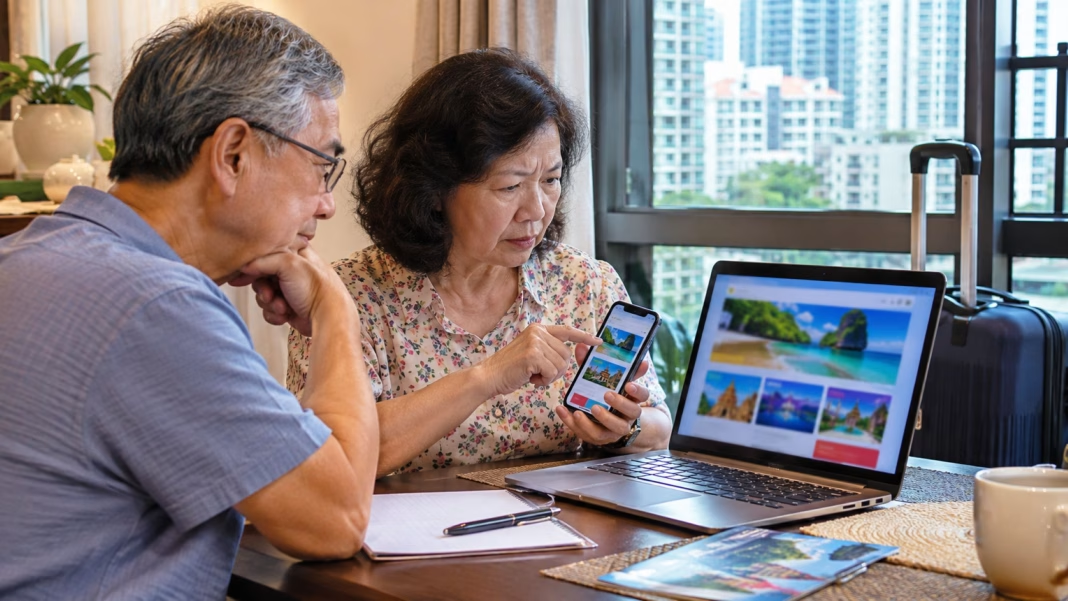


Singapore CTC Travel warns of fake senior holiday packages circulating on Facebook, raising tourist safety concerns over misleading offers and online booking risks. Fraudulent advertisements have used the travel agency’s identity to promote discounted overseas holidays for older travellers. The company has confirmed that these promotions are unauthorised. The incident highlights the importance of checking travel offers before making reservations or sharing financial details. It also draws attention to the wider challenge of protecting travellers from digital fraud.
Singapore CTC Travel Scam Highlights Risks Behind Discounted Senior Holiday Offers
Singapore’s Commonwealth Travel Service Corporation, widely known as CTC Travel, became the subject of an online impersonation scheme involving supposedly discounted overseas holiday packages. The fraudulent advertisements appeared on Facebook and used the company’s name and images to establish credibility. They promoted all-inclusive travel arrangements for people aged 50 and above. However, CTC Travel confirmed that the advertisements were not connected to its business. The warning concerned fake promotional material rather than a confirmed failure to deliver genuine bookings. This distinction matters because travellers must recognise the difference between an authorised travel offer and an advertisement created by someone misusing a company’s identity.
Advertisement
Advertisement
- The affected travel brand was CTC Travel Singapore.
- The unauthorised advertisements circulated on Facebook.
- The promotions targeted travellers aged 50 and above.
- The posts advertised 20 discounted all-inclusive holiday packages.
- The company rejected any association with the offers.
How Fraudulent Facebook Promotions Created Confusion Around Genuine Travel Bookings
The suspicious advertisements appeared under a Facebook account identified as Local Online Service – 1. They claimed that CTC Travel would provide discounted holiday packages for older customers from October 2026. The account was not the company’s official promotional page. Nevertheless, the use of familiar branding could make the posts appear credible to people searching for affordable overseas tours. This is a common weakness in social media booking journeys. Travellers may encounter advertisements outside a company’s verified channels and assume that the brand shown in the image also operates the account. The Singapore incident demonstrates why an advertisement’s source requires independent verification.
- The promotional account was unrelated to CTC Travel’s official page.
- The advertisement relied on the identity of an established travel agency.
- The package claim was not supported by an authorised company promotion.
- The offers targeted a specific age group with discounted pricing.
- The campaign encouraged attention towards holiday deals that the company had not announced.
Why Senior Holiday Package Scams Demand Greater Travel Consumer Awareness
Older travellers frequently use organised tours to arrange accommodation, transport and sightseeing within one booking. All-inclusive packages can simplify travel planning by bringing several services together under a single itinerary. This convenience also makes the format attractive for fraudulent advertising. A post promising discounted arrangements can appeal to people seeking predictable holiday costs. However, an advertised package cannot be considered genuine merely because it displays a recognised travel brand. The CTC Travel case specifically concerned people aged 50 and above. It does not establish that older travellers were more likely to suffer losses. Instead, it demonstrates how fraudsters can adapt promotional messages to particular customer groups.
- Compare any advertised offer with the company’s official promotions.
- Ask for written details of destinations, accommodation and transport.
- Check whether the package price includes taxes and additional charges.
- Verify the identity of the person or business requesting payment.
- Avoid sharing personal or financial information before confirming legitimacy.
Singapore Police Data Reveals Wider Financial Risks From Travel Booking Phishing
The broader threat is supported by Singapore’s official fraud statistics. On 9 October 2026, the Singapore Police Force reported at least 148 phishing cases involving hotels and hotel booking platforms since the beginning of the year. Reported losses reached at least S$185,000. These incidents typically involved fraudulent messages asking customers to confirm reservations or provide bank card details. Some contained authentic booking information, which made them harder to recognise. The figures relate to hotel booking phishing and not specifically to CTC Travel. Nevertheless, they demonstrate why travel-related impersonation requires attention from passengers, accommodation providers, travel agencies and online booking platforms. Singapore Police Force
Official Singapore scam statistics
Advertisement
Advertisement
| Indicator | Official figure |
| Scam cases across Singapore in 2025 | 37,308 |
| Total scam losses in 2025 | S$913.1 million |
| Change in scam cases from 2024 | 27.6% decrease |
| Hotel and booking phishing cases reported by 9 October 2026 | At least 148 |
| Losses linked to those hotel booking cases | At least S$185,000 |
- Singapore recorded a substantial volume of scams in 2025 despite a year-on-year decline.
- Financial losses remained significant across different fraud categories.
- Hotel booking platforms were impersonated in separate 2026 phishing incidents.
- Criminals sometimes used genuine reservation information to make messages believable.
- Official figures do not establish any financial loss from the reported CTC Travel advertisements.
How Singapore Tourism Board Licensing Helps Travellers Verify Travel Agencies
Singapore has a formal travel agent licensing system designed to help consumers identify businesses authorised to sell travel products. The Singapore Tourism Board advises people to transact with licensed travel agents and provides a public directory through its Travel Agents and Tourist Guides Licensing System, known as TRUST. This offers an important starting point when assessing an unfamiliar holiday provider. However, licensing checks alone cannot establish whether a particular Facebook advertisement is genuine. A fraudulent account may display the name of a legitimate company. Consumers must therefore check both the agency’s business credentials and the authenticity of the promotional channel before proceeding with payment.
- Use the official TRUST licensing portal to check travel agency credentials.
- Match the business name with the company offering the holiday.
- Visit the agency’s official website independently.
- Confirm package details through recognised company contact channels.
- Request proper booking documentation before transferring money.
How Travellers Can Identify Fake Holiday Advertisements Before Making Payments
Recognising fraudulent holiday advertisements requires careful attention to how offers are presented and where customers are directed. A low price alone does not prove deception because genuine travel agencies also run seasonal promotions. The more important questions concern the advertiser’s identity, the booking process and the payment destination. Travellers should be cautious when an unfamiliar account uses a recognised company’s branding but cannot provide confirmation through its official channels. Links that request bank card information, login credentials or one-time passwords create additional risks. Singapore Police Force guidance emphasises checking unexpected communications directly with the relevant business rather than following links provided in suspicious messages.
Advertisement
Advertisement
- Examine the exact Facebook account publishing the offer.
- Search for the promotion on the company’s official website.
- Verify the agency’s telephone number through an independent source.
- Review the proposed payment recipient and booking conditions.
- Stop the transaction if the seller requests confidential banking credentials.
Singapore ScamShield Services Strengthen Protection Against Online Travel Fraud
Singapore’s ScamShield programme provides several official resources for checking suspicious communications. The service includes a mobile application, a website and a dedicated helpline. The ScamShield app allows users to assess potentially fraudulent messages, telephone numbers and links. It also supports reporting and filtering suspicious communications. The official helpline operates continuously and provides assistance to people who are uncertain whether an approach is fraudulent. These services can be useful when travellers receive unexpected holiday offers, booking confirmation requests or payment demands. They complement direct verification with the travel provider, rather than replacing the need to contact the business independently.
- ScamShield app for checking suspicious messages and links.
- ScamShield website for current scam awareness information.
- The 24-hour ScamShield Helpline on 1799 within Singapore.
- The overseas helpline number +65 6869 1799.
- Singapore Police Force channels for reporting suspected criminal activity.
What Travellers Should Do After Encountering a Suspicious Holiday Booking Offer
A suspicious advertisement does not necessarily mean that personal data or money has already been lost. The appropriate response depends on whether the traveller merely viewed the post, opened a link, shared confidential information or completed a payment. Anyone who has only encountered the advertisement can avoid further interaction and report it through the relevant platform. If bank card details or account credentials have been disclosed, the situation becomes more urgent. Singapore’s official financial education guidance recommends contacting the bank immediately to protect affected accounts. A police report can also support the documentation of suspected fraud and any resulting financial loss.
- Stop communicating with the suspicious account.
- Preserve screenshots and relevant booking or payment records.
- Contact the bank immediately if payment information has been compromised.
- Change affected passwords and secure accounts where necessary.
- Report the incident to the police and the social media platform.
Travel and Airline Industry Impact of Fake Holiday Packages in Singapore
Fraudulent holiday advertisements can affect more than the individuals who encounter them. Organised travel packages often combine flights, hotel stays, airport transfers and destination experiences. When a fake offer misrepresents these arrangements, consumers may mistakenly believe that the advertised services are already available for reservation. This creates potential confusion across the travel booking process. However, the CTC Travel incident does not establish that any airline, hotel or destination operator experienced operational disruption. Its significance lies primarily in booking integrity, customer trust and digital consumer protection. Travel companies and aviation-related booking partners benefit from clear promotional channels and verification procedures that help customers distinguish legitimate reservations from fraudulent offers.
- Travel agencies need clearly identifiable promotional accounts.
- Airlines may need to help passengers verify flight reservations attached to package bookings.
- Hotels benefit from directing customers towards authentic reservation channels.
- Booking platforms need effective processes for reporting impersonation.
- Travellers require clear confirmation before relying on a holiday itinerary.
How Online Travel Scams Can Affect International Tourism Confidence
International tourism depends on confidence throughout the customer journey, from the first advertisement to the final booking confirmation. Fraudulent promotions introduce uncertainty at an early stage, especially when they imitate trusted companies. A traveller who cannot distinguish a genuine discount from a false offer may delay a purchase or seek additional verification. These are possible consequences rather than documented outcomes of the CTC Travel case. The incident has not been shown to reduce tourist arrivals or international air traffic. Nevertheless, it illustrates why protecting digital travel transactions matters for the long-term reliability of tourism services and for consumers planning holidays across national borders.
Advertisement
Advertisement
- Consumer confidence influences online booking decisions.
- Clear promotional information can reduce confusion.
- Verified booking records help travellers confirm airline and hotel services.
- Effective scam reporting supports safer digital travel marketplaces.
- Transparent customer communication can protect legitimate tourism businesses from impersonation.
Singapore Travel Scam Prevention Guide for Senior Tourists and International Holidaymakers
For travellers considering a holiday package, the safest approach is to verify each stage of the proposed transaction. This includes establishing who operates the advertisement, confirming the agency’s credentials, checking the itinerary and ensuring that payment instructions come from the real business. Consumers should also distinguish between a package advertisement and an actual reservation. An offer does not guarantee airline seats, hotel rooms or confirmed travel arrangements. The Singapore case provides a useful example of why this distinction matters. A branded advertisement can appear convincing even when the company whose name it carries has not authorised the promotion or created the advertised product.
| Booking stage | Potential concern | Recommended action |
|---|---|---|
| Social media advertisement | Impersonation of a recognised travel agency | Verify the publisher through official company channels |
| Holiday package selection | Unauthorised or fictitious offer | Ask the travel agency to confirm the package |
| Travel agency verification | Unclear business identity | Check the Singapore Tourism Board’s TRUST directory |
| Flight reservation | No confirmed airline booking | Request a booking reference and verify it through the airline |
| Hotel reservation | Invalid accommodation confirmation | Contact the accommodation provider directly |
| Payment | Suspicious link or unfamiliar recipient | Verify the payment channel before transferring funds |
| Personal information | Requests for confidential credentials | Do not disclose banking passwords or one-time passwords |
| Suspected fraud | Risk of financial or identity-related harm | Contact the bank, ScamShield and relevant authorities |
- A recognised travel agency name does not guarantee that an advertisement is genuine.
- An attractive package price should be supported by verifiable booking conditions.
- Airline and hotel confirmations should be checked independently.
- Financial details should never be provided through unverified links.
- Official consumer protection resources should be used whenever the authenticity of an offer is uncertain.
Conclusion
Singapore’s CTC Travel warning illustrates how fake senior holiday packages on Facebook can create tourist safety concerns even before a booking takes place. The incident shows that familiar branding is not enough to establish the authenticity of a travel offer. Travellers must confirm the seller’s identity, review package details and use recognised payment channels. For travel agencies, airlines and tourism businesses, the wider lesson concerns trust in digital reservations. Clear communication and accessible verification tools can help protect customers from misleading promotions. As international travel becomes increasingly connected to online platforms, stronger consumer awareness remains essential for safer holiday planning.