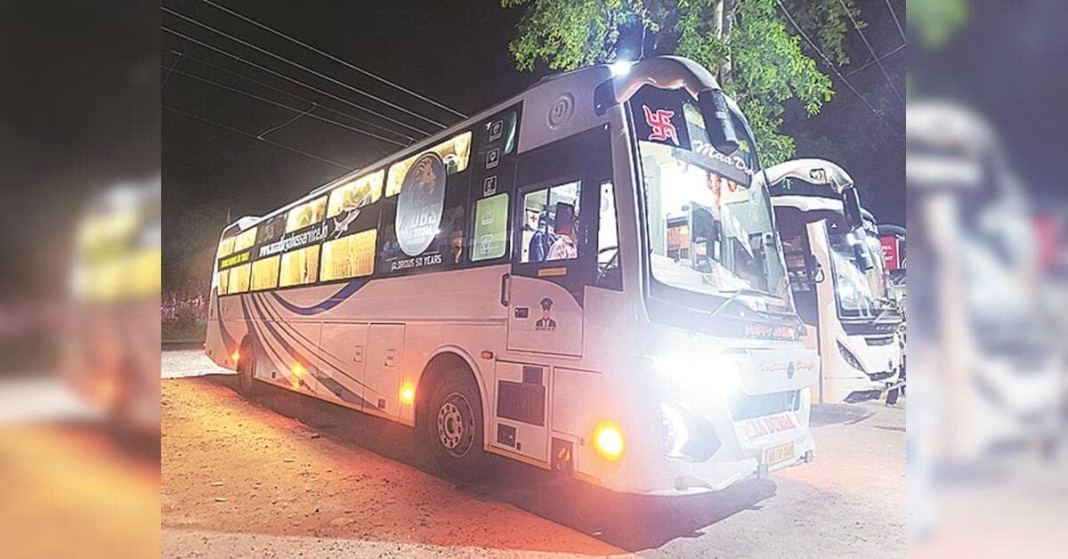

The change is being driven by more than just price. Better-quality buses, expanding sleeper services and improving highway infrastructure are making road travel more comfortable and reliable. Together, these factors are reshaping how travellers approach journeys of 200-500 kilometres.
Online travel aggregators (OTAs) and intercity bus platforms, including Ixigo’s AbhiBus, MakeMyTrip, FlixBus India and EaseMyTrip, are reporting strong growth in bookings and passenger volumes. AbhiBus recorded a 31.5 per cent year-on-year increase in bookings across its leading routes during the 25-day travel window around Dussehra 2026, compared with the corresponding period in 2025.
“Bookings grew on each of these routes, and 35 of them recorded growth above 50 per cent,” said Rohit Sharma, chief operating officer at AbhiBus. The company also reported sharp increases in bookings in several markets where airfares had risen steeply.
Outbound bookings grew by more than 122 per cent in Jharsuguda, 95 per cent in Dharamshala and 66 per cent in Thiruvananthapuram. Bhubaneswar and Varanasi recorded increases of more than 65 per cent and 63 per cent, respectively. Inbound bookings also rose in Kolkata, Dharamshala, Ludhiana, Mysuru and Puducherry.
EaseMyTrip, too, reported strong momentum, with passenger volumes in its intercity bus segment growing by more than 20 per cent in the recent period. “Higher airfares and limited availability of confirmed train tickets are influencing travel decisions, particularly during peak holiday and year-end periods. For journeys within approximately 200-500 kilometres, buses offer a practical alternative, allowing travellers to manage costs while retaining flexibility,” said Rikant Pittie, chief executive officer and cofounder of EaseMyTrip.
The economics are becoming harder for travellers to ignore. Domestic airfares have risen by an estimated 20-40 per cent year-on-year across several major routes over the past year for the September-November travel period, reflecting higher aviation turbine fuel (ATF) costs, airline fuel surcharges, sustained demand and adjustments to route capacity.
Some routes have seen considerably steeper increases. Delhi-Hyderabad recorded a 68 per cent year-on-year rise in average fares, alongside an approximately 15 per cent decline in available seats. Mumbai–Kolkata fares climbed about 51 per cent, while Delhi–Goa and Mumbai–Bengaluru saw increases of 39 per cent and 37 per cent, respectively, according to EaseMyTrip.
Average bus fares in India, on the other hand, typically range from ~850 to ~1,050, depending on the route and time of year.
There are also signs that buses are becoming a more deliberate consumer choice rather than merely a cheaper substitute. In a FlixBus survey of respondents who had travelled between 100 and 1,000 kilometres in the preceding 12 months, 52 per cent said they had used an air-conditioned intercity bus, compared with 49 per cent who opted for air travel.
“We believe buses have the potential to be the first-choice option for many intercity journeys, rather than simply an alternative when other modes are unavailable,” said Surya Khurana, managing director of FlixBus India.
For travel companies, the opportunity lies in turning this shift in preference into a larger, more organised market. FlixBus had increased its network capacity by 75 per cent the 2026 festival season compared with the corresponding Dussehra-to-year-end period last year. The expansion includes additional services on key corridors, particularly Delhi/Gurugram-Dehradun/Mussoorie, Bengaluru-Hyderabad, Bengaluru-Chennai, Delhi/Gurugram-Manali, Delhi/Gurugram-Katra and Chennai-Hyderabad.
MakeMyTrip, meanwhile, has reported growth in its bus business, which forms part of its ground transport segment. Last week, it also acquired Bengaluru-based bus shuttle service provider Quick Ride. “Ground transport continued to grow at a strong pace during the quarter. Supply additions, wider route coverage, and the continued development of India’s highway infrastructure supported the category’s structural growth,” the management said during its earnings call following the announcement of its Q2FY27 results.
The expansion is not confined to ticketing platforms. Companies are investing in route networks, operator partnerships, fleet capacity and technology to deepen supply and capture a larger share of the market. Weekend getaways, winter holidays, long weekends and year-end vacations are expected to sustain demand beyond the traditional festival peaks.
Fleet improvements are another important tailwind. Operators are expanding their fleets and upgrading services, particularly through the addition of sleeper buses, while better highways are making longer road journeys more viable. EaseMyTrip is seeking to build a broader presence in the segment through YOLO Bus, while developing electric mobility capabilities through Easy Green Mobility (EMTev). Its focus includes expanding route coverage, fleet capacity and operator partnerships.
“Under our ‘Vision 2030 roadmap’, we aim to establish an annual manufacturing capacity of 5,000 electric buses over the next five years. Our recent launch of electric bus operations in Bhopal marks an important step in taking this initiative forward,” said Pittie.
AbhiBus sees the opportunity extending well beyond the current demand cycle. “We continue to see a strong long-term growth opportunity in the intercity bus segment, driven by expanding supply across private and state transport operators, improving highway infrastructure, growing adoption of online bus bookings and increasing consumer preference for convenient and reliable travel experiences,” said Sharma.
Geographically, the demand is spreading across both leisure and pilgrimage corridors. In North India, routes connecting Delhi-NCR with Dehradun, Haridwar, Rishikesh, Mussoorie, Shimla, Chandigarh and Jaipur are gaining traction ahead of the coming season. In the South, Tirupati, Vijayawada, Guntur and Kakinada continue to attract pilgrimage and regional travellers, according to EaseMyTrip.