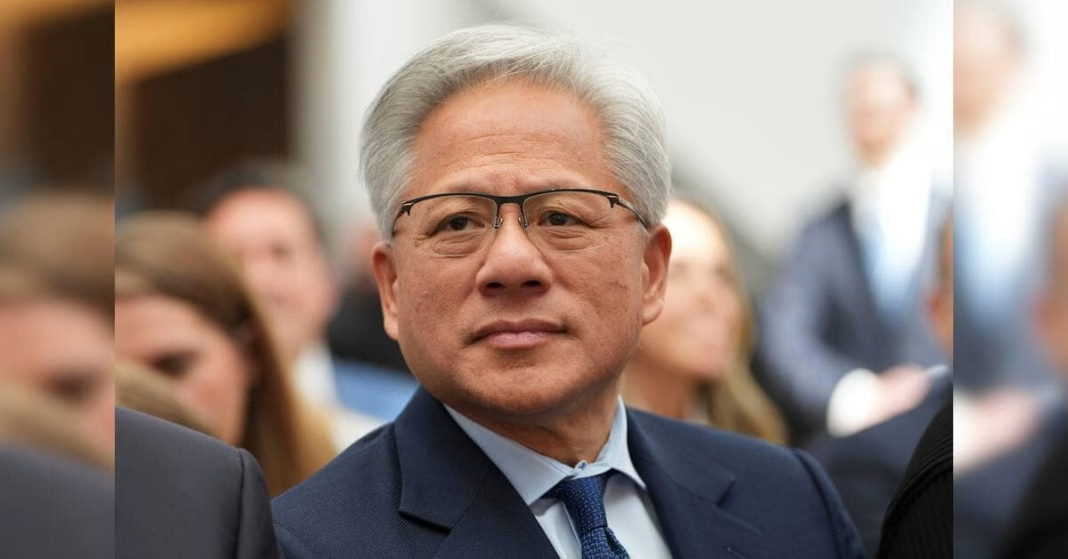

Nvidia was riding a fresh stock market high when New York-based short-selling firm Culper Research raised concerns about the chipmaker’s business in China and its chief executive, Jensen Huang. In a report published on May 13, the investment research firm warned that the world’s most valuable company had a “significant China problem,” according to the Australian Financial Review.
The 40-page report questioned Nvidia’s relationship with Megaspeed, a major buyer of its artificial intelligence (AI) chips, and raised concerns about its links to China. It also pointed to what Culper described as an unusually close relationship between Huang and Alice Huang, a Chinese national and senior executive at Megaspeed.
Six months later, the allegations have gained fresh attention following reports about Huang’s personal relationship with the executive. Huang has apologised to his wife, saying he was “deeply sorry,” the Financial Review reported.
The developments have raised questions about corporate governance, possible espionage risks and Nvidia’s exposure to China, sending ripples across the global technology industry and among investors.
Short seller’s warning about Nvidia’s China exposure
In its May report, Culper Research alleged that Huang had maintained an unusually close association with Megaspeed and its executive Alice Huang, also known as Huang Le.
“Huang has not only vouched for Megaspeed, but seems to have quite literally walked alongside Megaspeed at every step, while maintaining a close relationship with Megaspeed’s Alice Huang, a Chinese national,” the research firm wrote, as quoted by the Financial Review.
Culper also questioned Nvidia’s exposure to Chinese customers despite restrictions imposed by the Trump administration on the sale of advanced technology to China.
Megaspeed was established in 2023 after Chinese gaming and cloud computing company 7Road separated its overseas operations and renamed the business. Headquartered in Singapore, it became one of Nvidia’s largest customers in Asia, spending $4.8 billion over two years, according to the report.
Culper alleged that Megaspeed was being funded by Chinese e-commerce company Alibaba through a network of shell companies. It questioned whether Nvidia’s actual dependence on Chinese customers was greater than the company had publicly indicated.
The short seller also warned that Chinese competitors were catching up with Nvidia, raising questions about the company’s long-term position in the market.
Espionage concerns bring fresh scrutiny
The controversy has intensified following reports that US intelligence agencies had concluded that Alice Huang was passing information to Beijing. Nvidia has reportedly started an internal investigation into her relationship with Jensen Huang.
Alice Huang, a Chinese citizen, previously worked as a television reporter in China before taking up an executive role at Megaspeed.
The allegations have brought renewed attention to the risks facing Nvidia, particularly because of the importance of its technology to the US government.
Preventing China from accessing Nvidia’s most advanced chips has been a priority for US President Donald Trump. Washington views restrictions on these products as a way to limit China’s ability to develop advanced AI systems for civilian and military applications, the news report said.
Nvidia has, however, been allowed to sell some less advanced H200 chips to Chinese customers after agreeing to give the US government a share of the sales revenue.
Despite the controversy, Trump has defended Huang, describing him as a “fine person” who had “done an amazing job for our country”.
Billionaire investor Bill Ackman, founder of Pershing Square Capital Management, has also expressed support for the Nvidia chief, saying that “even incredible humans make mistakes”.
Investors question leadership risks
The developments have also drawn attention to the risks associated with Nvidia’s dependence on its chief executive.
The company is central to the global AI boom, supplying the chips used to power advanced computing systems. It has also become an important financial partner for companies building data centres, providing capital, guarantees and other support to some of its customers, the Financial Review reported.
Chief executives and investors have often looked to Huang to promote the potential of AI. His appearances at events across the world, where he has attracted large audiences, have become part of what is popularly known as ‘Jensanity’.
However, the latest controversy has raised questions about the risks of having so much of the company’s public image and leadership associated with one person.
Australian investment firm Loftus Peak, which first invested in Nvidia in 2016, continues to hold the chipmaker as one of the largest investments in its $1.6 billion Global Disruption Fund.
Its Chief Investment Officer, Alex Pollack, said the revelations had highlighted the importance of assessing key-person risks, particularly when a company does not have a clear succession plan.
“I’m really disappointed, Nvidia is one of our largest positions and there’s a whiff of espionage around this situation. If you’re Jensen Huang and you’re that important, it could be hard not to believe in your own hype sometimes and think you can do anything,” Pollack told the Financial Review.
He said he expected a significant fall in Nvidia’s share price but was unlikely to sell the firm’s entire holding.
Veteran investor John Hempton of Bronte Capital also defended the role of short sellers in bringing potential problems to light. His fund does not hold Nvidia shares but has a favourable view of Culper Research and its work.
Hempton said investors often dismissed short sellers because of their financial interests, while overlooking the fact that long-term investors could also be biased. He added that he had initially considered Culper’s allegations far-fetched when they emerged in May.
Nvidia controversy adds to AI market concerns
The controversy comes at a time when investors are already questioning the high valuations of technology companies and the money being spent on AI infrastructure.
Concerns about tighter scrutiny of data centre construction and AI development following the US midterm elections have added to uncertainty in the technology sector. The resulting sell-off wiped out trillions of dollars in market value, with the Nasdaq coming under pressure amid worries about high valuations, rising debt and whether investments in AI would generate sufficient returns, the Financial Review reported.
Nvidia investors have also been dealing with a sharp decline in the company’s shares, which have fallen about 20 per cent over the past month.