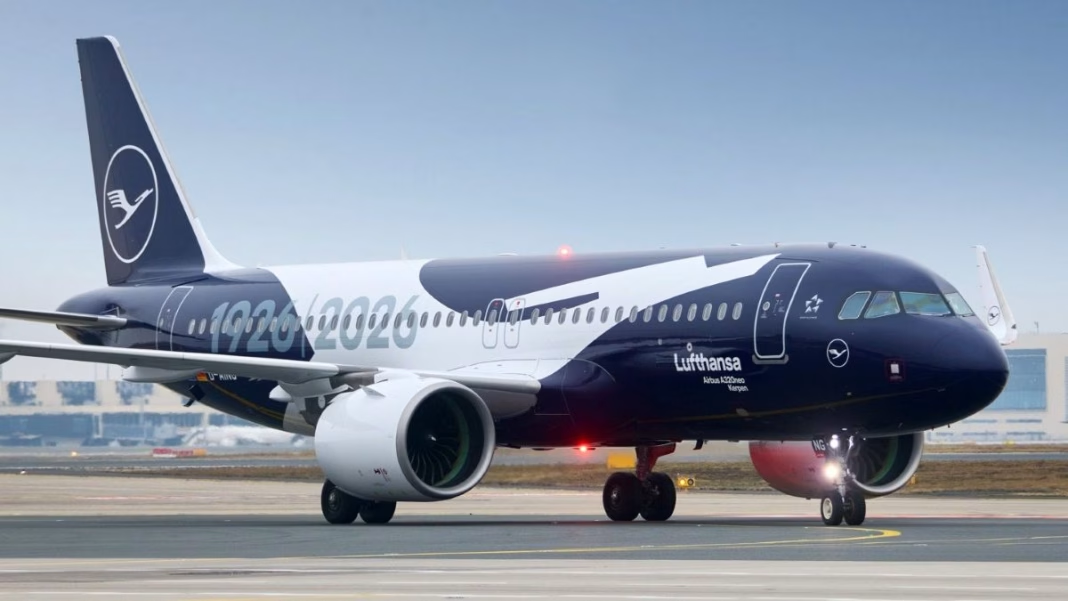


Lufthansa is negotiating with Boeing to introduce larger Business Class cabins on selected incoming Boeing 787-9 Dreamliners, signalling a significant shift in its long-haul capacity strategy. The German aviation group has 26 additional 787-9 aircraft awaiting delivery following an October handover. Chief Executive Officer Carsten Spohr confirmed advanced discussions with Boeing on November 3, 2026, as demand for premium international travel continues to strengthen. The proposed changes could give selected aircraft more Business Class seats and potentially expand Premium Economy capacity. Meanwhile, Lufthansa hopes to secure certification for three currently unavailable Allegris Business Class seats before the end of 2026.
Lufthansa Reconsiders Its Long-Haul Cabin Strategy
Lufthansa’s latest discussions with Boeing reflect a growing commercial priority: matching premium cabin capacity with passenger demand. The airline wants more flexibility across its long-haul network, particularly on routes where existing aircraft cannot accommodate all potential Business Class bookings.
Advertisement
Advertisement
Chief Executive Officer Carsten Spohr discussed the proposal during a media conference on November 3, following the group’s quarterly financial results presentation. He indicated that Lufthansa had entered very advanced discussions with Boeing about receiving some future aircraft with larger Business Class sections.
The proposal represents more than a straightforward cabin refurbishment. Lufthansa could receive selected aircraft with revised seating arrangements directly from Boeing, creating additional premium capacity without waiting for an entirely new aircraft programme.
Advertisement
Advertisement
However, the airline has not confirmed the number of aircraft involved. It has also withheld the proposed Business Class seat count and expected delivery dates for the revised configurations.
This distinction matters for travellers. The announcement signals a developing fleet strategy rather than an immediate improvement across Lufthansa’s entire long-haul network.
Advertisement
Advertisement
The airline must also balance cabin profitability against available floor space. Every additional premium seat affects the room available for other passengers and potentially changes the economics of individual routes.
Existing Dreamliners Offer Two Cabin Experiences
Lufthansa currently operates different Boeing 787-9 configurations, reflecting the aircraft’s delivery history and the introduction of its Allegris premium cabin.
Three Dreamliners originally intended for Hainan Airlines feature a different interior from the airline’s newer Allegris aircraft. Lufthansa plans to transfer these aircraft to Austrian Airlines, its group subsidiary.
The remaining aircraft feature the newer Allegris cabin, which Lufthansa introduced to modernise its long-haul passenger experience. The distinction becomes particularly important as the group considers expanding premium seating on incoming deliveries.
The following comparison outlines the published configurations.
| Cabin category | Earlier configuration | Allegris configuration |
|---|---|---|
| Business Class | 26 seats | 28 seats |
| Premium Economy | 21 seats | 28 seats |
| Economy Class | 247 seats | 231 seats |
| Total published seats | 294 | 287 |
The two layouts demonstrate how differently airlines can distribute cabin capacity within the same aircraft type. The Allegris configuration provides seven additional Premium Economy seats and two additional Business Class seats.
Advertisement
Advertisement
However, it reduces the published Economy Class allocation by 16 seats. Consequently, Lufthansa’s premium strategy involves more than simply adding luxury products. It requires a careful redistribution of available cabin space.
The three aircraft intended for Austrian Airlines also highlight an important fleet-management consideration. Lufthansa Group can deploy different cabin configurations across its subsidiaries while maintaining a shared aircraft family.
Allegris Certification Remains Important
The expansion discussions arrive while Lufthansa continues addressing certification requirements for its existing premium cabin.
Its Allegris-equipped Dreamliners have 28 Business Class seats. However, three seats remain unavailable for sale because they are awaiting approval from the US Federal Aviation Administration.
Lufthansa previously announced that 25 of the 28 seats had received certification. The airline subsequently made those seats available for bookings from March 2026.
Spohr expressed hope that the remaining three seats would receive approval before the end of 2026. Their release would allow Lufthansa to sell the entire published Business Class allocation on the affected aircraft.
Advertisement
Advertisement
For passengers, this development has immediate commercial relevance. Certification restrictions can influence seat availability even when an aircraft operates with a fully installed cabin.
The distinction also matters when comparing seat maps with actual booking inventory. A published configuration does not necessarily mean every seat can be selected or purchased.
Lufthansa’s Allegris introduction has therefore involved several stages of regulatory approval. The proposed larger cabins would require their own technical and certification considerations, depending on the final design.
Premium Demand Exposes Aircraft Capacity Gaps
Lufthansa’s decision to reconsider its cabin layouts follows a mismatch between aircraft capacity and demand on several international routes.
The airline has sometimes deployed smaller Boeing 787-9 aircraft on routes originally intended for larger Airbus A350-1000 and Boeing 777-9 aircraft. These substitutions have created pressure on premium seating availability.
Spohr acknowledged that the existing Dreamliner configuration does not always provide enough Business Class capacity for the demand Lufthansa could potentially accommodate.
Advertisement
Advertisement
This is particularly relevant on long-haul services connecting major financial centres, international business destinations and important tourism markets. Business travellers often prioritise privacy, direct aisle access, sleeping comfort and flexible working environments.
Consequently, airlines increasingly view premium seating as a significant revenue opportunity. A larger Business Class cabin could allow Lufthansa to accommodate additional high-value bookings without necessarily increasing flight frequencies.
The incoming Airbus A350-1000 fleet should also help address this imbalance. Lufthansa expects these aircraft to offer 49 Business Class seats, substantially more than the 28 seats currently available in its published Allegris Dreamliner configuration.
| Aircraft | Business Class seats | Strategic significance |
|---|---|---|
| Boeing 787-9 Allegris | 28 | Existing premium configuration |
| Boeing 787-9 earlier configuration | 26 | Different cabin layout |
| Airbus A350-1000 | 49 | Greater premium capacity |
| Boeing 777-9 | Not specified here | Larger aircraft intended for long-haul operations |
The comparison highlights why Lufthansa wants greater flexibility across its widebody fleet. However, the proposed Dreamliner changes do not establish that every incoming aircraft will match the A350-1000’s premium capacity.
The airline must also consider aircraft utilisation, route economics and the availability of suitable airport infrastructure. These factors influence where additional premium seats can generate sustainable returns.
Premium Economy Could Gain More Space
Business Class is not the only cabin under review. Lufthansa is also considering removing selected Economy Class rows to accommodate additional Premium Economy seats.
Advertisement
Advertisement
This proposal reflects the growing commercial importance of the intermediate cabin. Premium Economy offers passengers more personal space and additional comfort without requiring the substantially higher expenditure associated with Business Class.
For long-haul travellers, the product can provide an attractive compromise. It particularly appeals to holidaymakers seeking greater comfort and corporate travellers operating within tighter travel budgets.
Lufthansa’s existing Dreamliner configurations already demonstrate this positioning. Its Allegris-equipped aircraft provide 28 Premium Economy seats, compared with 21 in the earlier configuration.
However, the airline has not disclosed how many additional seats it could introduce. Nor has it confirmed whether the proposed changes would apply to the same aircraft receiving larger Business Class cabins.
The potential commercial benefits extend across different passenger segments. Additional Premium Economy capacity could help airlines capture travellers who might otherwise choose standard Economy Class.
At the same time, Business Class expansion targets passengers willing to pay substantially more for privacy and premium onboard services.
Advertisement
Advertisement
This creates an opportunity for Lufthansa to improve revenue distribution across its cabins. Nevertheless, the airline must avoid reducing Economy Class availability excessively on routes with strong leisure demand.
Twenty-Six Dreamliners Remain in Pipeline
Lufthansa’s remaining aircraft deliveries provide the immediate opportunity to implement these changes.
According to delivery figures reported in early November, the group expected 27 additional Dreamliners at the end of September 2026. One aircraft arrived during October, leaving 26 Boeing 787-9s pending delivery.
This incoming fleet gives Lufthansa an opportunity to introduce revised cabin arrangements before aircraft enter regular commercial service.
However, the 26 aircraft represent outstanding deliveries, not 26 confirmed aircraft with larger Business Class cabins. Lufthansa has not announced how many will receive the proposed configuration.
The distinction is important for passengers tracking future route launches and cabin upgrades. A revised aircraft specification must pass through planning, production and certification before becoming available commercially.
Advertisement
Advertisement
Lufthansa also has a broader fleet-modernisation programme. Its 2026 aircraft orders include ten additional Airbus A350-900s and ten Boeing 787-9s scheduled for delivery between 2032 and 2034.
The group is therefore pursuing both near-term capacity adjustments and longer-term fleet renewal.
| Fleet development | Reported position |
|---|---|
| Outstanding Boeing 787-9 deliveries | 26 aircraft after October’s delivery |
| Previous outstanding delivery figure | 27 aircraft at September-end |
| October delivery | One Dreamliner |
| Proposed cabin modification | Larger Business Class on selected incoming aircraft |
| Premium Economy review | Potential replacement of some Economy rows |
| Proposed revised seat count | Not announced |
| Expected implementation | Not confirmed |
This pipeline gives Lufthansa considerable scope to respond to changing market conditions. Nevertheless, aircraft delivery schedules and cabin certification will determine how quickly passengers experience the changes.
More Premium Seats Could Change Travel
For international passengers, the proposed changes could influence seat availability and the overall onboard experience.
Business Class travellers may eventually benefit from a larger selection of premium seats on selected Lufthansa long-haul services. This could become particularly important during busy travel periods when demand exceeds the available premium inventory.
However, more seats do not automatically guarantee lower fares. Airlines generally adjust pricing according to demand, booking patterns, competition and remaining inventory.
Advertisement
Advertisement
A larger cabin could nevertheless improve the probability of securing a Business Class booking. It may also provide greater flexibility for corporate travel departments managing group bookings and international business itineraries.
Premium Economy passengers could also benefit if Lufthansa proceeds with its proposed cabin redistribution. Additional seats might improve availability during school holidays and major international travel periods.
For holidaymakers, the potential improvement is especially relevant on overnight journeys. More Premium Economy inventory could offer an alternative to expensive Business Class tickets.
There is another consideration. Different Dreamliner configurations could complicate seat selection across the Lufthansa network.
Passengers should therefore check the aircraft-specific seat map before purchasing additional seat-selection services. Lufthansa publishes separate layouts for its different 787-9 configurations.
An aircraft substitution can also change the seating arrangement after booking. Consequently, travellers should verify their assigned seats again before departure.
Advertisement
Advertisement
Dreamliner Efficiency Supports Fleet Renewal
The aircraft itself remains central to Lufthansa’s long-term operating strategy.
According to Lufthansa Group, its Boeing 787 aircraft consume approximately 2.5 litres of kerosene per passenger per 100 kilometres under the company’s stated operating assumptions. The group also describes the aircraft as approximately 30% more fuel-efficient than its predecessor generation.
These characteristics make the Dreamliner attractive for airlines operating extensive international networks. Lower fuel consumption per passenger can support operating efficiency while helping airlines manage environmental pressures.
The aircraft also features larger windows, improved overhead storage and a cabin designed for long-haul passenger comfort.
Nevertheless, aircraft efficiency and cabin profitability remain separate considerations. Airlines must balance fuel consumption, seating density, premium revenue and operating expenses.
Lufthansa’s proposed changes illustrate this challenge. A more premium-heavy cabin could improve revenue potential, although it would also reduce the number of passengers accommodated in Economy Class.
Advertisement
Advertisement
The final commercial outcome will depend on the routes receiving the revised aircraft. High-demand international services may justify a different seating distribution from leisure-heavy routes.
Consequently, Lufthansa’s discussions with Boeing could eventually produce multiple cabin configurations within the same aircraft family.
What Travellers Should Check Before Booking
Until Lufthansa confirms its revised cabin arrangements, passengers should avoid assuming that every Dreamliner offers identical seating.
The airline’s aircraft-specific seat maps remain the most reliable reference when comparing available configurations. Travellers should also distinguish between installed seats and seats actually released for booking.
Lufthansa’s published information currently identifies two relevant 787-9 layouts. The airline advises passengers to check their booking confirmation for the exact aircraft designation.
For travellers purchasing Business Class tickets, this distinction becomes particularly important. Allegris offers different seating options, including Business Class Suites, Privacy Seats, Extra Space Seats and Extra Long Beds.
Advertisement
Advertisement
Some enhanced seating options may carry additional reservation charges. Therefore, passengers should examine the specific seat conditions before completing their purchase.
The following considerations will help travellers make better-informed decisions.
| Traveller consideration | What to check |
|---|---|
| Business Class booking | Confirm the aircraft’s cabin configuration |
| Premium Economy booking | Check the number and arrangement of available seats |
| Seat selection | Review the latest aircraft-specific seat map |
| Allegris experience | Check which premium seating options are available |
| Seat certification | Confirm that the preferred seat is open for booking |
| Aircraft substitution | Recheck the assigned seat before departure |
Lufthansa’s Premium Strategy Faces New Test
Lufthansa’s negotiations with Boeing underline how premium travel is influencing airline fleet planning. The group wants to match its aircraft interiors more closely with passenger demand while accommodating delayed widebody deliveries.
The next phase will depend on Boeing negotiations, aircraft production schedules and regulatory approvals. Lufthansa must also determine how many incoming Dreamliners justify larger premium cabins. Meanwhile, the arrival of additional A350 aircraft should strengthen its long-haul capacity. For passengers, the proposed changes offer the prospect of greater Business Class and Premium Economy availability. However, travellers should await confirmed aircraft specifications before expecting these improvements on particular routes.