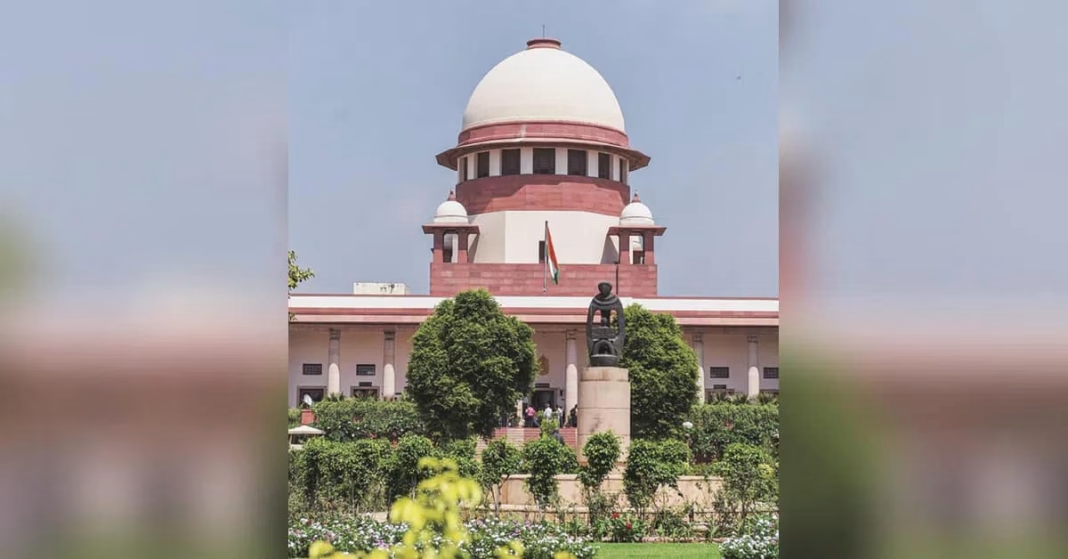

The Supreme Court on Tuesday asked app developers whether their agreements with Google permitted them to opt out of its payment system and use alternative providers, as it heard a challenge to the dismissal of civil suits questioning the tech giant’s Play Store billing policies.
A Bench of Justices P S Narasimha and Alok Aradhe asked the developers, “Can you opt out of the payment system in your contract?”
The proceedings arose from an appeal against a January 19, 2024, Madras High Court judgment that upheld the rejection of suits filed by app developers against Google over its Google Play Billing System, User Choice Billing policy, and associated payment conditions.
The developers have sought declarations that Google’s Payment Terms of Service, Payment Policies and Developer Distribution Agreement are unlawful and unenforceable. Their challenge centres on the definition of an “Authorised Provider” and a clause that they claim impose restrictive conditions and charges contrary to the Payment and Settlement Systems Act, 2007, and Reserve Bank of India guidelines.
Responding to the Bench’s query, counsel for the developers said they could technically choose not to use Google Play Billing and engage other payment processors. He pointed out that before Google’s policy changes, developers could independently enter into arrangements with service providers such as Razorpay and Paytm.
“Well, still now, yes, I can. I can not use the Google Play Billing System. I can use others. But because of the change in authorised provider, they are not forcing me to use either theirs or one of them authorised by them,” counsel said.
Appearing for Google, senior advocate Sajan Poovayya argued that the developers were attempting to convert a competition law dispute into a contractual one.
He said the Competition Commission of India (CCI) had already scrutinised Google’s Play Store billing framework and the service fees imposed on app developers. The regulator had concluded that the charges were neither unreasonable nor excessive, he submitted.
Poovayya said the developers had originally approached civil courts alleging abuse of Google’s dominant market position, a matter within the CCI’s jurisdiction. Their present attempt to frame the grievances as contractual violations, including allegations of unfair terms and breaches of the Payment and Settlement Systems Act, 2007, was an effort to reopen issues already examined by the competition regulator, he argued.
He added that the CCI had exercised its powers under Section 27 of the Competition Act (which empowers the CCI to pass orders) and considered the relevant aspects of Google’s billing arrangements. The developers could not circumvent those findings by bringing substantially similar allegations before civil courts under a different legal framework, he submitted.
The Bench sought to ascertain whether the CCI had specifically examined the contractual provisions now being questioned and whether the disputed fee clause was part of the original agreement. Poovayya maintained that the regulator had already considered the relevant issues.
Resuming arguments, counsel for the developers contended that the Madras High Court had incorrectly held that their civil suits were barred under the Payment and Settlement Systems Act, 2007.
He argued that Section 24 of the legislation did not expressly exclude the jurisdiction of civil courts. Instead, it provided a dispute resolution mechanism for parties participating in payment systems. App developers, he said, were users of such systems rather than system participants.
“We are not even a system participant. We are users of that entire system,” counsel submitted.
He further maintained that the developers’ claims arose independently under contract and civil law. These included allegations of novation, tortious interference with contractual relationships, undue influence, restraint of trade and the validity of contractual conditions under the Indian Contract Act.
According to the developers, Google’s policies curtailed their ability to freely select payment processors by limiting their choice to entities approved by the technology company.
“As an app developer, I could contract any payment processor,” counsel argued.
He also referred to the definition of “Authorised Provider”, which Google incorporated into its contractual framework on October 3, 2022.
Under the provision, an authorised provider is a third party, other than Google, that receives Google’s approval to offer services through which developers can collect payments for products sold to users on Google Play.
After hearing the submissions, the Supreme Court adjourned the matter for further hearing on December 1.