
 Image generated with Ai
Blue Lagoon and more geothermal attractions are putting Iceland’s wellness destinations in the spotlight, creating exciting reasons for travellers to plan their next Nordic holiday. From naturally heated pools to breathtaking volcanic surroundings, these destinations come forward with unforgettable opportunities for relaxation, exploration and rejuvenation. Moreover, Iceland’s wellness destinations offer more than traditional spa experiences, combining spectacular scenery, premium retreats and unique geothermal escapes. Blue Lagoon remains a major attraction, while other destinations add fresh appeal to the country’s tourism landscape. Travel And Tour World urges readers to explore the entire story and discover Iceland’s ultimate geothermal escape.
Iceland Tourism 2026 Expands Its Wellness Appeal With Geothermal Retreats, Luxury Stays and Extraordinary Nature Experiences
Iceland’s wellness tourism offering extends far beyond its famous geothermal lagoons. Travellers can discover naturally heated pools, mineral-rich bathing experiences, volcanic landscapes, peaceful coastal retreats and mountain wellness escapes. The country also offers opportunities to combine relaxation with hiking, glacier exploration, cultural attractions and regional cuisine.
This extended TTW feature examines Iceland’s leading wellness destinations, accommodation options, visitor statistics, regional experiences and a detailed travel itinerary. It also explores how international travellers can combine several regions into one memorable Iceland holiday.
Iceland tourism statistics: Five-year visitor comparison
Iceland’s tourism recovery provides important context for understanding its expanding wellness market. International travel was heavily affected by the pandemic in 2020 and 2021. However, arrivals recovered rapidly after international travel restrictions eased.
Advertisement
Advertisement
The Icelandic Tourist Board reports that Iceland welcomed just under 2.3 million foreign overnight visitors in 2025. Approximately 2.27 million entered through Keflavík International Airport, representing 98.7% of the total. Another 18,100 arrived through Seyðisfjörður by ferry.
International visitor arrivals, 2021–2025
The following annual series uses the published foreign visitor departure counts associated with Iceland’s airport statistics. These are useful for year-on-year comparisons, but should not be confused with accommodation bookings or total airport passenger movements.
Advertisement
Advertisement
| Year | Foreign visitors | Annual change | Tourism situation |
|---|---|---|---|
| 2021 | 687,691 | +42.6% | Early recovery following pandemic restrictions |
| 2022 | 1,696,785 | +146.7% | Strong international reopening |
| 2023 | 2,214,182 | +30.5% | Major return of international tourism |
| 2024 | 2,261,391 | +2.1% | Tourism stabilised near pre-pandemic levels |
| 2025 | 2,267,638 | +0.3% | Visitor numbers remained broadly stable |
Source: Annual foreign visitor series reported through Keflavík Airport statistics and the Icelandic Tourist Board. Figures represent airport-based foreign visitor counts, not all airport passengers.
What the five-year comparison reveals
2021 – Recovery begins: Iceland recorded approximately 688,000 foreign visitors. International travel remained affected by pandemic-related restrictions. Domestic travel played an important role in supporting tourism businesses.
2022 – International tourism returns: Visitor numbers reached approximately 1.70 million. This represented a substantial improvement as international flights and holiday travel resumed. Registered accommodation recorded 8.55 million overnight stays, compared with 5.01 million in 2021. Foreign overnight stays increased by 114%.
2023 – Strong international demand: Approximately 2.21 million foreign visitors arrived through the measured airport channel. Reykjavík, the Golden Circle, South Iceland and the northern geothermal region remained important visitor areas.
2024 – A stable tourism market: Approximately 2.26 million foreign visitors were recorded. Statistics Iceland reported approximately 9.6 million registered overnight stays across accommodation types. Hotels and guesthouses accounted for approximately 6.4 million, while other accommodation contributed around 3.2 million.
2025 – Visitor numbers remain steady: Iceland welcomed just under 2.3 million foreign overnight visitors. The United States accounted for 29.2% of international visitors, followed by the United Kingdom at 10.1% and Germany at 6.7%. Cruise arrivals also remained significant, with approximately 330,000 cruise passengers visiting during the year.
Advertisement
Advertisement
Tourism’s economic contribution
Tourism is also an important contributor to Iceland’s wider economy. OECD’s 2026 tourism assessment reports that the sector directly contributed ISK 400 billion to the economy in 2024. This represented 8.7% of national GDP.
Tourism supported approximately 32,840 jobs, equivalent to 15.8% of the workforce. International travel generated ISK 448 billion in receipts, representing 45.6% of Iceland’s total service exports. OECD
These figures demonstrate why accommodation, wellness facilities, restaurants and guided experiences matter to Iceland’s visitor economy.
Iceland’s leading wellness destinations beyond Reykjavík
Iceland offers a geographically diverse collection of geothermal bathing experiences. The official Visit Iceland directory currently lists 40 wellness and spa businesses across the country. Its geographical breakdown includes 10 listings in North Iceland, eight in Reykjavík, seven in South Iceland, six in West Iceland, four in Reykjanes and three in East Iceland. These are directory listings, not visitor-arrival figures or individual spa attendance statistics.
The following destinations offer different combinations of relaxation, nature, sightseeing and accommodation.
1. Blue Lagoon, Reykjanes Peninsula
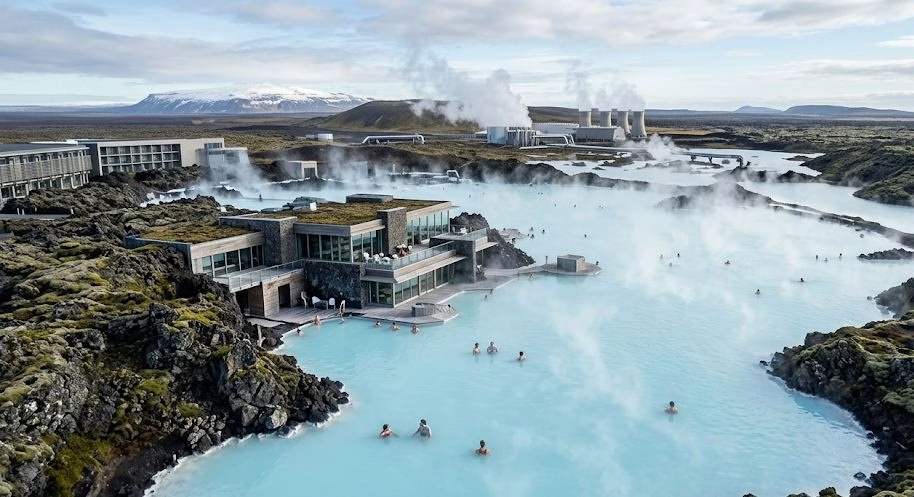
The Blue Lagoon is among Iceland’s best-known geothermal attractions. Located within the Reykjanes Peninsula’s volcanic landscape, it offers warm geothermal bathing surrounded by dark lava formations. Visitors can combine lagoon access with relaxation facilities and nearby exploration of the peninsula. The Retreat at Blue Lagoon adds a premium accommodation option, featuring 60 suites, a private lagoon and a subterranean spa. Its location also makes it practical for travellers arriving through Keflavík Airport. Visitors should check current volcanic and access conditions before travelling.
Advertisement
Advertisement
2. Sky Lagoon, Greater Reykjavík
Sky Lagoon provides a coastal wellness experience close to central Reykjavík. Its ocean-facing infinity pool creates an atmospheric setting for geothermal bathing. The signature seven-step Skjól ritual combines bathing, cold exposure, sauna, steam and relaxation. Visitors can schedule the attraction around a city break without travelling far into the countryside. It is particularly suitable for travellers with limited time who want to combine museums, restaurants and geothermal relaxation.
3. Hvammsvík Hot Springs, Hvalfjörður
Hvammsvík offers eight natural hot springs along the shoreline of Hvalfjörður. The bathing experience changes with the surrounding sea and tidal conditions. Its combination of geothermal water, ocean scenery and mountain views makes it particularly appealing to visitors seeking a quieter setting. Travellers can include it in a West Iceland excursion from Reykjavík. The attraction also suits visitors interested in combining outdoor scenery with a relaxing bathing stop.
4. Laugarvatn Fontana, Golden Circle
Laugarvatn Fontana combines geothermal bathing with traditional Icelandic food experiences. Its facilities include warm pools and natural steam rooms. The attraction is particularly interesting because geothermal heat is used in a local bread-making tradition. Visitors can watch or learn about rye bread prepared using heat from the ground. The destination lies approximately one hour by road from Reykjavík, making it a convenient stop on a Golden Circle journey.
5. Forest Lagoon, Akureyri
Forest Lagoon brings geothermal wellness into a wooded setting overlooking the Eyjafjörður area. Its facilities include two infinity pools, swim-up bars, a cold tub, sauna and bistro. The official Visit Iceland directory describes a 1,300-square-metre complex with capacity for up to 200 visitors at one time. Its location near Akureyri makes it a practical addition to northern Iceland itineraries. Visitors can combine bathing with regional sightseeing, whale-watching excursions and mountain scenery.
6. Earth Lagoon Mývatn, Lake Mývatn
Formerly known as Mývatn Nature Baths, Earth Lagoon Mývatn is an important wellness stop in North Iceland. The geothermal water is drawn from depths reaching approximately 2,500 metres. Its mineral content includes silicates and geothermal microorganisms. The attraction has welcomed visitors since 2004 and introduced upgraded facilities in 2026. It is approximately 105 kilometres from Akureyri and provides an excellent bathing stop after exploring the volcanic landscapes surrounding Lake Mývatn.
7. GeoSea Geothermal Sea Baths, Húsavík
GeoSea offers a distinctive bathing experience using naturally heated seawater. The pools overlook the North Atlantic and the coastal surroundings of Húsavík. Unlike conventional freshwater geothermal pools, the attraction uses heated seawater, creating a different bathing environment. Visitors can combine their visit with Húsavík’s whale-watching opportunities, harbour attractions and northern coastal scenery. It is an excellent choice for travellers exploring the Diamond Circle region.
Advertisement
Advertisement
8. Krauma Geothermal Baths, Reykholt
Krauma provides a geothermal bathing experience near Deildartunguhver, one of Europe’s most powerful hot springs. The spring water emerges at approximately 100°C and is cooled before entering the bathing facilities. Visitors can enjoy several warm pools, cold-water bathing, relaxation areas and sauna facilities. The destination works particularly well with a West Iceland itinerary covering Reykholt, waterfalls and historic attractions.
9. Secret Lagoon, Flúðir
Secret Lagoon is one of the most traditional geothermal bathing destinations in Iceland. Located in Flúðir, it offers visitors a naturally heated pool surrounded by geothermal activity. Small hot springs and bubbling ground features create a distinctive atmosphere. Travellers can combine the visit with the Golden Circle, nearby countryside and local restaurants. It is particularly suitable for visitors seeking a less elaborate bathing experience.
10. Vök Baths, East Iceland
Vök Baths offers a lakeside geothermal experience near Egilsstaðir. Its floating pools extend onto Lake Urriðavatn, creating a distinctive setting for visitors exploring eastern Iceland. Travellers can enjoy geothermal bathing while discovering the surrounding lake and mountain scenery. The attraction works well with journeys through the Eastfjords, Seyðisfjörður and nearby villages. It is an excellent wellness stop for visitors travelling around Iceland’s eastern region.
11. Laugarás Lagoon, South Iceland
Laugarás Lagoon adds another wellness option to the popular Golden Circle region. Located beside the Hvítá River, it offers a setting that combines geothermal bathing with countryside views. Travellers can include it in a sightseeing route covering major South Iceland attractions. Its position makes it particularly useful for visitors who want to divide a long sightseeing day with a relaxing stop.
12. Guðlaug Baths, Akranes
Guðlaug Baths provides a coastal bathing experience at Langisandur Beach in Akranes. Visitors can enjoy the nearby beach before relaxing in the geothermal pools. The attraction offers an appealing combination of seaside scenery and warm water. It is suitable for a shorter excursion from Reykjavík and can be combined with visits to West Iceland’s coastal communities.
13. Nauthólsvík Geothermal Beach, Reykjavík
Nauthólsvík is an unusual urban wellness attraction. It combines a sandy beach with geothermal heating facilities and bathing opportunities. Visitors can experience Iceland’s coastal environment without travelling far from the capital’s centre. The official tourism directory reports an estimated 530,000 annual guests for the attraction. This figure is an estimate rather than a recently audited annual attendance series. Visit Iceland
Advertisement
Advertisement
14. Hreppslaug, West Iceland
Hreppslaug is a historic geothermal bathing location dating from 1928. It is supplied by naturally warm water from nearby hillside springs. Facilities include two hot tubs, a sauna and outdoor shower. Its traditional character makes it attractive to visitors interested in local bathing culture. Travellers can combine the visit with a wider exploration of the Skorradalur countryside. Visit Iceland
Comparative guide to Iceland’s wellness destinations
| Wellness destination | Region | Main experience | Best suited to |
|---|---|---|---|
| Blue Lagoon | Reykjanes | Geothermal lagoon and luxury spa | Premium relaxation |
| Sky Lagoon | Reykjavík | Ocean-facing infinity pool | City-break visitors |
| Hvammsvík | West Iceland | Eight natural hot springs | Coastal wellness |
| Fontana | South Iceland | Steam rooms and geothermal bakery | Food and culture |
| Forest Lagoon | North Iceland | Infinity pools and sauna | Nature and relaxation |
| Earth Lagoon | North Iceland | Mineral-rich geothermal water | Volcanic landscapes |
| GeoSea | North Iceland | Heated seawater pools | Coastal exploration |
| Krauma | West Iceland | Geothermal bathing near hot springs | Countryside trips |
| Secret Lagoon | South Iceland | Traditional geothermal bathing | Golden Circle visitors |
| Vök Baths | East Iceland | Floating lake pools | Eastfjords travellers |
| Laugarás Lagoon | South Iceland | Riverside geothermal bathing | Golden Circle visitors |
| Guðlaug Baths | West Iceland | Beach and hot pools | Coastal day trips |
| Nauthólsvík | Reykjavík | Geothermal beach | Urban recreation |
| Hreppslaug | West Iceland | Historic natural bathing | Traditional experiences |
Source: Official Visit Iceland wellness and geothermal bathing directory. Individual visitor totals, prices and capacity figures are not consistently published for every attraction. Visit Iceland+1
What makes Iceland particularly attractive for wellness tourism?
Iceland’s natural environment provides a distinctive foundation for wellness holidays. Geothermal energy heats bathing facilities across the country. Mountain scenery, coastal landscapes and volcanic surroundings also create opportunities for outdoor recreation.
The official Visit Iceland wellness programme highlights 14 geothermal wellness locations and promotes swimming pool culture, hiking and spa experiences. Its tourism guidance also identifies the importance of combining relaxation with nature-based activities. Visit Iceland
Travellers can organise their holidays around several themes:
- Geothermal relaxation: Blue Lagoon, Sky Lagoon, Earth Lagoon and Forest Lagoon.
- Nature-based wellness: Mountain walks, coastal exploration and countryside accommodation.
- Cultural wellness: Traditional public swimming pools, local food and regional communities.
- Active wellness: Hiking, cycling, guided glacier walks and outdoor excursions.
- Luxury wellness: Premium spa hotels, private bathing areas and fine dining.
This combination allows visitors to create itineraries that balance physical activity with periods of relaxation.
Advertisement
Advertisement
What should travellers eat during an Iceland wellness holiday?
Food is another important part of discovering Iceland. Travellers can explore traditional dishes and regional ingredients while visiting geothermal destinations.
| Food to try | Description | Where to experience it |
|---|---|---|
| Icelandic lamb soup | Warm soup prepared with lamb and vegetables | Reykjavík and countryside restaurants |
| Arctic char | Locally sourced freshwater fish | Lake Mývatn and northern restaurants |
| Skyr | Traditional Icelandic cultured dairy food | Supermarkets, cafés and breakfast menus |
| Geothermal rye bread | Dense bread traditionally baked using geothermal heat | Laugarvatn Fontana |
| Fresh seafood | Fish and seafood prepared in different regional styles | Reykjavík and coastal towns |
| Smoked trout | Locally prepared fish, often served with bread | Laugarvatn and Lake Mývatn |
| Icelandic fish soup | Creamy or broth-based soup with seafood | Reykjavík and regional restaurants |
Where to eat in Iceland
Reykjavík: Visitors can explore the capital’s restaurants, cafés, bakeries and seafood establishments. It is the easiest location for travellers seeking varied dining choices.
Laugarvatn: Fontana’s Local Kitchen offers meals, soup, freshly prepared rye bread and smoked trout. Its geothermal bakery experience also introduces visitors to traditional food preparation. Visit Iceland
Akureyri: Northern Iceland’s largest town provides restaurants and cafés for visitors exploring the surrounding fjords.
Mývatn: Travellers can find regional dining options while exploring volcanic landscapes and geothermal attractions.
Húsavík: Coastal restaurants provide opportunities to enjoy seafood while visiting the harbour and whale-watching area.
Advertisement
Advertisement
5. Where should travellers stay during an Iceland wellness holiday?
Accommodation should depend on the locations included in the itinerary. Travellers should avoid booking every night in Reykjavík if they intend to explore northern and eastern Iceland.
| Base | Recommended accommodation approach | Nearby wellness attractions |
|---|---|---|
| Reykjavík | City hotels and serviced accommodation | Sky Lagoon, Nauthólsvík |
| Reykjanes | Airport hotels and luxury spa accommodation | Blue Lagoon |
| Laugarvatn and Flúðir | Guesthouses and countryside hotels | Fontana, Secret Lagoon |
| West Iceland | Rural hotels and guesthouses | Krauma, Hvammsvík, Guðlaug |
| Akureyri | City hotels and countryside stays | Forest Lagoon |
| Mývatn | Regional hotels and guesthouses | Earth Lagoon |
| Egilsstaðir | Hotels and countryside accommodation | Vök Baths |
For premium travellers, the Retreat at Blue Lagoon provides an integrated hotel and spa experience. Those preferring regional exploration can choose accommodation in Akureyri, Mývatn or Egilsstaðir.
6. Detailed visitor trends, seasonal demand and international markets
The monthly distribution of visitors provides useful information for travellers deciding when to visit Iceland.
According to the Icelandic Tourist Board’s November 2025 statistical report, approximately 2,296,836 international visitors departed through Keflavík Airport during November 2024–October 2025. The average stay was 7.1 nights. November 2025
Monthly visitor distribution
| Month | International departures |
|---|---|
| November 2024 | 162,000 |
| December 2024 | 142,000 |
| January 2025 | 121,000 |
| February 2025 | 147,000 |
| March 2025 | 148,000 |
| April 2025 | 146,000 |
| May 2025 | 159,000 |
| June 2025 | 234,000 |
| July 2025 | 302,000 |
| August 2025 | 311,000 |
| September 2025 | 224,000 |
| October 2025 | 200,000 |
| Total | 2,296,836 |
Monthly figures are rounded to the nearest thousand. The total is the reported figure. Source: Icelandic Tourist Board, November 2025. November 2025
August recorded the highest number of international departures, followed by July. June and September also recorded substantial visitor activity.
Advertisement
Advertisement
For wellness travellers, these figures indicate the importance of booking popular attractions and accommodation in advance during summer.
Winter offers a different experience. Visitors can enjoy geothermal pools surrounded by cold landscapes, shorter sightseeing days and opportunities to search for the Northern Lights.
International visitor markets
| Source market | Share of international visitors | Approximate visitor profile |
|---|---|---|
| United States | 29.2% | Largest international market |
| United Kingdom | 10.1% | Second-largest market |
| Germany | 6.7% | Third-largest market |
| Other markets | 54.0% | Visitors from other international markets |
OECD’s 2026 assessment of Iceland’s 2025 tourism market. Percentages are rounded.
The international visitor mix creates opportunities for Iceland’s wellness operators to serve different travel preferences. Some visitors prefer luxury spa holidays, while others combine geothermal bathing with outdoor exploration and cultural activities.
Visitor purpose and average stay
The Icelandic Tourist Board’s November 2025 report also provides a useful breakdown of visitor motivations and travel duration.
| Purpose of visit | Share | Estimated visitors |
|---|---|---|
| Holiday | 92.4% | 2,112,277 |
| Visiting friends and relatives | 2.3% | 52,827 |
| Health-related, education and similar | 2.2% | 50,530 |
| Business | 1.5% | 34,453 |
| Other purposes | 1.6% | 36,749 |
| Total | 100% | 2,286,836 |
Period: November 2024–October 2025. The published category estimates are based on the airport visitor statistics. The health-related category should not be interpreted as a dedicated wellness-tourism count. November 2025
Advertisement
Advertisement
The average international visitor stayed for 7.1 nights during this reporting period.
The length of stay varied by nationality:
| Country | Average nights |
|---|---|
| United States | 6.2 |
| United Kingdom | 5.0 |
| Germany | 9.8 |
| China | 6.1 |
| France | 9.2 |
| Italy | 7.7 |
| Poland | 7.3 |
| Canada | 6.6 |
| Spain | 8.0 |
| Netherlands | 8.1 |
These figures suggest that a week-long itinerary is a practical starting point for international visitors. Travellers staying longer can explore the northern and eastern regions without rushing between attractions. November 2025
Seven-day Iceland wellness and sightseeing itinerary
A seven-day journey can combine geothermal bathing, cultural attractions, regional food and nature-based activities. The following itinerary uses Reykjavík as the starting point and gradually introduces visitors to South Iceland and its countryside.
| Day | Destination | Main activities | Wellness experience | Overnight base |
|---|---|---|---|---|
| Day 1 | Reykjavík | City centre, Harpa, museums and harbour | Sky Lagoon | Reykjavík |
| Day 2 | Golden Circle | Þingvellir, Geysir and Gullfoss | Laugarvatn Fontana | Laugarvatn |
| Day 3 | Flúðir and South Iceland | Countryside, waterfalls and local food | Secret Lagoon | Flúðir |
| Day 4 | South Coast | Seljalandsfoss, Skógafoss and coastal scenery | Relaxation at countryside accommodation | South Iceland |
| Day 5 | Reykjanes | Coastal landscapes and volcanic scenery | Blue Lagoon, subject to access conditions | Reykjanes |
| Day 6 | Reykjavík | Shopping, restaurants and cultural attractions | Nauthólsvík or another city pool | Reykjavík |
| Day 7 | Reykjavík and departure | Final sightseeing and airport transfer | Optional short bathing session | Departure |
Day 1: Discover Reykjavík
Begin the holiday with Reykjavík’s cultural attractions. Visit Harpa Concert Hall, explore the waterfront and discover the city’s museums.
Spend the afternoon at Sky Lagoon. Its coastal location provides a relaxing introduction to Iceland’s geothermal bathing culture.
Advertisement
Advertisement
For dinner, explore the capital’s restaurants and try local seafood, lamb soup or traditional fish dishes.
Day 2: Explore the Golden Circle
Travel towards Þingvellir National Park. Discover its geological significance and historic landscapes.
Continue to the Geysir geothermal area and Gullfoss waterfall. These attractions provide an excellent introduction to Iceland’s natural environment.
Finish the day at Laugarvatn Fontana. Explore the geothermal steam rooms and traditional bread-making experience.
Day 3: Discover Flúðir
Travel to Flúðir and visit Secret Lagoon. Enjoy traditional geothermal bathing and explore the surrounding countryside.
Spend time discovering local farms and regional food. The area offers a quieter experience compared with the busiest sightseeing locations.
Advertisement
Advertisement
Day 4: Explore the South Coast
Visit Seljalandsfoss and Skógafoss. Continue towards the southern coastal landscape and enjoy photography opportunities.
Choose a countryside guesthouse or hotel for the night. Travellers should avoid overloading the itinerary with long drives and too many activities.
Day 5: Experience Reykjanes
Return towards the Reykjanes Peninsula. Explore its volcanic landscapes and coastal scenery.
The Blue Lagoon can be included if operating conditions and official access guidance permit. Travellers should check local volcanic activity information before visiting the region.
Day 6: Enjoy Reykjavík’s food and wellness culture
Return to the capital for a slower day. Visit cafés, local food markets and cultural attractions.
Nauthólsvík provides an alternative coastal experience. Travellers can also visit a traditional municipal swimming pool.
Advertisement
Advertisement
Day 7: Final sightseeing and departure
Enjoy breakfast and explore any remaining city attractions. Allow enough time for the journey to Keflavík Airport.
Travellers should leave additional time for road conditions, rental-car returns and airport procedures.
How to plan a longer wellness holiday across Iceland
Visitors staying for 10–14 days can expand the itinerary towards North Iceland and East Iceland.
| Additional region | Suggested experiences | Recommended wellness stop |
|---|---|---|
| Akureyri | Botanical Garden, harbour and Eyjafjörður | Forest Lagoon |
| Lake Mývatn | Volcanic formations, geothermal landscapes and nature trails | Earth Lagoon |
| Húsavík | Whale-watching and harbour exploration | GeoSea |
| Egilsstaðir | Eastfjords, lakes and countryside | Vök Baths |
| West Iceland | Waterfalls, historic sites and countryside | Krauma or Hvammsvík |
| Akranes | Coastal walks and local attractions | Guðlaug Baths |
This extended route gives visitors a broader understanding of Iceland’s geography. It also creates opportunities to experience different styles of geothermal bathing.
Practical travel information for international visitors
Best time to visit: June to August suits travellers seeking longer daylight hours and extensive road trips. September to March offers opportunities for winter scenery and Northern Lights viewing, subject to weather and cloud conditions.
Transport: Rental cars offer flexibility for regional journeys. Travellers without driving experience in challenging weather can choose guided excursions and organised transfers.
Advertisement
Advertisement
Accommodation: Book regional stays in advance, particularly during July and August. Check cancellation conditions when planning winter travel.
Clothing: Pack waterproof outerwear, warm layers, sturdy walking shoes and suitable swimming clothing. Weather can change quickly.
Wellness reservations: Check opening hours, admission requirements and treatment availability directly with each attraction. Advance reservations are advisable for popular geothermal facilities.
Road safety: Check official road and weather updates before driving. Safetravel Iceland warns that wind, rain and cold conditions can change rapidly. Its travel guidance recommends adapting or cancelling outdoor plans when conditions become unsafe.
Iceland’s wellness tourism outlook for 2026 and beyond
Iceland’s tourism offering is becoming more diverse through geothermal facilities, premium accommodation, cultural attractions and outdoor recreation.
The country’s approximately 2.3 million international visitors in 2025 demonstrate the scale of its international tourism market. Its 14 highlighted geothermal wellness locations and broader official wellness directory also demonstrate the variety of experiences available across different regions.
Advertisement
Advertisement
The most important opportunity for travellers is the ability to combine different holiday experiences within one destination. Visitors can enjoy geothermal relaxation, explore volcanic landscapes, discover Icelandic food and experience coastal communities.
For international tourists planning a Nordic holiday, Iceland offers more than spectacular scenery. Its combination of wellness, accommodation, regional cuisine and guided adventures makes it an attractive destination for a complete travel experience.
Conclusion
Iceland is redefining its appeal as a wellness destination, with Blue Lagoon and more geothermal attractions creating exciting opportunities for international travellers. From Sky Lagoon and Forest Lagoon to Earth Lagoon Mývatn, each destination offers a distinctive way to experience the country’s natural beauty and relaxation culture. Moreover, luxury accommodation, regional cuisine, outdoor adventures and breathtaking landscapes make Iceland an appealing choice for year-round holidays. Whether visitors seek peaceful retreats or adventurous escapes, Iceland’s wellness destinations promise memorable experiences. As geothermal tourism continues to attract global attention, Iceland stands ready to welcome travellers seeking the ultimate Nordic getaway.