
The recent expansions of Brazil UNESCO World Heritage Sites represent an extraordinary achievement in global conservation and cultural recognition. By successfully securing inscriptions for Lençóis Maranhenses, Cavernas do Peruaçu, and the Amazonia Theaters across three consecutive years, the Brazilian nation has reinforced its global position as a premier destination for sustainable tourism. These vital milestones guarantee stringent environmental protections, unlock vital economic investments, and empower indigenous local communities across the country. Ultimately, the meticulous stewardship of these twenty-six protected landmarks ensures that South America’s most unparalleled ecological wonders and architectural masterpieces will continue to educate, inspire, and captivate future generations.
The Strategic Expansion of Brazil UNESCO World Heritage Sites
As of October 2026, the South American continent has witnessed an unprecedented era of cultural and environmental preservation, led predominantly by Brazil’s rigorous heritage initiatives. The nation has successfully achieved three major inscriptions across three consecutive UNESCO World Heritage Committee sessions: the 46th session in New Delhi (2024), the 47th session in Paris (2025), and the 48th session in Busan (2026). This spectacular trifecta has elevated the total number of Brazil UNESCO World Heritage Sites to twenty-six, cementing the country’s status as a global leader in both ecological conservation and historical preservation.
Advertisement
Advertisement
These successful designations are not merely symbolic. They represent the culmination of decades of meticulous bureaucratic, scientific, and diplomatic efforts orchestrated by Brazil’s Institute of National Historical and Artistic Heritage (IPHAN) and the Chico Mendes Institute for Biodiversity Conservation (ICMBio). By aligning national preservation goals with international frameworks established by the United Nations Educational, Scientific and Cultural Organization (UNESCO), Brazil has engineered a robust mechanism for safeguarding its most vulnerable and valuable assets. This strategic expansion is reshaping the national tourism landscape, driving sustainable economic development, and providing an unparalleled blueprint for heritage management in the Global South.
Amazonia Theaters: The 2026 Cultural Triumph
In July 2026, during the 48th World Heritage Committee meeting in Busan, South Korea, UNESCO officially inscribed the Amazonia Theaters onto the World Heritage List. This serial property, comprising the Teatro Amazonas in Manaus (inaugurated in 1896) and the Theatro da Paz in Belém (inaugurated in 1878 and 1889), stands as a monumental testament to the architectural and economic phenomenon known as the Amazonian rubber boom.
Advertisement
Advertisement
Architecture and the Golden Rubber Era
During the late 19th and early 20th centuries, the extraction of latex from the Hevea brasiliensis tree generated unprecedented wealth in the Amazon basin. This immense capital funded a rapid, large-scale urban development programme aimed at modernising the region and integrating it into the global commercial matrix. The Amazonia Theaters embody this era perfectly, serving as symbols of political and urban ambition.
Architecturally, the theatres represent a unique amalgamation of European cosmopolitan design and local Amazonian contexts. Builders imported vast quantities of materials from Europe—including Italian marble, Scottish ironwork, and French glass—and seamlessly integrated them with native Amazonian woods and regional motifs. The result is an opulent aesthetic that reflects the extraordinary prosperity of the rubber era while remaining distinctly rooted in the South American rainforest.
Advertisement
Advertisement
Official UNESCO Criteria and Preservation
The 2026 inscription of the Amazonia Theaters was granted under UNESCO cultural criteria (ii) and (iv), recognising the sites as outstanding examples of a specific historical architectural typology that illustrates a significant stage in human history. The officially demarcated property spans 8.84 hectares, fortified by a rigorously protected buffer zone of 153.76 hectares. IPHAN has implemented strict regulatory frameworks within these zones to prevent unsympathetic urban development from encroaching upon the historic sightlines of both Belém and Manaus. According to official statements from Brazil’s Ministry of Tourism, this prestigious inclusion on the Brazil UNESCO World Heritage Sites list will dramatically enhance international tourism potential while affording the theatres the highest level of legal protection against infrastructural threats.
Cavernas do Peruaçu National Park: The 2025 Natural Inscription
Preceding the cultural triumph of the Amazonia Theaters was the remarkable natural inscription of Cavernas do Peruaçu National Park during the 47th UNESCO session in Paris in July 2025. Situated in the state of Minas Gerais, this site is internationally revered for possessing some of the most extraordinary documented examples of fluvial karstification on the planet.
Advertisement
Advertisement
Geological Marvels and Subterranean Ecosystems
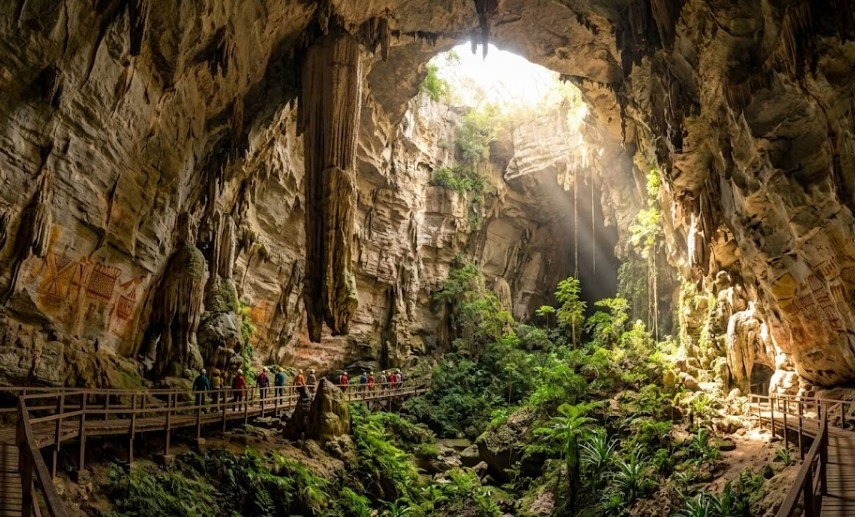
Spanning over 38,000 hectares, the park lies precisely at the ecological transition zone between the Cerrado (tropical savanna) and the Caatinga (semi-arid scrub forest). The defining geological feature of the region is the Peruaçu River, which has relentlessly carved a magnificent underground path through ancient limestone over millions of years. At six major points along the river’s subterranean course, the limestone roof has dramatically collapsed, exposing massive cave passages and enormous dolines (sinkholes).
The scale of these caverns is staggering. The Gruta do Janelão, the park’s most famous cave, boasts chambers reaching a hundred metres in height and sixty metres in width. Within this colossal earth-cathedral hangs the “Perna da Bailarina” (Dancer’s Leg), a massive speleothem measuring twenty-eight metres from ceiling to floor, widely considered by geologists and speleologists to be the largest stalactite in the world.
Prehistoric Rock Art and Indigenous Heritage
Beyond its geological supremacy, Cavernas do Peruaçu holds profound archaeological and anthropological significance. For at least twelve thousand years, human populations have sought shelter, performed rituals, and buried their dead within these subterranean chambers. The walls of the caves are adorned with thousands of prehistoric rock art paintings. These vibrant depictions, painted with naturally sourced pigments, feature complex geometric patterns, biomorphs, anthropomorphs, and unique regional motifs known as “cartuchos”.
The region is also deeply connected to the contemporary Xakriabá indigenous people, whose ancestral lands border the park. The name Peruaçu itself is derived from indigenous terminology, roughly translating to “great fissure” or “large hole,” reflecting a millennia-old understanding of the landscape’s immense subterranean voids. UNESCO’s 2025 designation protects both the physical environment and the invaluable archaeological record, ensuring that future excavations—which currently represent only a fraction of the park’s estimated 180 caves—can be conducted with the utmost scientific rigour.
Advertisement
Advertisement
Lençóis Maranhenses National Park: The 2024 Hydrological Wonder
The foundation of this three-year streak of UNESCO endorsements was laid in July 2024 at the 46th session in New Delhi, where Lençóis Maranhenses National Park was officially added to the list of Brazil UNESCO World Heritage Sites. Located in the northeastern state of Maranhão, this 156,562-hectare property presents a landscape of unique beauty rarely found anywhere else in the world.
The Interplay of Aeolian Dynamics and Freshwater Lagoons
Lençóis Maranhenses is characterised by a vast expanse of brilliant white sand dunes that stretch along 80 kilometres of coastline and reach up to 20 kilometres inland. The region’s geomorphology is dictated by complex aeolian (wind-driven) processes acting upon the sediments of the Barreirinhas Basin. Strong coastal winds continuously erode sand deposited by ocean tides, blowing it inland to form massive winding chains of barchan dunes that can reach heights of 30 metres. Astonishingly, these dynamic dunes are in a state of constant migration, advancing inland at rates of 4 to 25 metres per year.
What truly elevates Lençóis Maranhenses to Outstanding Universal Value is its extraordinary hydrological cycle. During the intense regional rainy season, the water table rises, and millions of litres of freshwater become trapped in the valleys between the impermeable dune chains. This process creates thousands of temporary and perennial crystal-clear lagoons, their waters tinted vibrant hues of blue and green by naturally occurring cyanobacteria and algae. Because these lagoons have no inlet or outlet and are fed exclusively by rainwater, their shapes and locations shift annually alongside the migrating dunes, resulting in a constantly transforming “watery desert” landscape.
Biodiversity and ICMBio Conservation Efforts
Despite its seemingly barren appearance during the dry season, the park is a thriving ecological sanctuary. Official surveys conducted by ICMBio indicate that the park shelters more than 133 plant species and 112 bird species, many of which have highly specialised adaptations to survive the shifting sands and fluctuating water levels.
To protect this fragile ecosystem, UNESCO and the Brazilian government established a massive buffer zone of 268,231 hectares surrounding the core property. This zone serves as a critical ecological barrier between the pristine natural habitats and encroaching urbanised areas. ICMBio maintains strict visitor regulations, managing access through designated gateway towns such as Barreirinhas, Santo Amaro, and Atins to prevent environmental degradation while accommodating growing tourist interest.
Government Announcements and Policy Implications
The rapid expansion of Brazil UNESCO World Heritage Sites between 2024 and 2026 has prompted sweeping updates to the nation’s environmental and heritage policy frameworks. Official government announcements from the Ministry of Environment and Climate Change, operating in tandem with the Ministry of Culture, have outlined comprehensive strategies to ensure these newly minted sites meet UNESCO’s stringent management requirements.
Advertisement
Advertisement
Upgraded Preservation Mandates by IPHAN and ICMBio
Following the 2026 inscription of the Amazonia Theaters, IPHAN announced a newly fortified Urban Heritage Preservation Protocol for both Manaus and Belém. This protocol mandates rigorous environmental impact assessments for any commercial or residential developments proposed within the 153.76-hectare buffer zones. The policy is explicitly designed to prevent the visual and structural degradation of these historic city centres, preserving the authentic 19th-century context of the rubber boom architecture.
Similarly, ICMBio has overhauled its management directives for both Lençóis Maranhenses and Cavernas do Peruaçu. In Minas Gerais, park authorities have instituted advanced fire-prevention protocols. The Cerrado-Caatinga transition zone is highly susceptible to wildfires, often exacerbated by traditional agricultural burning practices on neighbouring properties. The new management framework includes enhanced satellite monitoring, the establishment of dedicated rapid-response fire brigades, and extensive community outreach programmes aimed at educating local farmers on sustainable agricultural practices.
Sustainable Funding and Infrastructure Development
To financially support these upgraded mandates, the Brazilian federal government has increased the budgetary allocations for heritage conservation. A significant portion of this funding is directed towards improving sustainable infrastructure. In Cavernas do Peruaçu, investments have funded elevated walkways and strictly demarcated trails designed to prevent soil compaction and protect the invaluable 10,000-year-old rock art from human contact. Visitors are explicitly prohibited from touching cave formations, as human skin oils cause irreversible cumulative damage to geological and painted surfaces. These infrastructural upgrades ensure that tourism remains an educational tool rather than a destructive force.
Tourism and Economic Implications for South America
The official recognition of three new Brazil UNESCO World Heritage Sites has acted as a catalyst for a robust national tourism boom, driving significant economic implications for both local municipalities and the broader South American travel industry. The UNESCO brand carries immense global prestige, functioning as a powerful magnet for high-yield, environmentally conscious international travellers.
Statistical Growth in International Arrivals
Official statistics published by Brazil’s Ministry of Tourism (Embratur) highlight a dramatic surge in visitor numbers following these inscriptions. Lençóis Maranhenses, for instance, welcomed over 440,000 visitors in the year 2024 alone. The subsequent inscriptions in 2025 and 2026 have amplified this trend, creating a heavily marketed “Heritage Triangle” that encourages extended itineraries across the northern, northeastern, and southeastern regions of Brazil.
This influx of tourists is substantially boosting foreign exchange earnings. International visitors drawn to UNESCO sites typically exhibit longer dwell times and higher daily expenditures compared to traditional leisure tourists. They require specialised services, including highly trained ecological guides, specialised 4×4 transport for navigating dunes, and culturally immersive accommodation, all of which inject vital capital directly into local economies.
Advertisement
Advertisement
Job Creation and Local Community Integration
The economic benefits of heritage tourism extend far beyond gross revenue; they are fundamentally restructuring local employment paradigms. The Ministry of Tourism has prioritised the integration of local communities into the tourism value chain. In the gateway towns surrounding Lençóis Maranhenses and Cavernas do Peruaçu, government-sponsored training initiatives have certified hundreds of local residents as official eco-guides, hospitality managers, and conservation wardens.
This localisation of the tourism workforce ensures that the economic dividends of UNESCO status remain within the community, incentivising local populations to become active stakeholders in the preservation of their natural and cultural surroundings. Furthermore, the promotion of indigenous cultural heritage, particularly in relation to the Xakriabá people near Peruaçu and the riverine communities of the Amazon, has facilitated the growth of sustainable artisanal economies, allowing these groups to share their heritage on their own terms.
Official Statements and Industry Impact
The recent achievements at the World Heritage Committee sessions have been met with widespread acclaim from both domestic and international authorities. These endorsements underscore the geopolitical and diplomatic significance of heritage conservation in the 21st century.
Endorsements from the Ministry of Tourism
Following the 2026 announcement in Busan, Brazil’s Minister of Tourism released an official statement characterising the inscription of the Amazonia Theaters as a “triumph of Brazilian cultural diplomacy.” The Ministry emphasised that the continued expansion of Brazil UNESCO World Heritage Sites aligns perfectly with the nation’s long-term macroeconomic strategy to transition away from extractive industries and towards a sustainable, service-based green economy.
The Embratur agency has subsequently launched a massive international marketing campaign targeting European, North American, and Asian markets. This campaign prominently features the newly inscribed sites, branding Brazil not just as a destination for sun and beaches, but as a sophisticated custodian of global heritage.
Aligning with UN Tourism and Sustainable Development Goals
The management frameworks implemented across these three new sites are strictly aligned with the guidelines established by UN Tourism (formerly UNWTO) and the broader United Nations Sustainable Development Goals (SDGs). Specifically, these initiatives address SDG 8 (Decent Work and Economic Growth), SDG 11 (Sustainable Cities and Communities), and SDG 15 (Life on Land).
Advertisement
Advertisement
International organisations, including the World Bank and the Inter-American Development Bank (IDB), have monitored Brazil’s heritage management strategies closely. The successful implementation of buffer zones, carrying capacity limits, and community-based tourism models in sites like Lençóis and Peruaçu are now being cited as official best-practice case studies for other developing nations seeking to balance economic growth with environmental preservation.
Future Outlook for Brazil’s Cultural and Natural Legacy
Looking ahead, the future of Brazil UNESCO World Heritage Sites is characterised by both ambitious expansion and profound vigilance. While the recent triple-victory represents a high-water mark for the nation’s cultural diplomacy, government agencies remain acutely aware of the existential threats facing these irreplaceable landmarks.
Navigating Climate Change Threats
The most pressing challenge to Brazil’s natural heritage is the accelerating reality of global climate change. Lençóis Maranhenses, reliant entirely on seasonal rainfall to feed its famous lagoons, is highly vulnerable to shifting precipitation patterns and prolonged droughts. Similarly, the Amazon basin, home to the newly inscribed theatres, is facing unprecedented threats from extreme weather events, deforestation-induced aridification, and rising temperatures.
To combat these threats, ICMBio and the Ministry of Environment are integrating advanced climate resilience modelling into their park management plans. This includes continuous hydrological monitoring in Maranhão and structural vulnerability assessments for the historic masonry of the Amazonia Theaters. The Brazilian government is leveraging its UNESCO status to secure international climate finance, ensuring that adequate resources are available for rapid adaptation and mitigation strategies.
Expanding the Tentative List for Future Years
Buoyed by the successes of 2024, 2025, and 2026, IPHAN and the Ministry of Culture are actively refining Brazil’s Tentative List for future UNESCO submissions. Official government communications suggest upcoming nominations will increasingly focus on sites that highlight Afro-Brazilian heritage, complex marine ecosystems, and modernist architectural achievements.
The rigorous preparation required for a successful UNESCO dossier often takes up to a decade. The recent string of inscriptions proves that Brazil has perfected this complex bureaucratic process, demonstrating a masterful ability to articulate the Outstanding Universal Value of its national treasures to the global scientific community. As the nation moves towards the latter half of the 2020s, its commitment to preserving and promoting the Brazil UNESCO World Heritage Sites stands as a beacon of hope for global conservation, ensuring that the spectacular intersection of human history and natural wonder remains intact for generations to come.