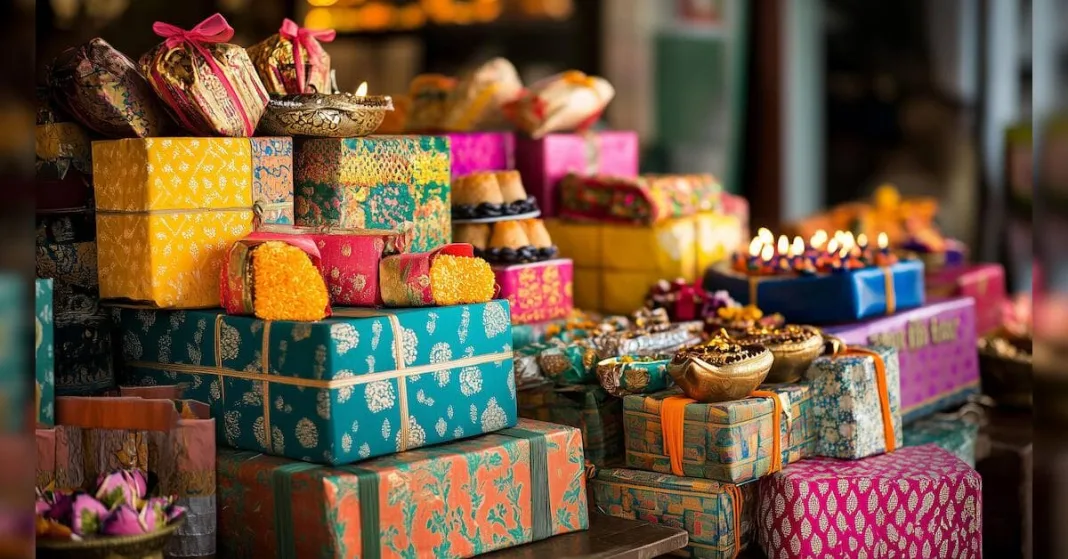

What happens to a gift after the occasion is over? The flowers eventually wilt, the chocolates disappear, and the festive hampers are emptied. But what about the expensive watch that is never worn, the painting that doesn’t quite fit the living room, or the fifth dinner set stashed away, unlikely to ever adorn a table?
Some gifts are treasured, others are tucked away in cupboards, and many are quietly passed on. Yet a gift need not reach the end of its useful life simply because its first recipient has little use for it. It could be resold, exchanged, donated, or even become an asset.
A rather unusual example of this was on display recently at the National Gallery of Modern Art (NGMA), New Delhi, where Union Culture Minister Gajendra Singh Shekhawat inaugurated an exhibition showcasing mementos presented to Prime Minister Narendra Modi. Paintings, sculptures, handicrafts and other objects are being offered through the PM Mementos E-Auction 2026, with the proceeds going towards the Namami Gange programme.
“Even gifts can be put to meaningful use,” said Shekhawat at the inauguration, explaining the larger purpose behind the initiative.
There is something compelling about this journey. An object given as a token of appreciation finds a new owner, acquires a new purpose and, in the process, contributes to a public cause. Its value no longer lies simply in what it cost or who received it, but in what it can go on to achieve.
And that brings us back to our own gifting habits. As India enters the festive season, with Diwali celebrations and weddings around the corner, we will spend considerable time and money choosing, wrapping and exchanging presents. But how much thought do we give to what happens after the gifts have been opened?
A gift’s ‘second innings home’
India’s festive shopping boom is creating another market, one that begins after gifts have changed hands. Unwanted gadgets, duplicate presents, luxury accessories and household items are increasingly finding their way into resale, exchange, and refurbishment channels.
Karan Chechi, founder and chief executive officer (CEO) of TechSci Research, a Delhi-based market research and consulting agency, estimates festive e-commerce sales at ₹1.55 trillio–1.60 trillion this season, compared with ₹1.24 trillion last year. Separately, India’s recommerce market, which includes resale of pre-owned goods beyond gifting, is estimated at $5.02 billion in 2025 and projected to reach $9.07 billion by 2030.
The opportunity lies in recovering value from even a small proportion of festive purchases that recipients cannot use or do not want. Of course, the size of India’s festive retail market should not be confused with the value of unwanted gifts, for which reliable estimates remain scarce.
Brands are already responding. Apple, Samsung and Xiaomi offer smartphone trade-ins, Cashify facilitates device buybacks, IKEA has furniture resale programmes, while jewellers such as Tanishq and CaratLane offer gold exchanges. Chechi believes gift receipts, extended exchange windows, instant resale valuations and refurbishment services could make this secondary market more accessible. The opportunity is not simply to sell more during Diwali, but to recover value after the celebrations end.
And for certain categories, resale is becoming a practical alternative to keeping something one neither needs nor likes. Luxury goods are a prime example. Punit Anand, founder of The LuxuryPop, an Indian resale platform specialising in authenticated designer merchandise, says handbags, wallets, and accessories from brands such as Gucci and Louis Vuitton frequently enter the resale market after being received as birthday, Rakhi, or Diwali gifts. Consider a Gucci wallet worth ₹45,000. The recipient may not like it, but without the original purchase bill, exchanging or returning it can be difficult. Reselling becomes an option.
According to Anand, such gifts are often in brand-new condition but offered below their original retail price, making them attractive to buyers. “Because it’s new and priced under retail, it sells faster,” he says.
For the recipient, resale unlocks money from an unwanted possession. For the next buyer, it offers luxury at a discount. And for the product, it means another life rather than years of disuse.
Can a gift become an asset?
Not every gift loses value when it changes hands. Some can become stores of wealth, although their resale value may differ substantially from the original purchase price.
“A gift and an investment are two very different things. But certain gifts, particularly precious metals, rare watches, fine art and collectibles, can preserve wealth,” says Keval Bhanushali, co-founder of 1 Finance, a Sebi-registered financial advisory firm specialising in holistic personal financial planning.
The distinction lies in what determines their value. Gold coins have an intrinsic metal value linked to prevailing gold prices, although resale proceeds depend on purity, weight and transaction costs. Jewellery may fetch less than its purchase price because making charges and retail markups are rarely recovered. Luxury handbags and watches generally depreciate, although rare, sought-after models can command premiums. Art and antiques depend heavily on authenticity, provenance, condition, and collector demand.
There are tax considerations too. In India, gifts received from specified relatives are generally exempt from income tax, while certain gifts from non-relatives exceeding ₹50,000 in aggregate may be taxable, subject to statutory exceptions. Selling a gifted asset may also trigger capital gains tax, with the previous owner’s acquisition cost and holding period generally relevant.
Bhanushali also highlights the cultural significance of gifting, particularly the tradition of passing jewellery, silverware and other valuables from one generation to another. These are not merely possessions but reminders of family history. However, he questions the lasting utility and resale potential of corporate gifts bearing prominent company logos. Such gifts may have little appeal beyond the original recipient.
The financial lesson is straightforward: a gift may carry sentimental value, resale value or investment potential, but these are not necessarily the same thing.
What makes a gift worth keeping?
Of course, not every gift needs a resale price to have lasting value. “Conventional gifting often starts with the occasion, whereas the gifts we remember usually start with the person,” says Avi Kumar, chief marketing officer, FNP.
According to Kumar, personalisation, relevance and emotional connection often determine whether a gift becomes a cherished possession or another object gathering dust. “A gift becomes a keeper when it feels considered rather than selected,” he says.
Quality, craftsmanship and thoughtful presentation matter too. A personalised keepsake, a photograph or even the packaging may be preserved long after the occasion has passed. Sometimes, the afterlife of a gift is entirely emotional: the memory of a midnight surprise, a bouquet sent at the right moment or something chosen with particular care.
“The transaction may end at delivery and the occasion may end that evening, but a great gift can live much longer,” says Kumar. For him, luxury in gifting is not necessarily about a higher price point. It is about attention to detail and the ability to convey a simple message: “I thought of you.”
That emotional dimension also raises an uncomfortable question. If thoughtfulness is what makes a gift valuable, why do we continue to exchange so many things that people neither need nor use?
Can Diwali gifting go circular?
An unwanted gift carries an environmental cost, from manufacturing and packaging to transportation, even if it remains unused.
“The most sustainable gifts are those you make or upcycle yourself, plants, and gifts that will be used for years,” says Rashi Grover, a Delhi-based sustainability expert. She advocates durable materials, minimal packaging and gifts that support local artisans and small businesses. Thoughtfulness matters too. “My aunt gifts me pinwheels for my balcony garden, and it means the world to me because she knows what would delight me.”
Grover believes brands should introduce take-back, resale, refurbishment and donation programmes. “A genuinely circular gifting economy would give both the gift and its packaging a second life,” she says, citing Eveready’s used-battery collection initiative with Zepto as an example. Neighbourhood sharing groups can also help unwanted gifts find new owners. “The purpose is to build a sharing economy, and that should not be lost.”
This Diwali, the question is not just what we give, but whether the gift continues to create value long after the celebration ends.