
India’s communications ministry on Thursday said it followed a “fair and non-discriminatory” authorisation framework for all telecommunication services, including satellite communication services, and that preferential clearance of any single operator would be inconsistent with that regulatory environment.
In a statement, the ministry said security assessment was part of the process and was currently under way for all three licensees. Once completed, the companies would move to the next stage of seeking spectrum assignment.
“At present, all the three entities are at broadly the same regulatory stage. As such, the suggestion that the framework or its application is unfair or discriminatory is baseless and misconceived,” the ministry said.
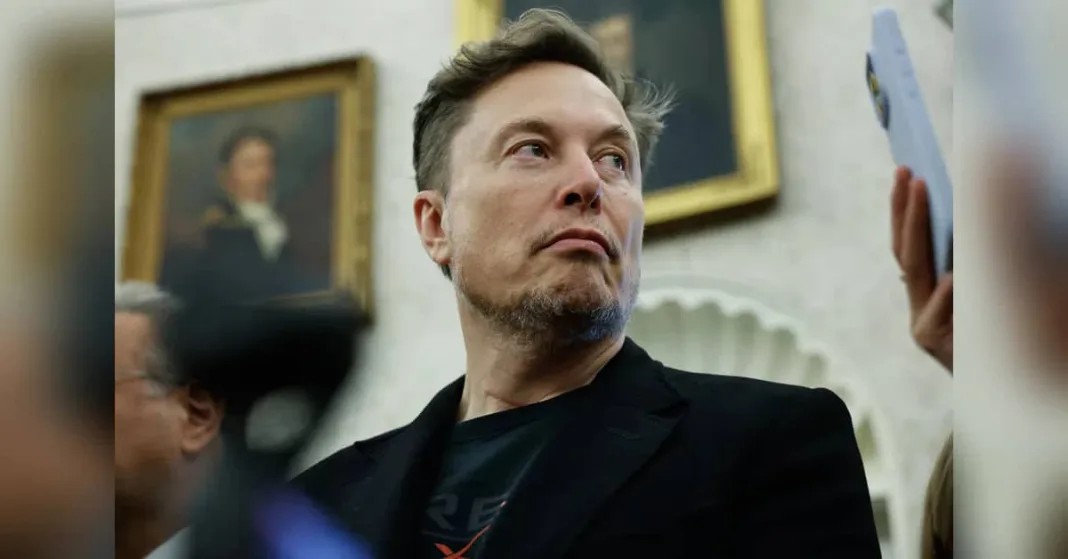
The statement came a day after SpaceX and Tesla founder Elon Musk alleged that “certain oligarchs” were blocking satellite internet provider Starlink’s entry into India, hours after a top company executive said at a public forum that it had invested in the Indian market and was ready to begin operations once it received official approval.
“Unfortunately, we are being blocked by certain oligarchs in order to maintain their monopolistic chokehold on the Indian people. You can guess who they are… This is a crime against the people of India!” Musk said in a post on X late Wednesday evening.
Musk, who also owns social media platform X, did not name any company or group.
His response was to a post by @DodgeDesigner that said India needed Starlink because of its ability to offer connectivity in remote regions and called on the government to complete the remaining clearances and spectrum allocation.
“Indian needs Starlink. 11,256 of India’s listed villages still lacked 4G coverage as of May 2026… BharatNet had laid over 850,000 route-km of fibre and made about 221,000 Gram Panchayats service-ready. However, its Points of Presence were reported operational at only 80,472 Gram Panchayats in June 2026,” the post said.
Starlink is among three applicants seeking to offer satellite broadband services in India. The other two are Bharti group-backed Eutelsat OneWeb, now Eutelsat Group, and Reliance Industries-backed Jio Satellite Communications, a subsidiary of Reliance Jio.
All three have been awarded licences but are awaiting security clearances.
Jio is separately building its own low-earth-orbit (LEO) satellite constellation, which will compete with global players such as Starlink and Amazon Leo. The latter is also eyeing an India entry.
Starlink received its last approvals last year, while Eutelsat and Jio received theirs earlier.
The Department of Telecommunications has approved a spectrum charge of 5 per cent of adjusted gross revenue (AGR), which is yet to be approved by the Union Cabinet.
A commercial launch by any of the companies would depend on government clearances that are yet to be granted.
India is seeking assurances of control over satellite systems in case of exigencies, according to people aware of the developments.
Musk’s post came hours after Lauren Dreyer, vice-president of Starlink business operations at SpaceX, said the company was ready for the Indian market as soon as it received the green signal.
She added that Starlink had built its operations specifically around India’s security requirements.
“We are standing ready to serve India once India is ready. We’re ready to work with the government. We are ready to work with operators and with industry to this end. We are ready to help Prime Minister Modi achieve his vision of 100 per cent connectivity throughout India — a vision all of our company, including Elon, shares,” Dreyer said at the India Mobile Congress on Wednesday morning.
“Hopefully, next time I address the Congress, the government’s work will be complete, and Starlink will be authorised and ready,” she said.
Starlink is awaiting the Indian government’s security clearance and approval for foreign direct investment, having secured permissions from IN-SPACe and the Global Mobile Personal Communication by Satellite (GMPCS) licence.
Dreyer said Starlink had already made investments in India, with more than 20 gateway sites ready to begin operations.
The company was also ensuring that its business met security requirements and other regulations needed to operate in the country, she said.
Dreyer noted that Starlink had been building relationships with industry, including tie-ups with Airtel and Jio, and partnering with state governments over the past five years to better understand the market and prepare for the start of operations.
“We have built our Starlink operations specifically for India in recognition of Indian security requirements and other regulations, establishing controls at every layer for India and keeping Indian user data within India. We have already made the investment and built the existing ground infrastructure here — 20 gateway sites comprising hundreds of antennas — and we have established the operations to be ready to serve India,” she said.
Dreyer said the digital divide needed to be narrowed and that this would not be possible by leaving out a substantial portion of the population.
“But there’s no one of us that can solve this challenging problem of the digital divide. It takes all of us thinking about how to apply the best technology in the places that it serves best. As Starlink serves over 170 countries around the world and growing, our consistent theme has been to work very closely with governments, private industry, and all of those looking to connect people who need reliable connectivity and connect and connected around the world,” she added.
Calling India’s achievements in digital connectivity “extraordinary”, Dreyer pointed to millions of people being connected and affordable data at scale, but said the last mile remained the biggest challenge.
“It’s the most challenging to connect. It’s also where Starlink offers the biggest potential to help accelerate the speed to connect 100% of India. With Starlink, people can get connected within minutes, not years,” she added.