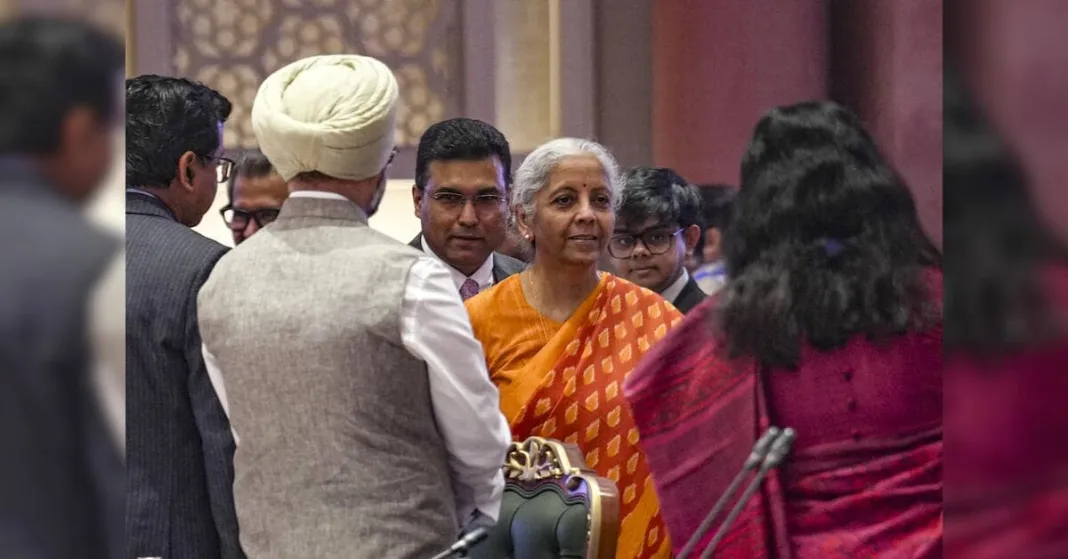

Finance Minister Nirmala Sitharaman on Thursday said the next-generation GST reforms have addressed about 99 per cent of issues related to tax rates and processes, with the latest changes aimed at simplifying compliance and improving tax administration.
Speaking after the 57th GST Council meeting, Sitharaman said the reforms were driven by a “trust-based approach” and expected the new set of process reforms to stabilise over the next year.
The Council recommended removing arrest powers under GST and raising the prosecution threshold from ₹1 crore to ₹5 crore. It also recommended reducing the general penalty from ₹25,000 to ₹10,000.
Sitharaman said the Council had also taken steps to make the movement of goods smoother by limiting inspections, detention and seizure to officers of the supplier or destination state.
“No in-between stopping and checking,” Sitharaman said, adding that goods could be intercepted only on the basis of specific intelligence and with authorisation from an officer of at least Joint Commissioner level.
“So, any random GST officer cannot stop a vehicle,” she said. Sitharaman added that the move would prevent arbitrary checks by GST enforcement wings and “significantly improve the ease of movement of goods.”
The Council has also decided that no GST demand notice will be issued where the tax amount is below ₹10,000. It recommended common standards for tax notices and proceedings, including giving taxpayers an opportunity to respond before a formal notice.
The government is also simplifying GST registration for small businesses selling through e-commerce platforms. Sitharaman said the measure would allow small sellers to operate across states without establishing a place of business in each state.
“A simplified GST registration mechanism for small sellers on the electronic commerce operators platform will enable small businesses to serve without establishing a place of business in each state,” she said.
On input tax credit, the Council discussed concerns around genuine taxpayers losing credit because of non-compliance elsewhere in the supply chain. An officers’ committee will examine the issue and submit its report within three months for a final decision by the Council.
Other measures include allowing employers to claim Input Tax Credit on GST paid for employee insurance cover and reducing the time for acknowledging refund claims from 15 days to 10 days.
Sitharaman also said the government intends to introduce faceless tax administration under the Central GST regime.
No GST rates were changed at the 57th GST Council meeting. The proposed process reforms are to be implemented in a staggered manner, with the changes forming part of the implementation agenda from April 1, 2027.