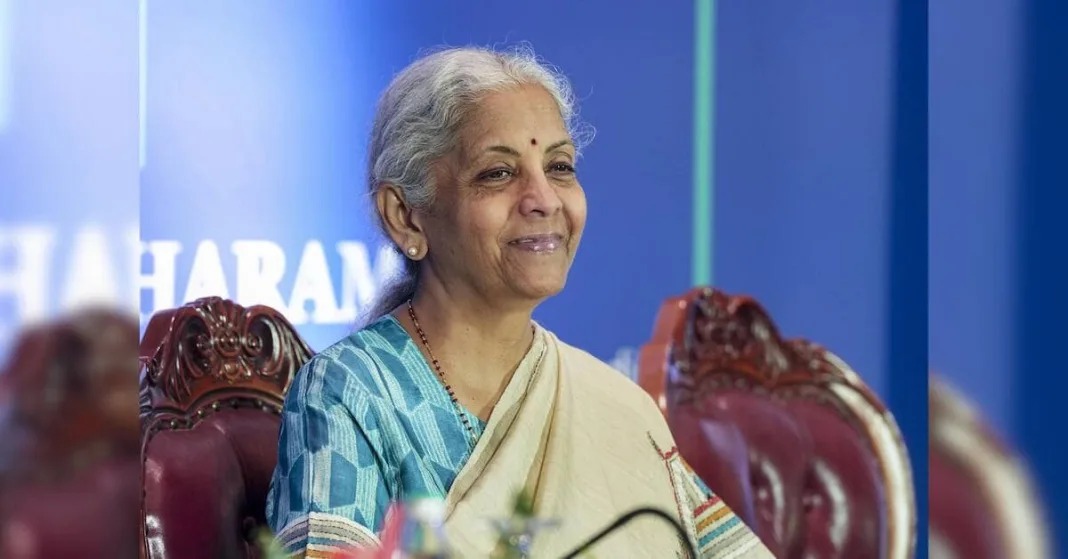

The negotiations for a trade deal between India and the US have reached a “plateau” beyond which giving further concessions by either side was “very difficult”, Union Finance Minister Nirmala Sitharaman said on Monday.
“It has been a very hard and rigorously negotiated agreement. The agreement’s negotiations are still ongoing, although we would like to believe that both the sides have reached a plateau beyond which giving, or taking might be very very difficult,” Sitharaman said at the Munich Security Conference in Delhi. “But maybe if there are rooms to operate from, both side would do it,” Sitharaman added.
She mentioned that addressing the US’ trade deficit with India was a “predominant” feature of the trade deal and Washington wanted to “get as much as they can” from the deal to also compensate for what they see as a loss they have suffered previously because of the deficit.
Trade imbalance can be addressed through negotiations, but “now the imbalance is being sought to be addressed by other means,” Sitharaman said. “Tariff was an instrument of negotiations,” she added.
From passing a law authorising US President Donald Trump to impose a tariff of up to 100 per cent on India for its energy purchases from Russia to initiating two investigations under Section 301 of the US Trade Act of 1974, the US has put into play several mechanisms to impose tariffs on India and gain leverage in trade talks.
Trump is yet to announce a final decision on the punitive tariff, including its rate and coverage. The Office of the US Trade Representative (USTR) has already imposed a 10 per cent extra duty on Indian goods after concluding one of the Section 301 investigations alleging the presence of forced labour in the supply chain, and the other probe alleging excess structural capacity remains underway.
Meanwhile, Union Commerce Minister Piyush Goyal is on a week-long visit to the US that concludes on Tuesday. Goyal met USTR Jamieson Greer last week, following which Greer said that both sides had identified the remaining sticking points in the deal, but an outcome was not imminent.
Last week, Prime Minister Narendra Modi also spoke to Trump over the phone to review bilateral cooperation in trade, defence, energy, critical technologies and other areas.
However, there appears to be a slight shift in the discourse around the India-US trade deal in the last week. Up until last week, the prevailing view was that the terms had largely been agreed, with New Delhi waiting for Washington to devise a mechanism that would give Indian exports a tariff advantage over competitors and shield them from future uncertainty.
Indian industry is of the view that Washington has put multiple tools into motion to weaponise tariffs, which is likely why New Delhi has become more vocal on its stance on the trade deal. “Ensuring safeguard of national interests and tariff certainty remains India’s primary focus under the trade deal,” Federation of Indian Export Organisations (FIEO) Director General and Chief Executive Officer Ajay Sahai said.
Sitharaman further said that in the current geopolitical environment of tariff uncertainties, bilateralism has become more relevant than multilateralism, especially considering how trade rules under the World Trade Organization (WTO) have weakened.
India is looking to cement trade and investment partnerships with newer partners. New Delhi is engaged in negotiations for a trade deal as well as a Bilateral Investment Treaty (BIT) with several economies.
India is likely to conclude BIT negotiations with Canada and two more partners by December or early 2027, Sitharaman said.
The Union Cabinet is also expected to approve a new template for BITs soon.
Meanwhile, India is engaged in BIT negotiations with Canada and others, keeping in mind the elements of the new template, the minister said. India is also in talks with Russia for a BIT, she said.
“Now the balance is somewhat tilted in the favour of bilateralism than multilateralism,” Sitharaman said. “Countries will have to choose newer partners for their trade and strengthen tie through an agreement. Therefore, newer partnerships are being searched and they are being tied bilaterally. Multilateralism is not going to go away, yet it has weakened because institutions that were to guide, monitor, regulate multilateralism have weakened over the decade.”
“In the current reality, you are tailoring the agreements to (not just) keep national interests alive but also survive in a very challenging global environment where no WTO laws are left to be respected,” Sitharaman said.
At the same time, the West Asia crisis and disruption in the Strait of Hormuz remain a concern as that could affect the movement of fertilisers, which may in turn pose a risk to food security, Sitharaman said.
While fertiliser prices have shot through the roof, the Indian government would continue its fertiliser subsidy to ensure food security in the country, the minister said.
Amid disruption in the Strait of Hormuz, the Strait of Malacca in Southeast Asia remains an alternative. Any disruption there may lead to “doom”, Sitharaman said.