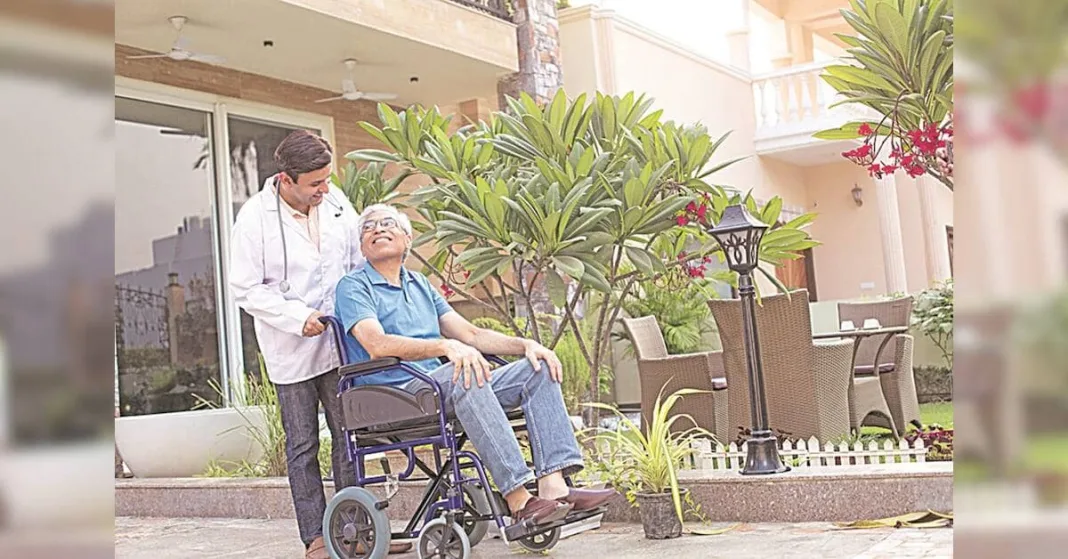

Once largely associated with retirement communities located away from major urban centres, the segment is now gaining a larger presence in established markets such as the Delhi-NCR, Pune, and Mumbai, with Gurugram and Noida emerging as key pockets within NCR.
The shift is being driven by affluent seniors with rising incomes, longer life expectancy, and a desire to remain close to the healthcare, social and lifestyle ecosystems.
The senior population, defined as those aged 60 and above, is projected to rise from 166.9 million this year to 191.5 million by 2030 and 346 million by 2050. With organised, high-quality supply expected to lag demand, the segment is likely to see sustained demand over the long term.
“Turning 60 is no longer viewed as retiring from life. They are healthier, more active, financially better placed, and keen to remain professionally, socially, and personally engaged,” said Aakash Ohri, MD and chief business officer at DLF Homes. India’s largest developer by market capitalisation, DLF is expected to launch its luxury senior living project in Sector 63, Gurugram, with an estimated sales potential of around ₹2,000 crore.
Another Gurugram-based listed developer is in discussions to partner a senior living operator and market some units in its existing luxury projects for the elderly, people in the know said.
“There is a massive headroom for growth in this segment, with demand far outstripping supply,” one of the company’s executives said, asking not to be identified as the plans had yet to be publicised.
“We expect more developers to evaluate the opportunity, particularly in markets with affluent senior populations and established healthcare ecosystems,” said Anantharam V Varayur, cofounder of Manasum Senior Living. Unlike traditional retirement homes, newer projects seek to offer urban locations, larger residences, healthcare, wellness, hospitality, and community services.
According to a JLL-Association of Senior Living India (ASLI) report earlier this month, total organised supply stood at 25,050 units as of June, growing at a compound annual growth rate (CAGR) of 14.2 per cent between 2024 and June, compared with 8.5 per cent in 2019-23. The addressable market, comprising urban, financially independent senior households, is forecast to expand from 1.7 million this year to 2.1 million by 2030.
Data also showed that occupancy rates at well-managed facilities were a strong 80-85 per cent. However, the organised penetration rate stands at just 1.5 per cent, versus 6-7 per cent in the US and 14-15 per cent in New Zealand, pointing to considerable room for expansion.
“With the development and policy drivers in place, the market has the potential to offer a $10.1 billion opportunity, provided all stakeholders move forward in sync,” the JLL report projected.
A premium address, a wider map
“Growth here is driven by financially independent retirees, non-resident Indian families, high income levels, and proximity to leading tertiary care hospitals,” said Rajit Mehta, managing director (MD) and chief executive officer at Antara Senior Care and chairman of ASLI.
Mehta added that unit prices typically start at ₹75 lakh and can exceed ₹5 crore, depending on location, configuration, and healthcare integration. The premium is not merely for the apartment. Senior living communities increasingly combine homes with healthcare, wellness, hospitality, security, and social infrastructure.
Shalin Raina, MD, residential services India, Cushman & Wakefield, said developers are incorporating features such as barrier-free walkways, accessible washrooms, anti-slip flooring, on-call and in-house medical assistance, and 24×7 ambulance services. “Some operators are also adopting an asset-light model, leasing residential buildings and retrofitting them with senior-specific designs and services,” he added.
The result is a product that sits somewhere between residential real estate, hospitality, and healthcare. But the premiumisation story does not mean senior living will become a metro phenomenon exclusively.
Southern states account for nearly 60 per cent of India’s organised senior living supply, with Bengaluru, Chennai, and Coimbatore among the established markets. However, the geography is beginning to change, with Delhi- NCR, particularly Gurugram and Noida, emerging as the second-largest regional cluster, accounting for around 14 per cent of organised stock.
Estimates from realty consultancy Anarock suggest that 7,000-7,500 senior living units were added between 2023 and 2025, with Gurugram and other parts of NCR among the key growth markets. Pune is also emerging, while cities such as Mumbai, Hyderabad, Mysuru, and Goa are seeing increasing activity. Developers say the shift reflects seniors’ preference to age in familiar cities while retaining their lifestyle, independence, and access to quality care.
A recent Colliers report estimates Tier-II and Tier-III cities will account for 30-40 per cent of launches, helped by lower living costs, improving healthcare, and a slower pace of life. Spiritual destinations such as Tirupati and Vrindavan are emerging alongside markets such as Coimbatore, Puducherry, Dehradun, and Vadodara.
Colliers estimates that more than ₹13,000 crore in commitments have been announced since 2025, with organised inventory expected to rise from around 25,000 units to 100,000 by 2030.
Beyond bricks, comes the care
Established operators say developers entering the space face a different challenge from conventional housing. “Selling the apartment is only one part of the business. Senior living combines real estate with operations, hospitality, community, and care,” said Tanay Saboo, founder of Amaya Senior Living.
He added that specialist operators would be important for sustainable scale, with healthcare increasingly being woven into the proposition rather than treated as an emergency service.
“Developers entering the segment will need to either build deep service infrastructure themselves or partner experienced operators,” Mehta said. He added that without strong service delivery, healthcare integration, and community-development expertise, it is difficult to build long-term trust in the category.
At leading communities, the offering can include preventive wellness, regular health monitoring, nursing support, physiotherapy, emergency response, hospital coordination, and access to specialists.
“The objective is to allow residents to remain independent while ensuring that care can become more intensive as their needs change. For affluent urban seniors, location remains central to that proposition,” an industry executive said.
Ohri added that seniors have deep-rooted connections to the cities where they have lived, including family, friends, communities, and professional networks, leaving them with little incentive to move to remote retirement destinations.