

September 8, 2026 11:02 AM
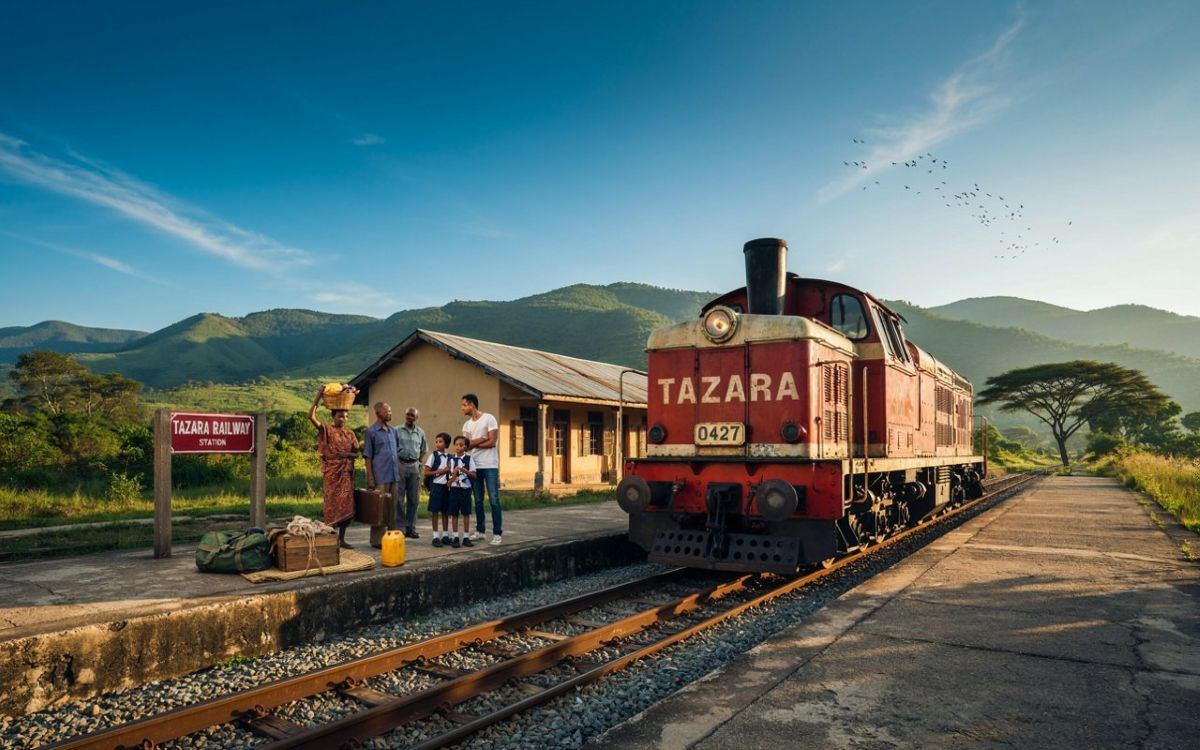
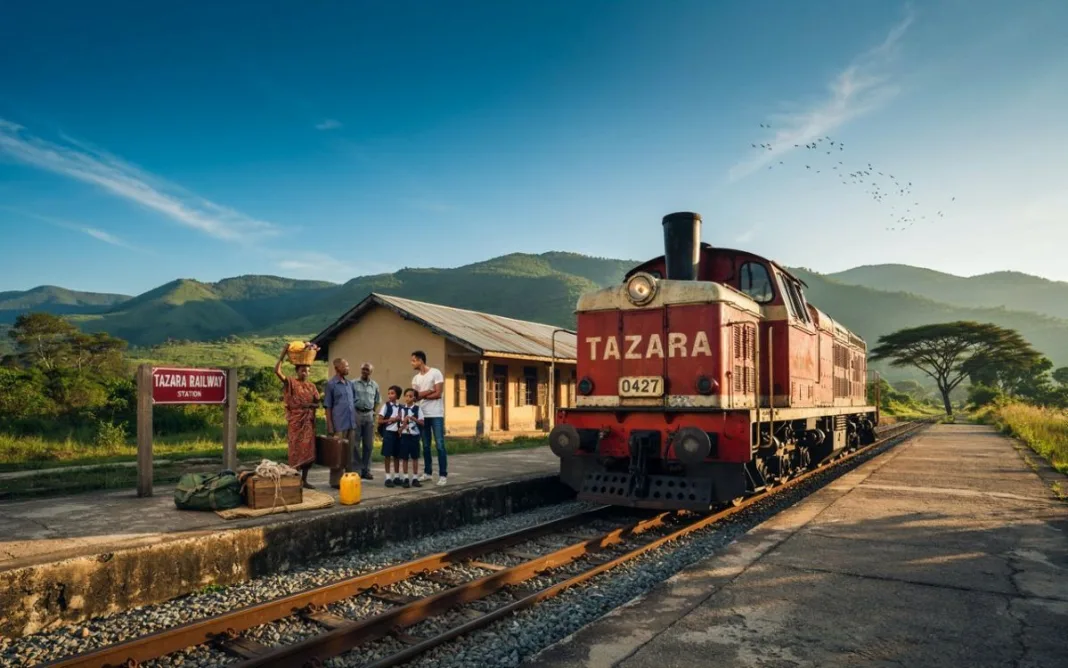
Image generated with Ai
TAZARA Railway in Tanzania to bring back cross border train in 2026, which will serve an important purpose for the passengers, but it will also indicate the need for further improvements in it because of the huge fleet pressure on TAZARA in 2026. The railway line runs from Dar es Salaam to New Kapiri Mposhi. It connects the local people and tourists in the region. However, at the moment, the TAZARA Railway Line offers only limited services owing to the lack of trains and coaches available. In this regard, the passengers should prepare themselves accordingly before traveling.
TAZARA Brings Back a Vital Tanzania Zambia Passenger Route
TAZARA restored cross-border passenger services between Tanzania and Zambia on 10 February 2026. The return marked a major moment for travellers after the route had been suspended since June 2024 because of technical challenges.
The railway is jointly owned by the governments of Tanzania and Zambia. It runs from the Indian Ocean port city of Dar es Salaam to New Kapiri Mposhi in central Zambia. From there, passengers and goods can connect with wider transport networks in southern and central Africa.
The service matters to many types of travellers. Local residents use it to reach markets, schools, hospitals and family members. Long-distance travellers use it as a lower-cost option across the two countries. Tourists also use the railway to see remote landscapes and experience one of Africa’s best-known cross-border rail journeys.
Advertisement
Advertisement
The restart restored this important link. But the new operation does not follow the same pattern as before. TAZARA has organised its trains around the equipment it currently has available.
The authority said the changes aim to make the service more reliable and sustainable. That means fewer departures, but a timetable designed to make better use of coaches and locomotives.
Tanzania Zambia Rail Travel Now Runs With Fewer Weekly Departures
The biggest change for passengers is the reduction in weekly services.
TAZARA said that cross-border trips between Dar es Salaam and New Kapiri Mposhi have changed from four to two each week. One train leaves from Zambia and one leaves from Tanzania.
The revised Mukuba train pattern is clear. A train leaves New Kapiri Mposhi every Tuesday at 14:00 Central Africa Time. Another leaves Dar es Salaam every Friday at 15:50 East Africa Time.
The Mukuba serves both express and ordinary passenger needs. It stops at major stations on some parts of the line. On other sections, it makes stops at all stations.
This timetable offers a vital route. But it gives passengers less choice. A missed train may mean waiting several days for the next departure. Travellers therefore need to plan their journeys carefully.
People travelling to catch flights, attend business meetings, join tours or connect with long-distance buses should allow extra time. They should also confirm the current timetable with TAZARA before leaving for the station.
A reduced schedule can still help when it gives passengers a more dependable service. TAZARA says the revised pattern is designed to balance capacity, demand and available resources across the railway.
The new timetable also responds to places with limited road connections. Parts of the route have strong passenger demand and no parallel road infrastructure. For communities along these sections, the train remains much more than a travel option. It is a basic connection to the wider region.
Ageing Coaches and Locomotives Shape the 2026 Rail Reality
TAZARA has clearly explained why it adjusted its passenger services. The issue is not a shortage of train drivers. The authority points to limited rolling stock.
Rolling stock means moving railway equipment. This includes locomotives, passenger coaches and wagons. TAZARA said its fleet availability remains constrained by ageing equipment, maintenance requirements and phased rehabilitation programmes.
This means the authority must carefully decide where to place each working locomotive and coach. It cannot simply add more trains whenever demand rises.
TAZARA therefore reduced the number of weekly cross-border services. It combined resources to strengthen the Mukuba train between Dar es Salaam and New Kapiri Mposhi. It also kept the Udzungwa service for domestic passengers in Tanzania.
The authority says this plan will improve reliability, use available capacity better and protect service for both local and international passengers.
For travellers, the message is simple. The Tanzania-Zambia route is operating, but it has limited room for disruption. Equipment repairs or inspections can affect the schedule quickly.
This makes direct communication very important. Passengers should check official information before buying onward transport, reserving accommodation or organising time-sensitive travel.
The route still holds great value. It links people across a very long distance and gives passengers access to areas that are harder to reach by road. But travellers must treat the timetable as essential travel information, not as a flexible guide.
The Mukuba Train Connects Big Cities and Remote Communities
The Mukuba train is the central cross-border passenger service in TAZARA’s 2026 plan.
It connects New Kapiri Mposhi in Zambia with Dar es Salaam in Tanzania. Along the way, it serves major stations and smaller communities across the railway corridor.
TAZARA has organised the route with two styles of travel. The express section makes fewer stops. The ordinary section calls at all stations. This helps passengers travelling long distances while also serving communities that depend on regular local stops.
The train operates as an ordinary service between Kasama and Nakonde in Zambia. It also operates as an ordinary service between Dar es Salaam and Msolwa in Tanzania.
It operates as an express service between New Kapiri Mposhi and Kasama, as well as between Nakonde and Msolwa.
This plan shows the difficult balance that TAZARA must manage. Fast long-distance passengers want fewer stops. Local residents need the train to stop close to their homes. The railway must serve both groups with a limited number of vehicles.
For tourism, the route has a special appeal. It is a long overland journey through Tanzania and Zambia. It offers a different way to see the region. Travellers can watch changing landscapes, visit towns beyond the main tourism routes and connect their journey with safari, cultural and city experiences.
However, travellers should not see it as a fast luxury train. They should see it as an important public rail service with real operating limits. Flexible plans are sensible. Extra food, water, phone power and time buffers may also help on a long trip.
The Udzungwa Shuttle Also Returns After Operational Problems
TAZARA’s 2026 reset also includes the return of the Udzungwa shuttle passenger train in Tanzania.
The Udzungwa service resumed on 12 February 2026. It runs between Kidatu and Makambako, serving areas in the Morogoro and Njombe regions.
The shuttle had been suspended in October 2025 because of operational challenges. TAZARA said it brought the train back after reorganising the available equipment.
This is important because it shows how equipment decisions affect travellers at every level of the TAZARA network. The authority has not only focused on the international route. It has also worked to restore access for people travelling within Tanzania.
TAZARA said the Udzungwa service would improve mobility and connectivity along the Makambako-Kidatu corridor. The route supports communities that need reliable transport for daily life.
The authority plans for the Udzungwa to operate two ordinary service trips each week. These services serve areas between Kidatu and Makambako, where demand remains high.
For travellers, the Udzungwa case gives a clear lesson. Rail services can return after disruption when operators find ways to use limited equipment more effectively. But the number of departures may remain low until the fleet becomes stronger.
A One Week Mukuba Suspension Showed How Quickly Travel Plans Can Change
TAZARA also announced a temporary suspension of the Mukuba cross-border train in May 2026.
The service was withdrawn from 26 May to 1 June. The authority said it needed time for annual mechanical maintenance, internal inspections and essential servicing work on rolling stock and related systems.
Normal operations were expected to resume on 2 June with a Dar es Salaam-bound train.
The pause was planned. It was not caused by a sudden driver shortage. It was part of maintenance work intended to support safety, reliability and better service.
Even a short suspension can create major travel challenges on a route with only limited weekly departures. A passenger who planned to travel during that week had to find another option or delay the journey.
This is why advance planning matters so much on long-distance rail corridors. When trains run only once a week from each direction, a one-week suspension affects far more than a single day of travel.
Passengers should always check whether scheduled maintenance work is taking place. They should not rely only on old timetable information or social media posts.
TAZARA advised customers to plan their journeys around the maintenance period. This remains good advice for every traveller using a rail route with ageing equipment and an active rebuilding programme.
TAZARA Is Building New Skills and Better Train Control
The 2026 challenges have also pushed TAZARA towards a bigger recovery plan.
In July, the authority announced the start of construction for a new Training Centre and an Operations Control Centre in Dar es Salaam. These projects are part of the wider TAZARA Railway Revitalisation Project.
The Training Centre will prepare railway workers in technical, operational and management roles. It is expected to support engineers, technicians, locomotive drivers, train controllers, station staff, safety officers and managers.
This does not prove that a shortage of drivers has disrupted services. The available official information does not make that claim. But it does show that TAZARA sees skilled staff as essential to building a safer and more reliable railway.
The Operations Control Centre will act as a central hub for monitoring and coordinating train movements across the network. It will use modern communication and information systems to improve decisions, train planning and emergency response.
TAZARA says the new centre will help it manage locomotives, wagons and train movements more efficiently across its 1,860-kilometre network.
For passengers, better control can make a real difference. It can improve information flow between stations and trains. It can help railway teams react faster to problems. It can also support more reliable timetables.
The authority said the projects are part of its plan to improve safety, passenger services, freight capacity and customer service.
Morocco Brings a Different September Rail Disruption Story
While Tanzania and Zambia face equipment limits, Morocco offers another important African rail development in September 2026.
Morocco’s national railway operator, ONCF, has announced a new transport plan from 14 September 2026. The changes relate to work on the Kénitra-Marrakech high-speed line.
The new phase follows construction work that began in September 2025. ONCF says the revised transport plan will adjust train movements to meet the needs of the construction site while trying to maintain service continuity.
This is a different type of disruption. It is linked to railway construction, not to crew shortages or a lack of drivers.
For passengers, it means timetables may change as work progresses. Travellers using rail services in Morocco should check the latest ONCF schedule before going to the station. They should also leave extra time if they have a flight connection, hotel check-in or tour departure.
The operator says passenger support will be available at stations and on board trains during the works.
Morocco’s case shows another side of African rail travel in 2026. Railways are expanding and modernising. But improvement work can temporarily affect the journeys that passengers take today.
Nigeria’s Warri Itakpe Route Remains Tied to Safety Work
Nigeria also has a major passenger rail disruption story in 2026. It involves the Warri-Itakpe Train Service.
The Nigerian Railway Corporation issued a preliminary report in August after a derailment near Owa-Oyibu in Delta State on 8 June 2026.
The train had left Itakpe carrying 482 people, including 442 passengers and 40 operational staff. The accident affected several coaches, a locomotive and a power car.
The corporation said all passengers were evacuated within two hours. Its report recorded four deaths and 64 injuries.
The railway has since recovered and restored the affected track. But the Nigerian Railway Corporation said the recovered locomotives were undergoing reconditioning. It also said service resumption would depend on a detailed safety audit of the track and equipment.
This is not related to a driver shortage. The preliminary report identified a possible bogie or wheel defect as a working hypothesis. The final cause will be determined through further investigation.
For travellers, the key fact is that the latest official report located did not give a final restart date. People planning to use the Warri-Itakpe service should seek current information directly from the Nigerian Railway Corporation.
What Travellers Need to Do Before Using African Rail Services
Traveling by rail through Tanzania and Zambia is going through a huge reset in 2026 due to reduced train operations caused by fleet issues. But the fact that the rail route is not closed makes a significant difference to both tourists and businesses. The TAZARA train has re-launched cross-border train services, but now, fewer train services every week define all journeys from Dar es Salaam to New Kapiri Mposhi. So, it is crucial for travelers to plan ahead and make sure to have additional time for connecting trains.
Advertisement
Advertisement