

September 8, 2026
3:37 AM
Cuba tourism decline is becoming impossible to ignore as visitor numbers plunge and a brief five-year recovery gives way to a shocking reversal. The Cuba tourism decline now raises fresh questions for travellers watching Cuba’s changing holiday landscape. Visitor numbers surged after the pandemic, yet recent data reveals a dramatic reversal that could reshape travel plans, flights, hotels and tourism experiences across the island. Moreover, this Cuba tourism decline affects major international markets and popular destinations alike. As visitor numbers continue falling, travellers need to understand what is changing and why. Travel And Tour World examines the latest figures, key travel challenges and what this shocking reversal means for tourists planning Cuba trips.
Cuba Tourism Decline: Five-Year Visitor Data Shows a Dramatic Reversal
Cuba’s tourism downturn has moved from a post-pandemic recovery story into a much deeper contraction. Official statistics show that international visitor numbers rose strongly between 2021 and 2023, weakened in 2024, declined further in 2025, and then fell sharply during the first seven months of 2026. The latest figures are especially significant for travellers because the decline is occurring alongside weaker air connectivity, fuel shortages, electricity problems and changes in tourism operations. Cuba’s National Office of Statistics and Information (ONEI) reported 419,863 international visitors between January and July 2026, only 37.2% of the comparable 2025 level. That means a 62.8% decline, or 708,968 fewer international visitors.
Cuba International Visitor Numbers: Five-Year Comparison
The most useful way to understand the current Cuba tourism crisis is to examine the annual progression rather than looking only at 2026.
| Year | International visitors | Change from previous year | Key context |
|---|---|---|---|
| 2021 | 573,944 | -60.2% vs 2020 | Pandemic restrictions severely limited international tourism |
| 2022 | 1,614,087 | +181.2% | Strong reopening and recovery |
| 2023 | 2,436,980 | +51.0% | Major post-pandemic rebound |
| 2024 | 2,203,117 | -9.6% | Recovery lost momentum |
| 2025 | 1,810,663 | -17.8% | Tourism fell to the lowest non-pandemic level in more than two decades |
| 2026 Jan–Jul | 419,863 | -62.8% year-on-year | Severe contraction compared with Jan–Jul 2025 |
The 2021 figure was 573,944 international travellers, while 2022 increased to 1,614,087. Cuba then reached 2,436,980 international visitors in 2023 before falling to 2,203,117 in 2024. The 2025 total declined further to 1,810,663.
Advertisement
Advertisement
The Five-Year Trend in Numbers
| Indicator | 2021 | 2022 | 2023 | 2024 | 2025 |
|---|---|---|---|---|---|
| International visitors | 573,944 | 1,614,087 | 2,436,980 | 2,203,117 | 1,810,663 |
| Annual change | — | +1,040,143 | +822,893 | -233,863 | -392,454 |
| Approx. percentage change | — | +181.2% | +51.0% | -9.6% | -17.8% |
| 2025 vs 2021 | — | — | — | — | +1,236,719 |
| 2025 compared with 2023 peak | — | — | — | — | 74.3% |
The five-year picture therefore contains two very different phases. Cuba first experienced a powerful recovery after the pandemic shock. It subsequently entered a sustained decline.
2021: The Pandemic Low Point
Cuba recorded 573,944 international travellers in 2021. The figure represented only 39.8% of the 2020 level, according to figures based on ONEI data. Russia became the leading source market with 146,151 visitors, while Canada dropped to second place with 68,944.
The broader ONEI travel tables show 1,443,125 entries into Cuba in 2020 and 573,944 in 2021. The pandemic and international mobility restrictions heavily affected the tourism sector.
For comparison, Cuba was still receiving more than four million international visitors annually before the pandemic.
2022: Tourism Recovery Accelerates
The recovery became much stronger in 2022.
Cuba recorded 1,614,087 international visitors, more than 1 million above the 2021 result. The increase was approximately 181%.
Canada remained particularly important. Cuba also attracted significant numbers from the Cuban community abroad, the United States, Spain and Germany. The 2022 recovery reflected the gradual restoration of international travel after the pandemic.
By August 2022 alone, Cuba had registered 971,456 international visitors, compared with 163,724 during the same period in 2021, according to figures reported from ONEI.
2023: The Strongest Post-Pandemic Rebound
Cuba reached 2,436,980 international visitors in 2023.
That represented an increase of 822,893 visitors, or approximately 51%, compared with 2022. Total travellers reached 3,192,939, an increase of 914,961 from 2022.
Cuba’s Leading Source Markets in 2023
| Source market | 2023 visitors |
|---|---|
| Canada | 936,436 |
| Cuban community abroad | 358,481 |
| Russia | 184,819 |
| United States | 159,032 |
| Spain | 92,000+ |
| Germany | 70,000+ |
| Mexico | 60,000+ |
| France | 40,000+ |
Canada was overwhelmingly important. Its 936,436 visitors represented a major share of Cuba’s international tourism.
China was also becoming more significant. Cuba received more than 8,000 Chinese visitors in 2022, more than 18,000 in 2023, and approximately 26,760 in 2024.
2024: Recovery Loses Momentum
The reversal began in 2024.
Cuba welcomed 2,203,117 visitors, equivalent to only 90.4% of the 2023 result. The figure also represented just 71% of the government’s planned target.
2023–2024 Comparison
| Indicator | 2023 | 2024 | Change |
|---|---|---|---|
| International visitors | 2,436,980 | 2,203,117 | -233,863 |
| Percentage change | — | — | -9.6% |
| 2024 target achievement | — | 71% | Below plan |
| Canada’s position | Largest market | Largest market | Remained dominant |
Canada accounted for about 39% of Cuba’s tourism market in 2024. Cuba also reported growth from Brazil, Peru, China, Türkiye and Portugal during the year, showing that diversification was beginning even as total arrivals declined.
Russia was another important market. Approximately 185,800 Russian tourists visited Cuba in 2024, around 1% more than the 184,800 recorded in 2023 and approximately 5% above the 2019 level.
2025: Another Major Annual Decline
The deterioration continued through 2025.
Cuba finished the year with 1,810,663 international visitors, down 392,454 from 2024. International visitors therefore reached only 82.2% of the previous year’s figure.
The government had targeted 2.6 million foreign visitor arrivals for 2025. The actual result was approximately 789,337 below that target.
2024–2025 Market Comparison
| Market | 2024 | 2025 | 2025 change |
|---|---|---|---|
| Canada | 860,877 | 754,010 | -12.4% |
| Cuban community abroad | 294,816 | 228,091 | -22.6% |
| Russia | 185,816 | 131,882 | -29.0% |
| United States | 142,? | 110,005 | -22.8% |
| Mexico | 62,? | 56,438 | -10.2% |
| Argentina | 43,? | 49,428 | +13.6% |
| Spain | 65,? | 46,489 | -28.5% |
| France | 49,? | 36,884 | -26.0% |
| Colombia | 32,604 | 35,202 | +8.0% |
| Germany | 65,? | 33,056 | -49.5% |
Note: Some 2024 comparison values are not reproduced here where the accessible official-derived sources did not provide the exact prior-year number in the same dataset. The 2025 values and percentage movements are reported from ONEI-derived figures.
Only Argentina and Colombia recorded increases among the major markets, rising by 13.6% and 8%, respectively. Germany experienced one of the sharpest declines at 49.5%, followed by Russia at 29%, Spain at 28.5% and France at 26%.
2026: The Decline Becomes Much More Severe
The first seven months of 2026 show a much sharper deterioration.
ONEI reported 794,492 total travellers through July. That was just 50.2% of the comparable 2025 figure, representing 787,773 fewer travellers.
International visitors totalled 419,863.
The 2025 January–July comparison figure was 1,128,831.
| January–July indicator | 2025 | 2026 | Difference | Change |
|---|---|---|---|---|
| Total travellers | 1,582,265 | 794,492 | -787,773 | -49.8% |
| International visitors | 1,128,831 | 419,863 | -708,968 | -62.8% |
| 2026 as share of 2025 | 100% | 37.2% | — | — |
ONEI specifically states that 419,863 represents 37.2% of the previous year’s level. It does not mean a 37.2% decline. The actual year-on-year decline is 62.8%.
Canada Bears the Largest Decline in 2026
Canada remains Cuba’s largest source market, but the decline is exceptionally large.
During January–July 2026, Cuba received 127,645 Canadian visitors, compared with 478,382 during the same period in 2025. That represents a decline of approximately 73.3%.
The market comparison is particularly important because Canada has traditionally been Cuba’s largest tourism source.
| Market | Jan–Jul 2025 | Jan–Jul 2026 | Change |
|---|---|---|---|
| Canada | 478,382 | 127,645 | -73.3% |
| Russia | 72,190 | 21,374 | -70.4% |
| Cuban community abroad | 140,546 | 88,525 | -37.0% |
| United States | — | — | -39,944 visitors |
| All international visitors | 1,128,831 | 419,863 | -62.8% |
ONEI identified the largest absolute losses as 350,737 fewer visitors from Canada, 52,021 fewer from the Cuban community abroad, 50,816 fewer from Russia, and 39,944 fewer from the United States.
Why the Numbers Matter to Travellers
The statistics are important because Cuba’s tourism decline is occurring alongside operational challenges.
Government travel guidance from the United Kingdom warns about fuel shortages, electricity disruption and transportation difficulties. Travellers considering Cuba should therefore check airline schedules and accommodation arrangements immediately before departure.
The tourism sector itself has also acknowledged the need to strengthen air connectivity, diversify source markets and improve service quality. In 2024, Cuban authorities reported approximately 84,000 tourism rooms, alongside foreign management arrangements and joint ventures.
Hotel Capacity Versus Visitor Demand
The contrast between accommodation capacity and visitor numbers is increasingly important.
Cuba entered the recent downturn with substantial accommodation infrastructure. Authorities reported more than 80,000 updated rooms in 2025.
Yet international visitor numbers dropped from 2.44 million in 2023 to 2.20 million in 2024, then to 1.81 million in 2025.
This means the tourism industry has faced a growing mismatch between available capacity and actual demand.
For travellers, that can create opportunities for accommodation availability in some destinations. However, visitors should not assume that every hotel or service operates at normal capacity.
Cuba Tourism Decline: The Five-Year Picture
The broader five-year trajectory is now clear.
| Year | Visitors | Direction | Traveller takeaway |
|---|---|---|---|
| 2021 | 573,944 | Sharp pandemic low | Very restricted travel environment |
| 2022 | 1,614,087 | Strong recovery | International mobility returned |
| 2023 | 2,436,980 | Strong expansion | Recovery reached its post-pandemic high |
| 2024 | 2,203,117 | Moderate decline | Recovery began losing momentum |
| 2025 | 1,810,663 | Major decline | Demand weakened across leading markets |
| 2026 Jan–Jul | 419,863 | Severe decline | Tourism contraction accelerated dramatically |
The result is a striking reversal. Cuba gained 1.86 million international visitors between 2021 and 2023, but then lost 626,317 visitors between 2023 and 2025.
The January–July 2026 figure indicates that the decline has accelerated far beyond the pace seen during 2024 and 2025.
What Global Travellers Should Check Before Visiting Cuba
Travellers should treat the latest statistics as a practical planning signal rather than simply an economic headline.
Before travelling, visitors should verify:
| Travel consideration | Why it matters |
|---|---|
| Flight confirmation | International schedules can change because of operational conditions |
| Fuel availability | Road transfers may be affected |
| Hotel operating status | Reduced demand can alter hotel operations |
| Electricity supply | Power interruptions can affect services |
| Payment arrangements | Travellers should understand accepted payment methods |
| Entry requirements | Documentation requirements should be checked before departure |
| Travel insurance | Coverage should reflect possible disruption |
| Government advisories | Conditions can change rapidly |
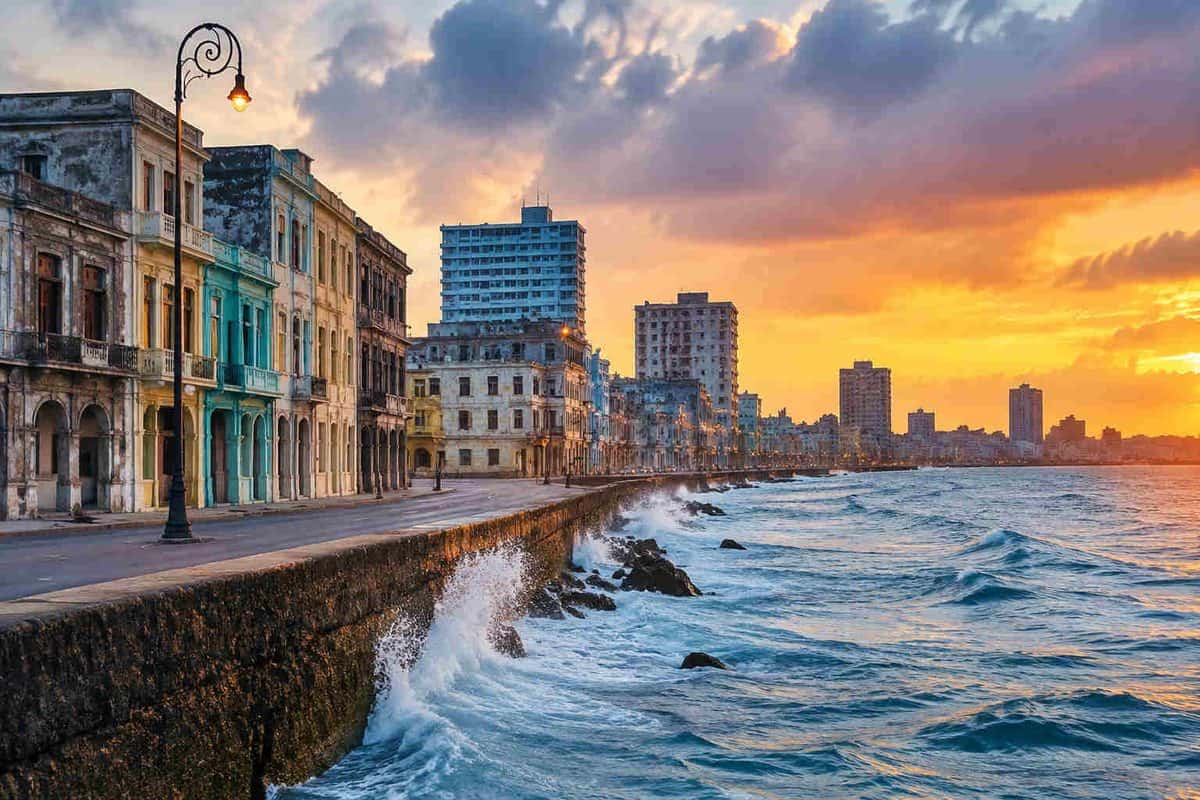
Cuba still offers Havana’s historic architecture, Varadero’s beaches, cultural attractions and destinations across the country’s extensive coastline. However, the latest visitor data show that the travel environment is considerably different from the strong recovery seen in 2022 and 2023.
For travellers, the most important message from the statistics is simple: Cuba is experiencing a sustained tourism contraction, and 2026 has so far produced the sharpest decline of the period.
The 419,863 international visitors recorded through July 2026 were only 37.2% of the comparable 2025 total. With 708,968 fewer international visitors, the island’s tourism market is now operating far below its recent recovery peak.
Key Statistics at a Glance
| Statistic | Figure |
|---|---|
| 2021 international visitors | 573,944 |
| 2022 international visitors | 1,614,087 |
| 2023 international visitors | 2,436,980 |
| 2024 international visitors | 2,203,117 |
| 2025 international visitors | 1,810,663 |
| Jan–Jul 2025 international visitors | 1,128,831 |
| Jan–Jul 2026 international visitors | 419,863 |
| Jan–Jul 2026 decline | 62.8% |
| International visitors lost in Jan–Jul 2026 | 708,968 |
| Total Jan–Jul 2026 travellers | 794,492 |
| Total traveller decline | 787,773 |
| 2025 government visitor target | 2.6 million |
| 2025 actual international visitors | 1,810,663 |
| 2025 target shortfall | 789,337 |
| Largest 2026 absolute market loss | Canada: 350,737 |
| 2026 Russia decline | 50,816 fewer |
| 2026 U.S. decline | 39,944 fewer |
| 2026 Cuban community decline | 52,021 fewer |
Conclusion
Cuba’s tourism decline marks a striking reversal after the island’s strong post-pandemic recovery. Visitor numbers have fallen steadily since the 2023 peak, while 2026 has brought an even sharper downturn. For travellers, the changing situation means careful preparation matters more than ever. Flight schedules, hotel operations, transportation, electricity and payment arrangements can affect the overall holiday experience. However, Cuba continues to offer historic cities, Caribbean beaches, vibrant culture and distinctive travel experiences. Therefore, tourists should not rely only on headline statistics. They should check current official travel guidance and confirm arrangements before departure. As Cuba tourism decline continues to reshape visitor demand, Travel And Tour World urges travellers to stay informed and plan carefully before choosing the island for their next Caribbean getaway.
Advertisement
Advertisement