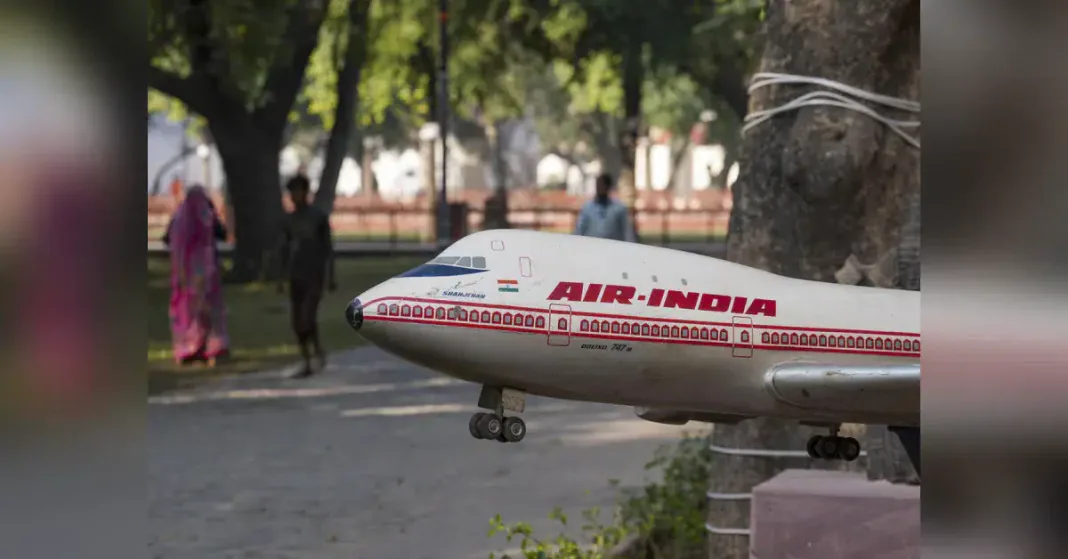

The airline’s Boeing 787 operating flight AI171 crashed shortly after takeoff from Ahmedabad on June 12, 2025, while flying to London’s Gatwick Airport. The accident killed 260 people, including 241 people on board and 19 people on the ground. The Aircraft Accident Investigation Bureau (AAIB) is yet to issue its final probe report into the crash.
In June 2025, Air India’s scheduled seat capacity on the India-UK route was 28.6 per cent higher year-on-year (Y-o-Y), while passenger traffic rose 14.8 per cent Y-o-Y. In July, capacity grew 13.3 per cent Y-o-Y, while passenger traffic increased just 2.2 per cent Y-o-Y, according to Cirium’s data.
Air India’s seat capacity started falling from August onwards for three months, but passenger traffic declined faster during each of those months.
According to Cirium, Air India’s scheduled seat capacity declined 3.9 per cent Y-o-Y in August, while passenger traffic fell 12 per cent. In September, capacity declined 3.5 per cent Y-o-Y, but passenger traffic plunged 19.2 per cent. In October, capacity was almost unchanged, rising just 0.4 per cent over the year-ago period, while passenger traffic fell 14.3 per cent.
The contrast with other airlines operating on the India-UK route is striking. Their passenger traffic generally grew faster than seat capacity in the months following the crash.
In July 2025, for instance, airlines other than Air India — including British Airways and Virgin Atlantic — increased their seat capacity by just 0.6 per cent Y-o-Y, while passenger traffic grew 10 per cent Y-o-Y. In August, capacity rose 3.3 per cent, while passenger traffic jumped 14.5 per cent.
In October, November and December, airlines other than Air India saw passenger traffic on India-UK routes rise 10.9 per cent Y-o-Y, 11.9 per cent, and 11.9 per cent, respectively. Their seat capacity in those three months increased by just 2.1 per cent Y-o-Y, 10.3 per cent and 11 per cent. For these airlines, demand grew faster than capacity on their India-UK flights, resulting in higher seat occupancy.
However, the decline in Air India’s India-UK traffic should be viewed against a difficult operating environment. Following India’s military strikes inside Pakistan during Operation Sindoor in May 2025, Pakistan shut its airspace to Indian carriers. The ban remains in place, forcing Air India to take longer routes on its India-UK services, adding to the airline’s operating costs and flying time.
The airline’s problems were aggravated further in late February this year, when military strikes by Israel and the US on Iran led to the closure of significant portions of West Asian airspace. Air India, which was already taking longer routes because of the Pakistan airspace closure, was forced to take even longer routings on affected services.
This ultimately forced the airline to curtail capacity on the India-UK route. But passenger numbers fell faster than capacity, suggesting that the airline was not merely carrying fewer passengers because it was operating fewer seats.
In February 2025, Air India’s passenger traffic on the India-UK route fell 9.8 per cent Y-o-Y, against a 1.6 per cent Y-o-Y decline in capacity. March was relatively better, with passenger traffic down 2.8 per cent and capacity down just 0.7 per cent.
When asked about the steep drop in passenger traffic, which was faster than the decline in seat capacity in most months after the AI171 crash, an Air India spokesperson said: “Air India continues to see encouraging customer response on its UK services as the airline’s transformation programme delivers tangible improvements in customer experience. This progress has been achieved despite a challenging operating environment marked by prolonged Pakistan airspace restrictions, evolving competitive dynamics, and periodic geopolitical disruptions affecting international aviation markets.”
“Over the past several years, Air India has invested significantly in upgrading its fleet, introducing new cabins and seats, enhancing onboard dining, expanding digital capabilities, and modernising customer service systems. These investments are translating into stronger customer sentiment. Across Air India’s UK operations, Net Promoter Score (NPS) has improved from -46 in FY24 to +2 in FY26 and further to +13 in FY27 year-to-date. On London routes, NPS has improved by 66 points, from -45 in FY24 to +21 in FY27 year-to-date, reflecting the positive impact of the airline’s product, service, and digital enhancements,” the spokesperson added.
“Air India remains focused on delivering a consistently better experience for customers and further strengthening its position in the UK market,” the spokesperson stressed.