

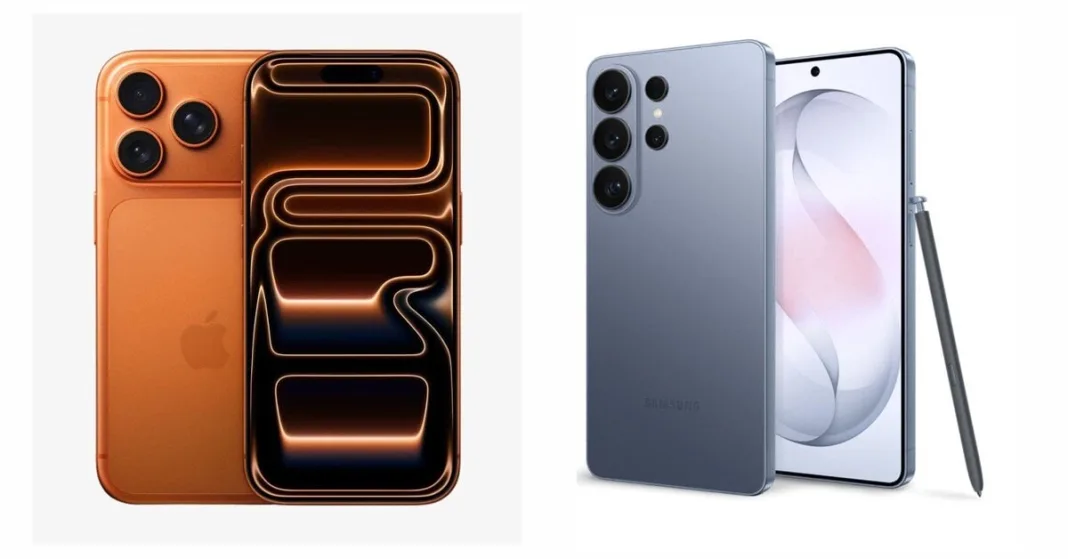

Apple and Samsung dominated the global smartphone market in the second quarter of calendar year 2026, with five models each making it to the top 10 best-selling smartphones worldwide, according to Counterpoint Research’s Global Handset Model Sales Tracker. Apple’s iPhone 17 was the best-selling smartphone during the quarter, accounting for 6 per cent of global smartphone unit sales.
The concentration at the top comes as the overall smartphone market faces pressure from higher component costs and weaker demand. Counterpoint report noted that the top 10 smartphones accounted for 26 per cent of global unit sales in the June quarter, the highest share recorded for the quarter. Brands are increasingly concentrating their resources on a smaller number of models as rising memory costs put pressure on the wider portfolio.
iPhone 17 leads global sales
The iPhone 17 remained the world’s best-selling smartphone in Q2 2026, with a 6 per cent share of global smartphone unit sales. The iPhone 17 Pro Max and iPhone 17 Pro followed it in the second and third positions, giving Apple the top three spots on the list.
According to Counterpoint, Apple’s unit sales increased 5 per cent year-on-year in the quarter despite the broader smartphone market declining 11 per cent. Growth came from markets including India, Japan and the Middle East and Africa, while sales in South Korea nearly doubled.
The base iPhone 17 also benefited from a smaller gap between it and the Pro models. It is to be noted that improvements to the standard model made it a stronger option for customers who did not want to pay the higher price of the Pro range.
Samsung Galaxy S26 Ultra leads Android phones
The model moved five places higher than its predecessor’s position in the corresponding ranking. The report mentioned that the Galaxy S26 Ultra accounted for more than half of the Galaxy S26 series sales in Q2.
The later launch of the Galaxy S26 series compared with the previous generation also meant that more of its sales were concentrated in the second quarter.
Samsung has positioned the Ultra model at the top of its smartphone range, with features such as an enhanced AI experience and a privacy display. The company has also increased promotions around its flagship devices as it deals with higher component costs.
As mentioned in the report, the performance of the Galaxy S26 Ultra is significant because it marks the first time that an ultra-premium Android smartphone has led Android sales in a June quarter, according to Counterpoint.
Samsung’s presence in the top 10 was not limited to its flagship Galaxy S series. Its more affordable Galaxy A series models also continued to attract buyers.
The Galaxy A range benefits from wider availability and lower prices compared with Samsung’s flagship phones. The devices also offer long software support, with the Galaxy A models appearing in the top 10 offering six years or more of software updates.
Longer software support is becoming more relevant as consumers hold on to smartphones for longer. A buyer who keeps a device for several years is more likely to consider the duration of software and security updates when deciding between models.
Faisal Kawoosa had earlier told Business Standard that Samsung could be better placed to absorb higher costs, citing its strong brand recall, resale value and financing options. Consumers may also be more willing to pay a premium for Samsung smartphones if they expect better resale value.
This gives Samsung an advantage across different price segments, with the company able to compete for both premium buyers and consumers looking for relatively affordable devices.
Why the top 10 is gaining share
The growing contribution of the top 10 smartphones comes at a time when the overall market is shrinking. Global smartphone sales declined 11 per cent in Q2 2026, while the top 10 models together accounted for 26 per cent of total unit sales.
One reason is the pressure created by rising memory costs. Smartphone makers are facing higher prices for DRAM and NAND storage as demand for memory from AI infrastructure and data centres increases.
This is affecting lower-priced smartphones more sharply because manufacturers in these segments generally operate with thinner margins. They have less room to absorb higher component costs without either raising prices or accepting lower profits.
Premium smartphones are gaining ground
The Q2 sales ranking also reflects a wider shift towards premium smartphones. Counterpoint’s separate analysis showed that smartphones priced at $600 and above accounted for a record 29 per cent of global smartphone sales in the first half of 2026, compared with 25 per cent a year earlier. Apple and Samsung together accounted for 84 per cent of global premium smartphone sales during the period.
The increase does not mean that consumers have suddenly become more willing to spend. Rising prices in the mid-range are also changing the comparison.
Higher memory and component costs are pushing prices of mid-range smartphones upwards, reducing the gap between some mid-range models and older or discounted premium devices. For some buyers, spending slightly more on a flagship with a longer usable life can therefore appear more attractive.
Counterpoint has also pointed to stronger margins and fewer promotional discounts in the premium segment, which give premium brands more flexibility to absorb some of the increase in component costs.
Financing options make premium phones more affordable
Another factor supporting premium smartphone sales is the growing use of financing, trade-ins and buyback programmes.
These schemes do not necessarily reduce the retail price of a smartphone, but they lower the immediate cost for consumers. Longer EMI periods allow buyers to spread payments over a longer period, while trade-in programmes reduce the amount that needs to be paid for a new device.
Samsung, for instance, has expanded its Galaxy Forever programme in some markets, while the company and Apple continue to offer financing and promotional schemes. In India, Samsung has also introduced longer no-cost EMI options for some premium devices.
Fewer models, more focus on key devices
The latest global sales ranking suggests that smartphone makers may increasingly rely on a smaller number of models rather than maintaining large portfolios across every price band.
For Apple, the iPhone 17 series provides a strong combination of volume and premium sales. Samsung, meanwhile, has models ranging from the Galaxy A series to the Galaxy S26 Ultra, allowing it to compete at different price points.
This strategy also becomes more important when component costs are rising. Maintaining too many models means manufacturers need to spread limited memory and other components across a larger portfolio. Concentrating resources on products with stronger demand can help brands manage those pressures.
The result is a smartphone market where the biggest brands and their strongest models are taking a larger share of sales. For consumers, however, the trend could mean fewer attractive choices in the mid-range and higher prices across categories. With the global market already under pressure and memory costs remaining elevated, the gap between what consumers want to pay and what manufacturers need to charge could become more difficult to bridge.