

Published on August 23, 2026 |

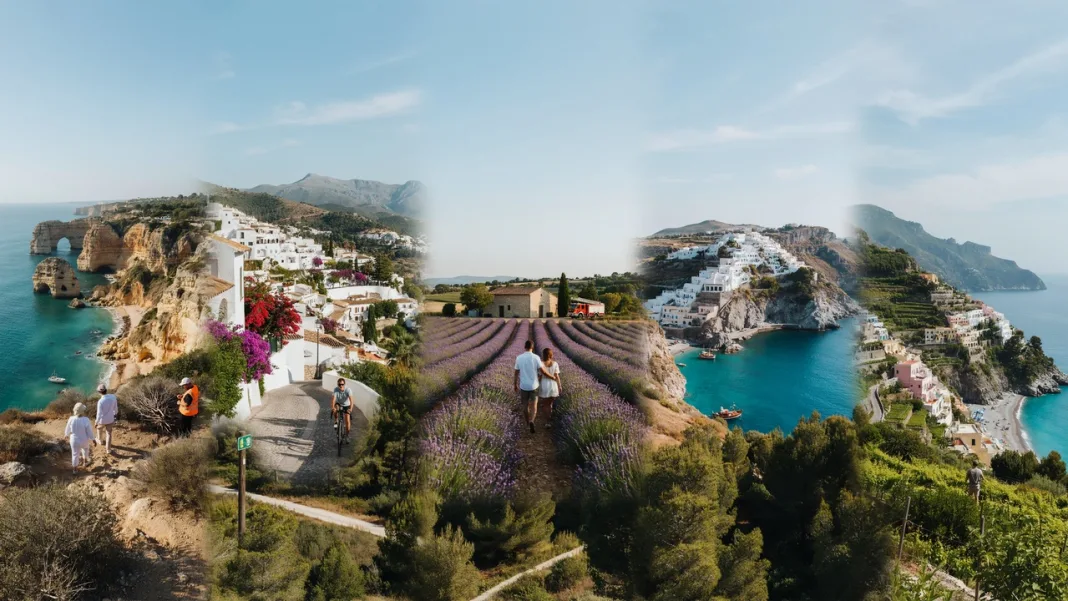
Image generated with Ai
Over decades, the tourism sector in Europe has been competing in the field of beach resorts, historical places, picturesque landscapes, festivals and cultural attractions. However, a new element has appeared in the strategy of destination promotion: resilience.
With the increase of fire hazard, countries and representatives of the tourism industry start thinking not only about enhancing tourism numbers. It now becomes crucial how to ensure the safety of visitors and at the same time protect people, nature and tourism facilities during the times of high fire danger.
The nature of the idea about the wildfires has changed and it is treated now more in the broad context of threats to tourism. The nature of the idea about wildfires has changed radically, and it is not simply an emergency troubling vacations but a necessity of preparation for wildfires.
The European Commission claims that the wildfires in the European Union in 2025 were the strongest of all times with nearly one million hectares of land burned.
Advertisement
Advertisement
A Record Fire Season Has Changed the Conversation
The latest European wildfire figures show why resilience is becoming an important tourism issue.
As of 17 August 2026, the European Forest Fire Information System recorded 600,494 hectares burned in the EU and 1,706 fires since the beginning of the year. The figure was below the same date in 2025, but remained substantially above the 2006–2025 long-term average.
| Wildfire Indicator | EU Situation |
|---|---|
| Area burned by 17 August 2026 | 600,494 hectares |
| Fires detected | 1,706 |
| Area burned by 12 August 2026 | 584,266 hectares |
| Long-term average by 12 August, 2006–2025 | 243,189 hectares |
| 2025 | Worst wildfire season on record |
The figures do not mean that every tourism destination is facing an immediate threat. They show instead why European authorities are treating wildfire resilience as a continent-wide planning issue.
The New Tourism Question: How Resilient Is a Destination?
For travelers, the attractiveness of a place has traditionally depended on scenery, accommodation, accessibility and experiences.
Advertisement
Advertisement
For tourism planners, the checklist is becoming much longer.
A resilient destination may need to consider:
| Tourism System | Resilience Priority |
| Hotels and resorts | Emergency procedures and communication |
| Roads | Alternative routes and rapid closure plans |
| Nature parks | Fire-risk monitoring and visitor controls |
| Tourist attractions | Evacuation and continuity planning |
| Airports and transport | Disruption management |
| Local authorities | Coordinated emergency response |
| Visitors | Clear, timely safety information |
This broader approach matters because a wildfire can affect a destination without destroying its tourism infrastructure. A closed road, restricted forest area or temporary evacuation can be enough to disrupt a holiday itinerary.
Spain Shows Why Destination Preparedness Matters
Spain remains one of Europe’s most important tourism markets, attracting enormous numbers of international visitors every year. The country’s scale also means that wildfire management can have major implications for tourism.
Official UK travel guidance currently notes wildfire emergencies affecting parts of Madrid and Ávila, illustrating how fire risk can reach areas well beyond traditional Mediterranean resort zones.
This wider geographical reach is important. Travelers may associate wildfire risk mainly with remote forests, but modern tourism networks connect cities, inland attractions, highways, rural accommodation and natural parks.
For destination managers, resilience therefore needs to cover the entire visitor journey.
Portugal Is Strengthening the Safety Conversation
Portugal has a long history of wildfire exposure, particularly during hot and dry periods.
Current government travel guidance states that Portugal faces an increased wildfire risk from April through October. Authorities can evacuate areas and close roads when necessary, while travelers are advised to monitor local fire-risk information and follow instructions from Portuguese authorities.
That has implications for tourism planning in places ranging from the mainland to Madeira and the Azores.
The challenge is not to make these destinations appear inaccessible. It is to ensure that tourism infrastructure is integrated with emergency planning so that visitors can receive clear information and destinations can respond quickly when conditions deteriorate.
France Highlights the Importance of Local Restrictions
France provides another example of how wildfire resilience intersects directly with the visitor experience.
During periods of elevated danger, authorities can restrict access to forests and countryside areas, close roads and evacuate campsites or tourist accommodation. Official travel guidance has specifically highlighted wildfire impacts in parts of Gironde and Landes during the 2026 season.
This shows why destination resilience cannot depend entirely on national-level policies.
Local authorities play a crucial role because wildfire conditions can vary dramatically between neighboring regions. An entire country may remain open for tourism while specific municipalities, forests or roads temporarily require restrictions.
Greece Is Building Safety Into the Visitor Experience
Greece illustrates another important part of the new tourism model: communication.
Greek authorities use emergency alerts to warn people about wildfires and other hazards. Official guidance encourages visitors to remain attentive to emergency notifications and follow instructions from local authorities during wildfire incidents.
This is more than an emergency measure.
For international tourism, communication is part of destination infrastructure. Travelers who do not speak the local language need information that is rapid, understandable and easy to act upon.
The future of resilient tourism will therefore depend partly on how efficiently destinations connect emergency systems with visitors.
Nature Protection Is Becoming Tourism Protection
There is another important shift underway: protecting natural landscapes is increasingly being recognized as a way of protecting tourism itself.
The European Environment Agency’s Climate-ADAPT platform emphasizes the close relationship between tourism and nature. It notes that stronger climate hazards can put pressure on tourism infrastructure and reduce access to attractions, while nature protection can also form part of tourism adaptation.
That creates an important connection.
Forests, national parks, coastal landscapes and mountain environments are not simply scenery. They are tourism assets. When they are degraded, tourism value can decline with them.
For this reason, fire prevention, land management, ecological restoration and visitor management can all become part of tourism strategy.
Europe Is Building a More Coordinated Firefighting Network
The response is also becoming more international.
Ahead of the 2026 wildfire season, the European Commission said 777 firefighters from 14 countries would be deployed across high-risk areas in six southern European countries. The EU also had 22 firefighting airplanes and five helicopters ready for support, alongside certified emergency teams.
The European Union is also using satellite monitoring and the European Forest Fire Information System to track risks and support emergency decisions.
This cross-border approach is particularly relevant to tourism because Europe’s visitors move easily between countries. A regional crisis can affect road networks, transport connections and multi-country itineraries.
Tourism Can Adapt by Designing Smarter Itineraries
One of the most promising responses is not simply moving tourism away from one region to another.
It is making travel more flexible.
European destinations can develop tourism products that combine different types of experiences, allowing travelers to adjust their plans according to conditions.
For example:
- Urban attractions can complement nature excursions.
- Cultural tourism can reduce reliance on outdoor activities during high-risk periods.
- Regional itineraries can provide alternative destinations.
- Shoulder-season travel can spread demand across the year.
- Flexible booking and communication systems can help travelers respond to changing conditions.
Climate-ADAPT specifically identifies tourism diversification, cooler destinations and seasonal adjustments as potential adaptation opportunities.
The North Could Gain, but the Opportunity Is Bigger Than Geography
Changing climate conditions may create opportunities for cooler and higher-altitude destinations. The European Environment Agency notes that some areas may attract more visitors as travelers seek relief from heat, while other tourism regions may experience greater pressure.
But the long-term tourism opportunity is not simply a north-versus-south competition.
It is about diversification.
A resilient European tourism industry can offer different experiences across different seasons and geographical zones, reducing pressure on individual destinations and giving travelers more alternatives.
What This Means for the Future of Holiday Planning?
For travelers, wildfire risk is likely to become another factor considered alongside accommodation prices, transport connections and weather forecasts.
That does not make European travel less attractive. It changes what responsible travel planning looks like.
Visitors may increasingly value destinations that provide:
clear information, reliable emergency systems, flexible travel options, protected natural spaces.
That combination could become a competitive advantage.
Destinations with strong resilience systems may reassure travelers that they can respond quickly when conditions change.
The New Competitive Advantage: Resilience
Europe does not face a clear-cut dilemma when it comes to selecting between travel and climate change.
The apparent problem is establishing a tourism industry that can function responsibly in a transforming world.
This involves maintaining forests, building emergency response systems, funding more communication resources, and developing venues and products that will stand the test of time.
The most successful tourist location of the times may well not be a place with the biggest beaches, the most popular attractions, or the largest number of hotels.
The destination that has mastered the art of preparing for instability may prove to be the one among others.
The development of wildfires as one of the aspects of climate change makes resilience a necessary component of tourism planning in Europe.
Frequently Asked Questions
1. Will wildfires stop people from visiting Europe?
Not necessarily. Europe remains a major global tourism region, but wildfire risk may influence seasonal choices, itinerary planning and demand for flexible travel.
2. Which European countries are particularly exposed?
Southern Europe has substantial exposure, but wildfire danger can also reach parts of central, western and northern Europe. Recent EU forecasts have shown very high-risk areas extending beyond the Mediterranean.
3. Can tourism help destinations become more resilient?
Yes. Tourism planning can support nature protection, infrastructure investment, better visitor management and diversification of local economies. Climate-ADAPT identifies nature protection and tourism diversification as important adaptation approaches.
4. Are European governments investing in wildfire preparedness?
Yes. The European Commission expanded firefighting capacity for 2026 and is strengthening prevention, preparedness, response and recovery across the EU.
5. Could cooler destinations benefit from the changing climate?
Some may. European climate-adaptation research indicates that travelers may increasingly favor cooler areas during periods of intense summer heat.
6. Why does wildfire preparedness matter to tourism businesses?
Because fires can affect roads, accommodation, attractions, outdoor activities, local infrastructure and visitor confidence even when tourism facilities are not directly damaged.
Advertisement
Advertisement