
The first large site in the continental U.S. for testing technologies that generate electricity from ocean waves is now open after securing a key green-energy approval from the Trump administration.
The federal approval is notable because President Donald Trump has created massive hurdles for clean energy, particularly offshore wind. His government has implemented policies that slow energy permitting and development, canceled billions in grants for hundreds of clean energy projects and spent nearly $4 billion to buy back leases to stop offshore wind projects. But Trump officials see promise in harnessing the power of the ocean’s waves.
Companies can now bring wave energy technologies off the coast of Oregon to PacWave South to test their ability to generate power in the open ocean and deliver it to the local grid. The goal is to advance an industry that’s still in its infancy but has enormous potential for cleanly generating large amounts of electricity.
Oregon State University developed the test facility. After Trump returned to office in 2025, PacWave had to pass a “go/no-go” review at the Energy Department that required approval by the energy secretary to open, PacWave Director Dan Hellin said. Hellin said the approval came through last summer and they connected to the grid this summer.
But the facility has yet to generate any electricity because no wave energy devices have arrived, with developers facing delays in federal funding.
The Department of Energy has invested nearly $150 million since 2016 in the facility’s siting and construction costs. The university is marking the facility’s opening Thursday in an invitation-only event.
Bringing PacWave South online will help streamline the testing and permitting process that has held back marine energy for decades, an Energy Department spokesperson said in a statement.
Burning coal, oil and natural gas for electricity emits carbon dioxide, trapping heat in the atmosphere and warming the planet. By contrast, marine energy is carbon-free.
It has the potential to power about 57% of U.S. electrical needs, according to federal estimates. The Energy Department says that even if only a small portion of this is captured, marine energy technologies would make significant contributions to America’s energy system.
The department also says the wave energy devices that will be tested at the PacWave site can enhance national security, in contrast to its characterization of wind energy. The administration has worked to stop offshore wind development on the grounds that it’s a national security risk since late last year.
The Energy Department said that technologies that convert wave energy to electricity are “uniquely suited to provide power sources for national security applications.” Those could include remote sensors, autonomous underwater vehicles and other equipment that requires persistent, low-visibility power in remote and sensitive offshore and coastal environments, as well as power resiliency for forward military bases.
The PacWave South site in Oregon isn’t the first grid-connected wave energy test site in the nation — the U.S. Navy has one in Hawaii — but it’s the first to be connected to the continental U.S. grid. It’s also “pre-permitted,” which means developers can bring several types of wave energy converters there without having to acquire permits on their own for testing, saving them time and money. Those include point absorbers, oscillating water columns and attenuators.
“When you’re developing this technology, ultimately you have to get to that stage of full-scale open water testing, connected to the grid. And that’s the real bottleneck for the global industry, the fact that there’s very few facilities like this,” Hellin said.
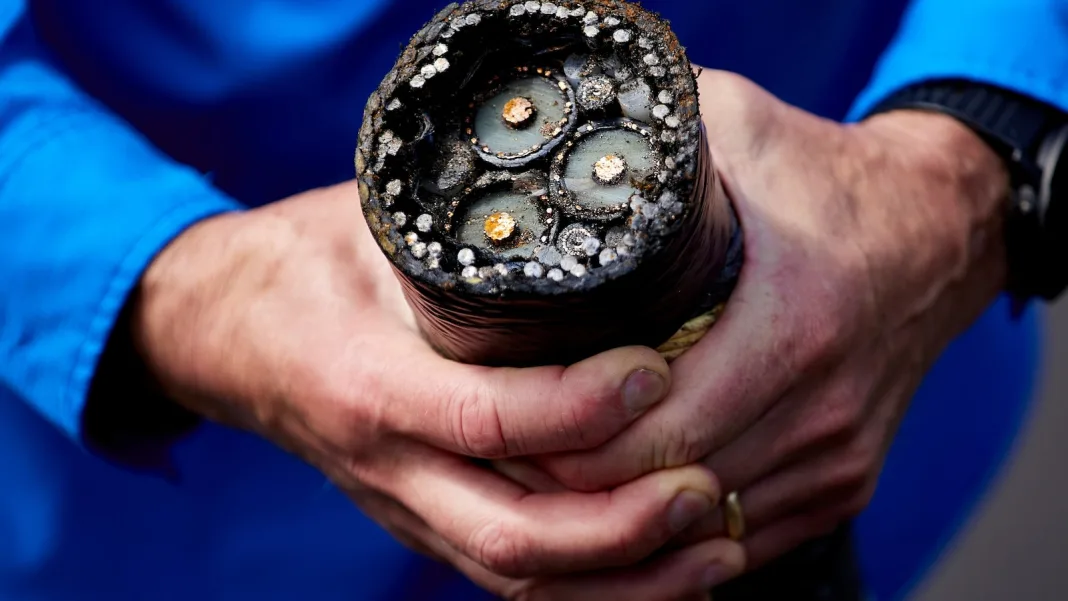
A point absorber is the most common type. These buoy-like devices move up and down, converting the motion of waves into electricity. An oscillating water column uses the rise and fall of waves to push and pull air through a turbine to generate electricity. An attenuator is a long, floating device. As its sections flex with the motion of the waves, that movement is converted into electricity. These devices use subsea cables to connect to the grid to supply that electricity to shore.
___
The Associated Press’ climate and environmental coverage receives financial support from multiple private foundations. AP is solely responsible for all content. Find AP’s standards for working with philanthropies, a list of supporters and funded coverage areas at AP.org.