
Published on August 22, 2026 |

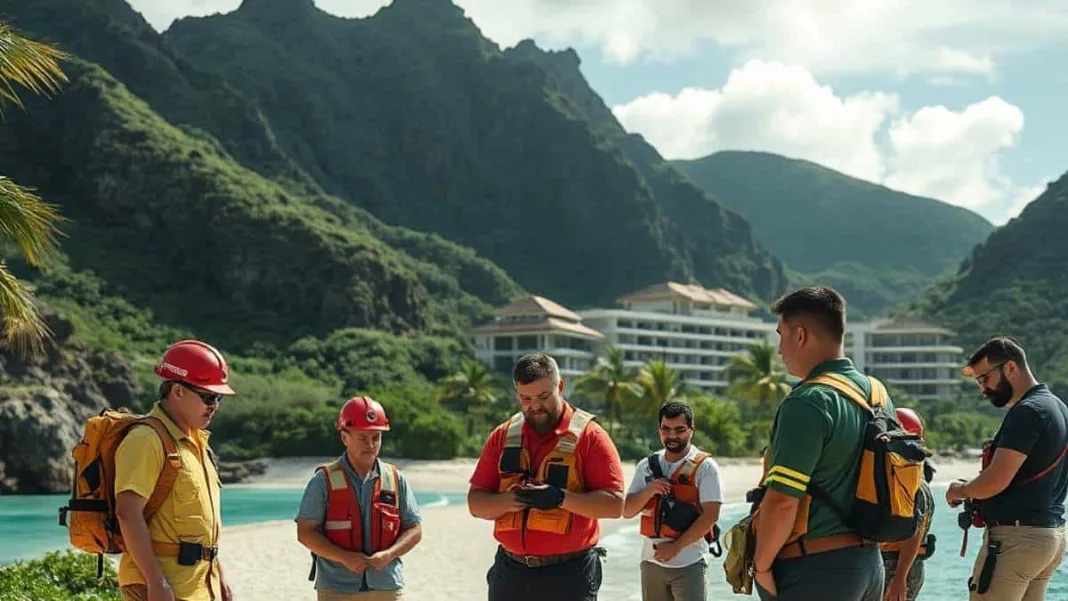
Image generated with Ai
Tourism safety in the Philippines is currently being upgraded via disaster preparedness and response programmes that involve tourism employees as lifesaving first responders. In Batanes, for instance, the Department of Tourism trained their local tourism frontliners in disaster risk reduction and management, giving them the ability to communicate during emergencies, rescue methods, firefighting and crisis management knowledge. The program is consistent with the increasing emphasis on resilient tourism in the Philippines wherein tourism guides, hospitality staff, and destination workers are very important in ensuring the safety of tourists and the community at times of emergencies.
Fortifying Island Tourism Through Targeted Disaster Risk Reduction
The operational continuity and visitor security of the Philippine tourism sector are consistently challenged by acute vulnerability to hydro-meteorological, seismic, and volcanic events. Positioned directly within both the Pacific Ring of Fire and the Western Pacific typhoon belt, regional destinations require localized, highly specialized disaster risk reduction and management (DRRM) frameworks. These systems are strategically calibrated to address diverse regional topographies, including isolated oceanic islands, dense coastal urban hubs, and steep mountainous corridors prone to landslides.
Throughout 2026, disaster preparedness programs across the archipelago were substantially expanded through coordinated operations led by the Department of Tourism (DOT) in partnership with the National Disaster Risk Reduction and Management Council (NDRRMC), the Office of Civil Defense (OCD), the Department of Science and Technology (DOST), and various Local Government Units (LGUs). Parallel capacity-building initiatives were deployed across Cagayan Valley (Region 2), Bicol Region (Region 5), Eastern Visayas (Region 8), Central Visayas (Region 7), the Cordillera Administrative Region (CAR), and Northern Mindanao (Region 10).
Localized First Response Architecture in Batanes
The Department of Tourism Cagayan Valley Regional Office (DOT Region 2), under the direction of Regional Director Troy Alexander Miano, organized a structured capacity-building seminar from August 13 to 14, 2026. The training was conducted at the 3rd Floor Conference Hall of the Bureau of Fisheries and Aquatic Resources (BFAR) Building in Basco, Batanes. Formal inter-agency collaboration was established with the Provincial Government of Batanes through the Provincial Disaster Risk Reduction and Management Office (PDRRMO) and the Provincial Heritage and Tourism Office (PHTO).
Advertisement
Advertisement
Frontline cohorts comprising local tour guides, homestay operators, and private enterprise staff were assembled to establish decentralized emergency capabilities. This program built upon earlier initiatives, including a February 2026 workshop in Basco wherein 42 tourist drivers were instructed in safety standards, service excellence, and heritage regulations.
The instructional curriculum was divided into distinct phases:
- Incident Command and Crisis Communication (Day 1): Instruction was delivered by DOT Region 2, PDRRMO Batanes, and PHTO on Incident Command System (ICS) protocols, situational awareness across isolated island geographies, and accurate crisis communication to prevent panic during severe weather events.
- Tactical Response and Rescue Drills (Day 2): Hands-on drills were supervised by the Bureau of Fire Protection (BFP) and PDRRMO Batanes, focusing on portable fire extinguisher operation, technical knot-tying for search and recovery, and patient extraction maneuvers across coastal, roadside, and hiking trail environments.
- Culmination and Simulation: Tailored, establishment-level Emergency Action Plans (EAPs) were drafted by participants and evaluated through multi-hazard scenario simulations managed by the PDRRMO.
Comparative Implementations Across Key Philippine Destinations
Across the country, distinct regional strategies were executed to address localized geographic hazards, event security, and resource mobilization:
- Volcanic Risk Management in Albay (Bicol Region): A hybrid national seminar entitled Crisis Preparedness and Risk Management in Tourism was conducted on March 11, 2026, by the Tourism Promotions Board (TPB) Philippines under Chief Operating Officer Maria Margarita Montemayor Nograles. Technical presentations were delivered by the Asian Institute of Management (AIM) Andrew L. Tan Center for Tourism, the San Pedro City Disaster Risk Reduction and Management Office (DRRMO), and specialized communications consultants. Hazard identification tools and crisis communication strategies were presented to 53 onsite destination managers and more than 350 virtual participants at the base of Mayon Volcano.
- Resilience-Based Educational Circuits in Leyte (Eastern Visayas): A science-based tourism model was established on July 20, 2026, through a formal Memorandum of Agreement (MOA) between DOT Region 8 and DOST Region 8 during the 2026 Regional Science, Technology, and Innovation Week (RSTW). Working with the Association of Leyte Tour Operators (ALTO) and the Eastern Visayas Association of Travel and Tour Agencies (EVATG), the Leyte Science Trails: Energy, Resilience, and Innovation Experience was introduced. Under the theme Science of Resilience and Recovery, the Tacloban–Palo Cluster was designated to transform post-Super Typhoon Haiyan (Yolanda) infrastructure, coastal engineering projects, and climate research centers into educational tourism destinations.
- Multi-Agency Preparedness and Maritime Compliance (Central Visayas): In preparation for the ASEAN Summit 2026 hosted across Cebu and Bohol, comprehensive readiness protocols were coordinated by DOT Region 7 Director Gelena Asis-Dimpas alongside OCD 7, DOH 7, and DSWD 7. Code Blue status was activated across regional health facilities by DOH 7, deploying 55 medical teams comprising nearly 400 responders, while 14 evacuation centers were fortified with mobile command systems. Additionally, 51 regional officials were trained in Post-Disaster Needs Assessment (PDNA) methodology from July 27 to 31, 2026, by DEPDev 7 and OCD 7 at the RDC Hall in Cebu City. Mandatory safety compliance under Republic Act 9593 was enforced on May 26, 2026, by Senior Tourism Operations Officer Marlon Barrientos, requiring travel agencies to contract solely with MARINA-certified, DOT-accredited operators, resulting in physical inspections across 70 water transport operators managing yachts and motor bancas.
- High-Altitude Emergency Units in the Cordillera (CAR): A Memorandum of Agreement was formalized on June 17, 2026, in Baguio City by DOT-CAR Regional Director Jovita Ganongan and PRO-CAR Regional Director Police Brigadier General Erickson Dilag. Specialized Tourist Police Units were established under the Tourist-Oriented Police for Community Order and Protection (TOPCOP) framework to provide roadside landslide assistance, mountain trail search and rescue, and cultural guidance throughout high-altitude mountain corridors.
- Aquatic Rescue Mobilization in Lanao del Norte (Northern Mindanao): A joint initiative was instituted on June 3, 2026, during a PDRRMC meeting in Tubod, Lanao del Norte, led by Governor Mohamad Khalid Q. Dimaporo. A strategic partnership between the PDRRMC and DOT Region 10 was approved to train a certified pool of local rescue divers for deployment during marine accidents, search and rescue operations, and coastal environmental hazards such as red tide occurrences.
Strategic Summary of 2026 Regional DRRM Tourism Frameworks
| Region & Location | Implementation Date | Institutional Partners | Core Focus & Methodology | Primary Target Cohort & Outputs |
| Cagayan Valley (Batanes) | August 13–14, 2026 | DOT Region 2, PDRRMO Batanes, PHTO, BFP | Incident Command System, practical fire suppression, rescue knot-tying, coastal drills | Local guides, hospitality staff; establishment-level EAPs |
| Bicol Region (Albay) | March 11, 2026 | TPB Philippines, DOT, AIM, San Pedro DRRMO | Volcanic hazard risk management, crisis communications, destination hazard analysis | Onsite and virtual destination managers; crisis plans |
| Eastern Visayas (Leyte) | July 20, 2026 | DOT Region 8, DOST Region 8, ALTO, EVATG | Science of Resilience and Recovery trails, educational interpretation | Tour operators, travel agencies; formal science-tourism MOA |
| Central Visayas (Cebu & Bohol) | May – July 2026 | DOT Region 7, OCD 7, DOH 7, DEPDev 7, MARINA | Summit medical readiness, PDNA methodology, maritime safety accreditation | Event delegates, DRRM officers, water transport operators; safety audits |
| Cordillera (CAR-wide) | June 17, 2026 | DOT-CAR, Police Regional Office-Cordillera | TOPCOP deployment, mountain trail rescue, high-altitude hazard assistance | Provincial police, mountain frontliners; tourist police units |
| Northern Mindanao (Lanao del Norte) | June 3, 2026 | Lanao del Norte PDRRMC, DOT Region 10 | Aquatic search and rescue, certified rescue diver development, marine safety | Marine operators, local divers; coastal response units |
Strategic Policy Implications and Future Directions
A transition toward decentralized, geography-specific risk reduction frameworks is demonstrated by the 2026 interventions. Frontline hospitality workers and local police are established as effective first responders during the critical opening hours of a disaster, compensating for potential infrastructure isolations in remote alpine or island environments. Furthermore, hazard resilience is increasingly integrated into destination identity and educational travel products, mitigating reputational vulnerability while generating scientific awareness.
To maintain national momentum, three strategic policy directions are highlighted for future implementation:
- Standardization of Emergency Action Plans: Mandatory establishment-level EAPs should be integrated as an indispensable requirement for annual DOT accreditation across all primary tourism enterprises.
- Institutionalized Recertification Pathways: Structured, periodic recertification programs should be mandated for frontline workers in Incident Command System protocols, emergency communications, and basic tactical rescue.
- Integration with Centralized Digital Infrastructure: Direct linkages should be constructed between localized emergency response networks and the national 24/7 Tourist Assistance Call Center to ensure real-time coordination during large-scale national emergencies.
Conclusion
As such, the decision by the Philippines to prepare their tourist workers against disasters emphasizes the need for safety, resilience, and quick responses in the travel industry. By arming its frontliners with life-saving skills, emergency planning skills, and response techniques, the Philippines is able to keep tourists safe even while helping its local communities respond to disasters. Batanes is part of a much larger effort to improve the resilience of the tourism industry in disaster-prone areas of the country.
Advertisement
Advertisement