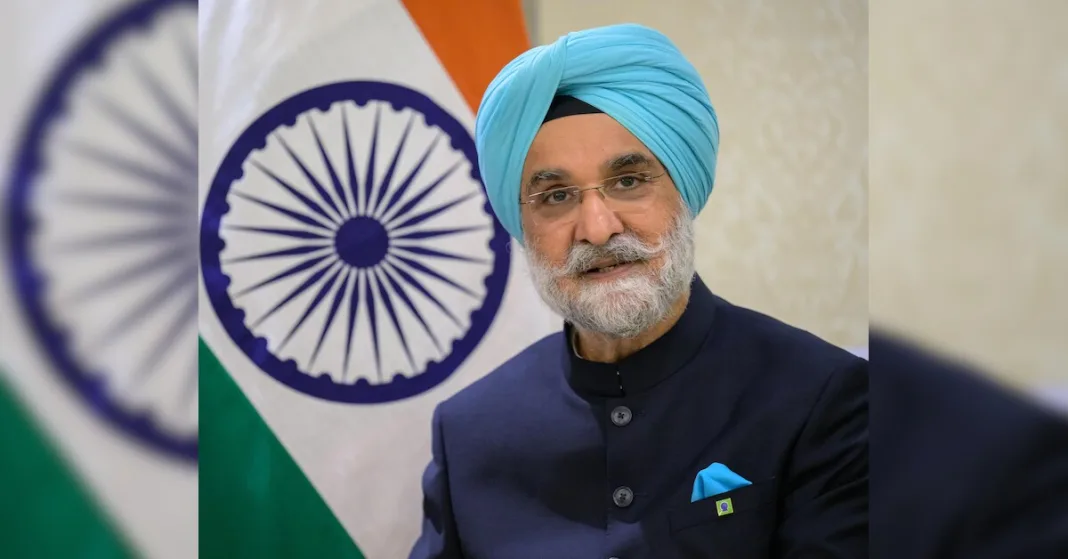

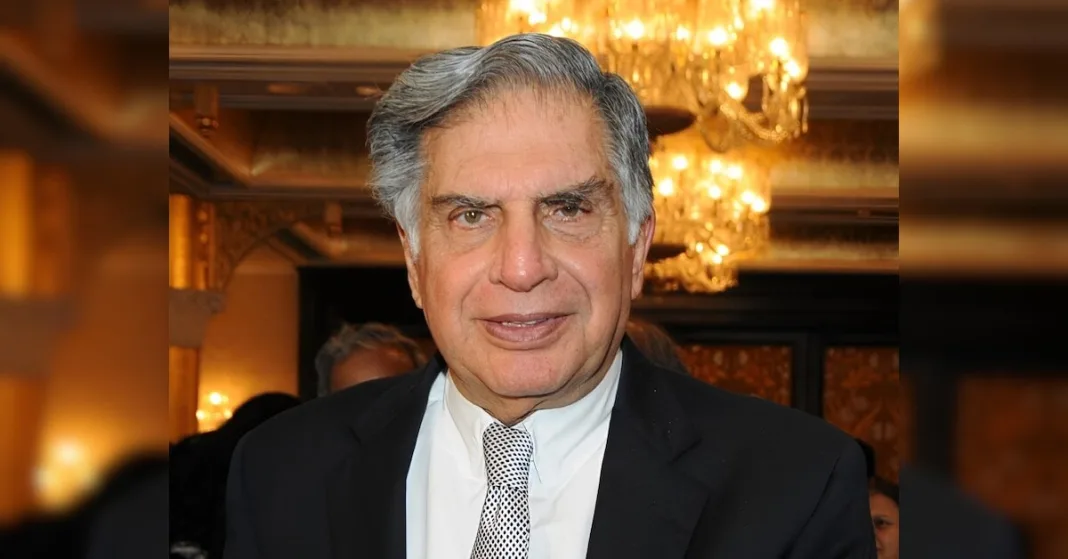

N Chandrasekaran’s decision to step down as Tata Sons chairman when his current term ends in February 2027 caps nearly two years of upheaval at the Tata Group following Ratan Tata’s death.
What began as a leadership transition at Tata Trusts gradually widened into disagreements over the Trusts’ oversight of Tata Sons, whether the holding company should remain privately held, an exit mechanism for the Shapoorji Pallonji Group, the performance of capital-intensive businesses and succession at the top of the group.
Ratan Tata died on October 9, 2024. Two days later, his half-brother Noel Tata was unanimously appointed chairman of Tata Trusts, whose constituent trusts together own around 66 per cent of Tata Sons.
Noel brought extensive operating experience but did not inherit Ratan Tata’s unquestioned authority over the trustees, Tata Sons and the wider group. This became increasingly significant as differences emerged among trustees over governance and representation on the Tata Sons board.
Noel joined the Tata Sons board as a Tata Trusts nominee in November 2024. Around the same time, the trustees adopted a resolution providing for their continuation after their fixed terms expired. Its interpretation — whether renewal was effectively automatic or still required the approval of fellow trustees — would later become a major source of conflict.
The first public rupture came in September 2025, when four trustees — Mehli Mistry, Pramit Jhaveri, Darius Khambata and Jehangir H C Jehangir — opposed the continuation of former defence secretary Vijay Singh as a Tata Trusts nominee on the Tata Sons board. Noel Tata and Venu Srinivasan, chairman emeritus of TVS Motor and vice-chairman of Tata Trusts, supported Singh, but the proposal failed and Singh subsequently stepped down from the Tata Sons board.
The four trustees reportedly argued that Tata Trusts was not receiving adequate information from its representatives on the Tata Sons board. They sought greater visibility into strategic decisions, capital allocation, board appointments and the performance of newer businesses.
They subsequently proposed Mistry, a close associate of Ratan Tata, as a Tata Trusts nominee on the Tata Sons board, but Noel and Srinivasan opposed the move. The following month, when Mistry’s three-year term on the boards of the Sir Dorabji Tata Trust and Sir Ratan Tata Trust expired, Noel, Srinivasan and Singh withheld the support required for its renewal, bringing his tenure at the two principal trusts to an end.
The dispute exposed two competing blocs within Tata Trusts and prompted an unusual intervention by the Union government. Reports said Union Home Minister Amit Shah and Finance Minister Nirmala Sitharaman met senior Tata representatives, including Noel and Chandrasekaran, and urged them to resolve their differences amicably and prevent the dispute from spilling into the public domain, given the group’s importance across aviation, defence, technology and manufacturing.
Alongside the governance battle was the unresolved question of whether Tata Sons should be listed. The Reserve Bank of India had classified Tata Sons as an upper-layer non-banking financial company in September 2022, ordinarily requiring it to list within three years.
Tata Sons repaid its debt and applied to surrender its NBFC registration, but the application remained pending and the RBI continued to retain the company in the upper-layer category. The Shapoorji Pallonji Group, which owns 18.37 per cent of Tata Sons and needs liquidity to reduce debt, publicly supported a listing.
Tata Trusts, however, was concerned that an initial public offering could dilute its control and alter Tata’s trust-owned corporate model. In July 2025, it asked Chandrasekaran to explore ways to keep Tata Sons private while simultaneously negotiating a possible exit for the SP Group — two objectives that proved difficult to reconcile.
In July 2025, Chandrasekaran appeared to retain strong support, with the Sir Ratan Tata Trust and Sir Dorabji Tata Trust unanimously backing a third five-year term for him from February 2027. Chandrasekaran, now 63, would turn 65 in 2028, requiring an exception to the group’s convention under which executives retire at 65. Continuity was considered important as Tata pursued large investments in Air India, semiconductors, electronics, batteries and digital businesses.
By February 2026, however, Noel’s position had changed. At a Tata Sons board meeting convened to consider Chandrasekaran’s reappointment, four of the six directors reportedly supported another term, while Noel sought additional conditions before giving his approval. These included greater clarity on the group’s five-year strategy, containing losses at Air India and other businesses, avoiding high-risk investments, finding an exit mechanism for the SP Group and ensuring that Tata Sons remained private.
The last condition was difficult for Chandrasekaran to guarantee. Tata Sons remained classified by the RBI as an upper-layer NBFC, ordinarily requiring a listing, while its application to surrender the registration was pending. He, therefore, could not unconditionally commit to keeping the holding company private.
Rather than allow the board to decide the matter through a divided vote, Chandrasekaran proposed deferring it until Tata Sons and Tata Trusts could reach a consensus. The principal trusts’ earlier resolutions supporting a third term had not formally been withdrawn, but Noel’s opposition meant that Chandrasekaran no longer had the unequivocal backing of the controlling shareholder’s leadership.
No consensus emerged over the following six months. Reports subsequently suggested that Noel favoured an extension of one or two years, tied to a succession plan, rather than another full five-year term. Such an arrangement would have allowed Chandrasekaran to oversee a transition while effectively placing an end date on his leadership.
The situation was further complicated when former trustee Mistry approached the Maharashtra Charity Commissioner, alleging irregularities in trustee appointments, the creation of permanent trusteeships and the functioning of certain Tata trusts. Tata Trusts contested the allegations, which remained under examination by the Charity Commissioner.
The proceedings nevertheless affected the Trusts’ ability to hold meetings and take decisions. In May, the Charity Commissioner directed the Sir Ratan Tata Trust to defer a scheduled meeting while the complaints were examined.
By August, Chandrasekaran was approaching another potential flashpoint. His reappointment as a Tata Sons director was due to come before shareholders at the August 18 annual general meeting. This was separate from the proposed third term as chairman, as his existing tenure ran until February 2027. Retaining his directorship, however, was necessary for him to continue as chairman.
The regulatory proceedings added another complication ahead of the AGM. The Sir Ratan Tata Trust — one of Tata Sons’ largest shareholders — faced restrictions on taking important decisions while the inquiry continued.
With Tata Trusts divided, its decision-making under regulatory scrutiny and no agreement on his third term after nearly six months, Chandrasekaran announced that he would not seek reappointment rather than face a potentially contentious vote without unequivocal shareholder support. He will continue until his current term ends in February 2027, giving the group time to identify a successor.
His exit is, therefore, more than a change of chairman. It represents the breakdown of the informal consensus that governed the Tata system under Ratan Tata. It also leaves unresolved the central governance question exposed earlier by the Cyrus Mistry episode: Where does ultimate authority lie — with Tata Sons’ professional board or the charitable trusts that control it?