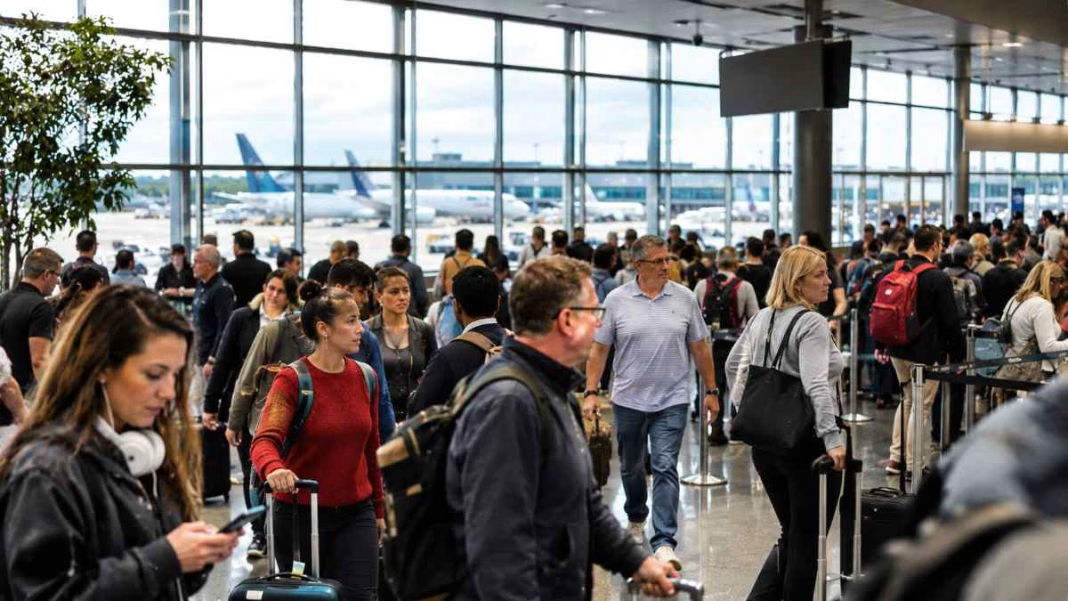


The breakdown in a major airline control coms system caused a nationwide ground stop over all flights throughout the US on Friday 13 November 2026, causing travel chaos for thousands of flight cancellations and stranded travellers. Although the Federal Aviation Administration (FAA) approved the airspace by that night, the system was unable to accelerate flights, leading to a hangover that stretched into Saturday as airlines scrambled to reposition aircraft and crews. Questions about the state of the country’s aged airline traffic control infrastructure have come into focus. Transportation Secretary Sean Duffy and FAA Administrator Bryan Bedford initially blamed telecom work by contractor L3Harris while officials continued to probe an unidentified equipment or installation failure. By Sunday 15 November, authorities hoped to completely resume airline scheduling that day, but travellers were told to keep a close eye on their flights until their resets reached full speed, as reshuffling schedules, crews and airport activity could take longer to resume.
Why the FAA ordered a nationwide ground stop
The disruption began at approximately 3:36 p.m. Eastern Time on Friday, when instability affected radar and communications systems used by air traffic controllers. The FAA subsequently ordered a nationwide ground stop, halting nearly all departing flights while aircraft already in the air were allowed to continue to their destinations.
The restriction was lifted at approximately 8:15 p.m. ET, after technicians isolated the problem and authorities determined that operations could resume safely. The episode was described by Reuters as the longest nationwide halt to US air travel since the September 11, 2001 attacks.
However, it is important to distinguish a nationwide departure ground stop from a complete shutdown of every aircraft movement. Flights already airborne were not all ordered to land immediately. The FAA’s precautionary decision was intended to prevent additional departures while communications and radar reliability were assessed.
Advertisement
Advertisement
The Department of Transportation said more than 3,500 flights were grounded during the response. Once the restriction was lifted, more than 8,000 flight operations resumed that evening. The reopening, however, did not immediately restore normal airline schedules.
L3Harris router installation under investigation
At a press conference on Saturday, Transportation Secretary Sean P. Duffy and FAA Administrator Bryan Bedford outlined the preliminary explanation for the communications failure.
Advertisement
Advertisement
According to Duffy, telecommunications contractor L3Harris was carrying out routine work at a remote FAA location, replacing ageing copper telephone lines with fibre-optic connections. During the transition from older analogue technology to digital systems, a router began sending an unusually high volume of connection attempts into the wider network.
Officials said the affected equipment generated more than 1,000 connection attempts every four to five seconds. This overloaded other routers and disrupted communications with aircraft as well as some radar feeds.
Advertisement
Advertisement
The problem affected 17 of the FAA’s 22 en-route air traffic control centres, not all 22 as initially reported in some accounts. These centres manage aircraft during the cruising portion of flights. Bedford said no facility had completely lost communications, but the possibility of a wider failure justified the decision to stop departures.
Investigators have not yet established whether the incident resulted from an installation error, human error or a faulty router. Duffy said the FAA and L3Harris were continuing their investigation and testing to identify any remaining risks.
Officials have said they do not believe the incident was caused by a cyberattack. That assessment should be treated as a preliminary finding while the investigation continues, rather than a final technical conclusion.
More than 15,000 cancellations across Friday and Saturday
The operational impact extended well beyond the period when the ground stop was active. FlightAware figures reported by Reuters showed approximately 9,200 cancellations and 7,500 delays on Friday, 13 November.
Advertisement
Advertisement
On Saturday, 14 November, airlines cancelled more than 6,400 flights and recorded over 8,000 delays. Combined, the two days therefore saw more than 15,600 cancellations and approximately 15,500 delays across flights within, into or out of the United States.
These are reported daily network totals, not a count of flights directly stopped by the FAA order. They include the wider disruption that followed as aircraft and crews were left out of position.
The consequences were particularly difficult for passengers connecting through major hubs. A cancelled first flight could mean a missed international connection, while crew scheduling limits and aircraft availability made it harder for airlines to accommodate displaced travellers quickly.
The disruption also highlighted the wider vulnerability of an air traffic system that relies on communications infrastructure requiring modernisation. Duffy has called for significant investment in upgrading the national air traffic control network.
Airlines offer fee-free rebooking options
Major US airlines have introduced travel waivers to help affected passengers change their plans. However, eligibility, affected travel dates and rebooking deadlines differ by carrier.
- American Airlines: Its waiver covers selected US airports and eligible tickets purchased by 12 November. The latest published terms allow affected passengers to rebook without a change fee, with changes to be made by 18 November and eligible replacement travel through 21 November, subject to conditions.
- Delta Air Lines: Delta has offered flexible rebooking for customers scheduled to travel from 13 to 15 November. The airline is encouraging passengers with flexible plans to move travel to 16 November or later.
- United Airlines: Eligible passengers affected by the disruption can change flights without additional change fees or fare differences for qualifying replacement travel through 20 November, subject to the airline’s waiver conditions.
- JetBlue: The airline is waiving change and cancellation fees, as well as fare differences, for eligible JetBlue-operated flights scheduled from 13 to 15 November. Passengers can rebook for travel through 18 November.
Passengers should check the relevant airline’s official travel alert before making changes. Some waivers apply only to selected airports, original booking dates, routes or fare conditions. A fee waiver should not automatically be interpreted as permission to change destinations or travel dates without restrictions.
Sunday recovery target remains important for travellers
By Sunday, 15 November, the FAA and airlines had set a goal of being back to normal scheduling by the end of that day. “We anticipate the airlines will have full schedule integrity” by the end of the day on Sunday, said Bedford, though individual airlines were being cautious about the time required to reposition aircraft and crews. Delta, for one, said on its website that “customers with travel flexibility” might want to consider shifting their plans to 16 November or later. That underscores why that was a timeline, rather than a promise, that every flight would be on time Sunday. Passengers flying in the next couple of days should double-check their flights with the airline before heading to the airport, watch for updates, and plan to arrive early. Customers whose flights are affected should review their airline’s waiver and refund policies