
Even through the Galwan clash in 2020 and the long standoff in eastern Ladakh, nuclear weapons stayed in the shadows of India-China relations. There was no nuclear
sabre-rattling.
The reason was mutual restraint. India and China, two nuclear powers with broadly similar doctrines, had both declared a policy of “no first use” (NFU) — China in 1964 and India in 1998. Both lived with large gaps against bigger arsenals: China against the United States (US) and the Soviet Union/Russia, and India against China and Pakistan combined. Warheads were kept apart from missiles. Survivability, not speed, was the guarantee. The result was a quiet balance.
That balance is now fraying. China is moving deliberately from minimum deterrence (a small force meant only for retaliation) towards what analysts call limited or effective deterrence (a larger, more varied force meant to shape escalation in a crisis). Its doctrine and posture are also shifting, from “assured retaliation” to “early-warning counterstrike”, with hints of a lower threshold for NFU. The stated policy has not changed. Facts and signals around it have.
A growing arsenal
The numbers are contested. The Stockholm International Peace Research Institute (Sipri) estimated China’s stockpile at about 620 warheads in January 2026, up from about 600 a year earlier. The Pentagon’s December 2025 report expects more than 1,000 by 2030. Some read the small rise last year as a slowdown; the comfort should be resisted.
The pipeline behind the numbers is being enlarged. China is building facilities for nuclear material production and reprocessing, very likely to support expansion. Two CFR-600 fast breeder reactors at Xiapu are designed to restore China’s capacity to make weapons-grade plutonium, beyond civilian energy needs. Warhead component plants are being upgraded, and the Lop Nur test site is expanding. China’s fissile production sits outside international monitoring. The shortage of material that constrained Chinese numbers may be easing.
China still trails the US and Russia by a wide margin, with a nuclear stockpile about one-ninth the size of either country’s. Yet no other nuclear power is growing faster, or expanding all three legs of its triad at once. The change lies not only in numbers, but in range and sophistication.
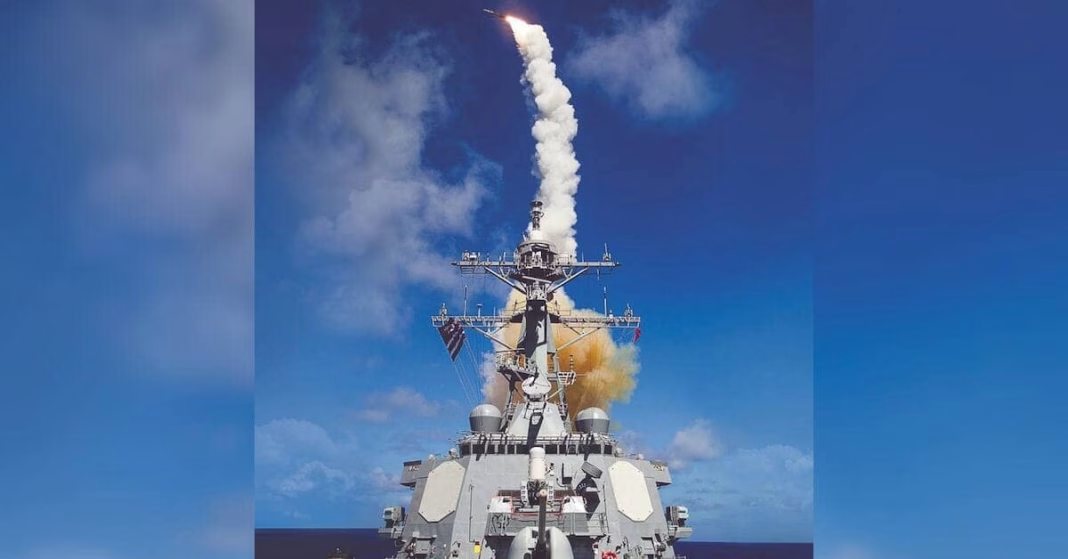
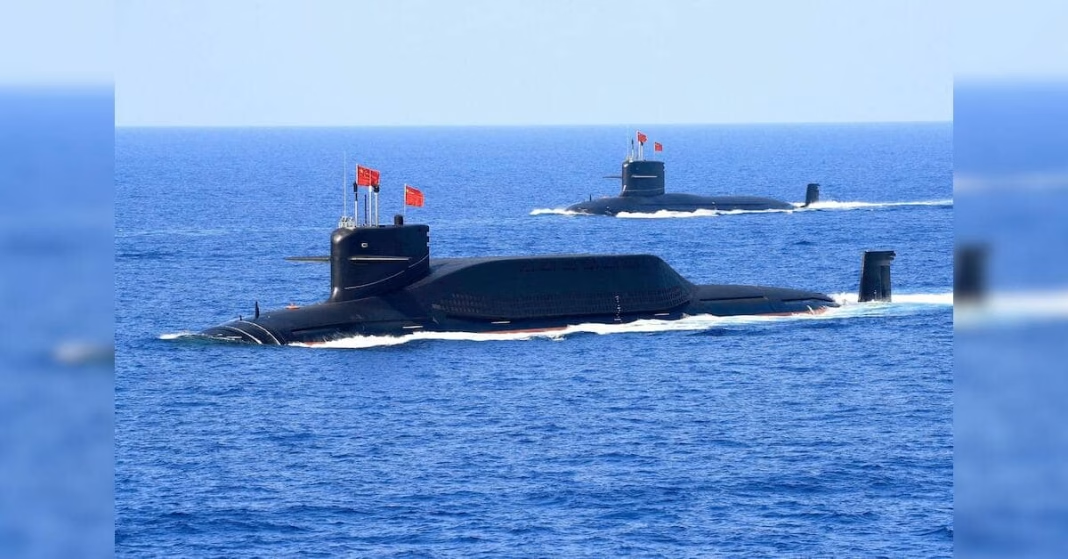
China has built about 320 new silos for solid-fuelled missiles across three missile fields. The Pentagon assesses that more than 100 have been loaded with missiles, although satellite analysts have not confirmed this. At sea, six Type 094 submarines patrol with JL-3 missiles capable of reaching targets about 10,000 kilometre away. The H-6N bomber can carry an air-launched ballistic missile, providing China with an air-based nuclear capability. China also tested a fractional orbital bombardment system (FOBS) in 2021, which sends a warhead partway around the Earth, approaching from unexpected directions to evade missile defences. At its Victory Day parade on September 3, 2025, China displayed all three legs of its nuclear triad for the first time. Once secretive about its nuclear arsenal, China openly displayed its weapons, with Russian President Vladimir Putin and North Korean leader Kim Jong Un standing beside President Xi Jinping.
The Pentagon estimates a yield of under 10 kilotons for some Chinese warheads, for precise, limited use. Such low-yield weapons would offer options for a proportionate response at different stages of escalation and could be used for warfighting.
Doctrine, more than hardware, decides how these weapons bear on stability. The declared pillars (no first use, minimum deterrence, no warfighting, civilian control) are each under strain. The common thread is deliberate ambiguity: China gains from adversaries’ uncertainty, at the cost of a higher risk of miscalculation. Five shifts stand out.
First, early-warning counterstrike. China is moving from slow but certain retaliation towards launch on warning: if sensors detect an incoming attack, missiles fly before enemy warheads land. Decision time shrinks from hours to minutes, just when a crisis calls for careful judgement, not speed.
Second, a quiet qualification of the no-first-use policy. On paper, the pledge stands; China continues to press other nuclear powers to adopt it too. Chinese military writings have long discussed lowering the nuclear deterrence threshold if nuclear facilities, major dams or cities come under attack, or if China faces a decisive defeat in a conventional war. Within China, some strategists have questioned whether an unconditional pledge still makes sense.
Third, the slide away from “minimum”. Chinese texts still speak of a “lean and effective” force — never defined by a fixed number but assessed at around 200 warheads in 2020. Since then, China has moved towards a much larger, more varied and sophisticated arsenal.
Fourth, lessons from Ukraine. Chinese strategists have observed how Russia’s nuclear signalling may have helped deter direct Western military intervention in Ukraine. Some now argue that China’s nuclear forces could similarly deter outside intervention in a potential Taiwan crisis.
Fifth, command arrangements. Following Xi’s sweeping purges, only two members remain active in the Central Military Commission (CMC), which normally has seven. The Rocket Force leadership has also been overhauled. Under the “CMC Chairman Responsibility System”, authority over nuclear launch decisions may be concentrated in Xi’s hands, potentially reducing opportunities for collective deliberation. Artificial intelligence (AI) is being built into early-warning systems and military planning as a “smart staff”. In November 2024, Xi and Joe Biden affirmed “the need to maintain human control over the decision to use nuclear weapons”, but the pledge is neither legally binding nor reconfirmed. A bigger force, a faster posture and a hollowed-out command structure are not a comforting mix.
Three explanations are possible for China’s nuclear “breakout”. The first is defensive: concerns that American missile defences and precision conventional weapons could undermine China’s ability to retaliate. The second is strategic: a stronger arsenal may deter American intervention in a Taiwan conflict and give China greater room for risk-taking below the nuclear threshold. The third is political: Xi sees nuclear weapons as a symbol of great-power status and China’s “great rejuvenation”. All three are probably at work, but China’s opacity makes it difficult to be certain.
The official language has hardened step by step. The 14th Five-Year Plan (March 2021) called for “high-level strategic deterrence”. Xi’s report to the 20th Party Congress (October 2022) promised “a strong system of strategic deterrence”. The Party Central Committee’s proposal for the 15th Five-Year Plan (October 2025) went further, linking the strengthening of “strategic deterrence forces” to safeguarding “global strategic balance and stability” for the first time.
The US is divided on responding to China’s nuclear “breakout”. The classified 2024 Nuclear Employment Guidance directs the US to deter Russia, China and North Korea simultaneously. Some urge superiority over China and Russia combined; others say a modest increase suffices. Either way, the old baseline is gone.
The wider setting makes things worse. New START, the last treaty limiting American and Russian arsenals, lapsed on February 5, 2026. China refuses talks involving the US and Russia, pointing to its smaller numbers. The argument weakens with every 100 warheads added.
The unease extends beyond the great powers. At a recent nuclear strategy dialogue in Delhi, a senior speaker identified several destabilising developments: declining confidence in strategic communication channels, the growing use of AI in military systems, the Iran war (which could persuade other countries that only nuclear weapons can protect them from attack), and doubts about the credibility of America’s “nuclear umbrella” over its allies. The risk of more countries acquiring nuclear weapons is particularly high among those allies.
Implications for India
In his 2016 book, Choices, Shivshankar Menon judged that “India-China nuclear deterrence is stable and will remain so despite shifts leading to equilibrium at higher technological levels as both programmes develop increasing sophistication”. A decade later, the conditions behind that stability are eroding, under five pressures.
One, the gap is widening in quality, not just quantity. India’s stockpile is less than a third of China’s (by Sipri estimates). More worrying are gaps in range, multiple warheads, early warning, surveillance and missile defence. China’s missile defences, immature against the US, may be more effective against a regional nuclear power such as India. Chinese missile modernisation has significant implications for India: some units of the People’s Liberation Army (PLA) Rocket Force, including those equipped with DF-21 missiles, are assessed to have India-specific targeting missions. Chinese conventional missiles could also target Indian nuclear facilities in a “counterforce” role. India faces a slow erosion of the credibility of an assured second strike, while China fears the same from the US.
Two, the new posture is more accident-prone. Early-warning counterstrike, peacetime-mated warheads and low-yield options all shorten warning time. Set this against an unsettled, militarised border. A conventional incident could acquire a nuclear shadow, however unintended.
Three, China’s commingled nuclear and conventional forces add a special danger: the Rocket Force runs both, and the DF-26 has both roles. A strike on a dual-role system could be read in Beijing as a nuclear attack. A conventional exchange with China is riskier than one with Pakistan.
Four, India’s nuclear calculus is further complicated by two nuclear-armed neighbours, China and Pakistan, with an extensive history of collusion, both expanding their arsenals and delivery systems. China gave Pakistan weapon designs and uranium in the early 1980s, then missiles and reactors, and now submarines. Operation Sindoor in May 2025 showed how far Beijing’s operational help could go. China’s ceiling is rising, while Pakistan’s threshold, set by its short-range battlefield weapons, is falling. India must deter at both ends.
Five, India’s Arihant-class nuclear-powered submarines give it an advantage over Pakistan, but that edge may gradually narrow as Pakistan develops a Chinese-supported sea-based nuclear capability involving Hangor-class submarines and Babur-3 cruise missiles. Against China, which operates six Type 094 nuclear-powered ballistic missile submarines and is developing the Type 096, India remains well behind.
What should India do? First, hold the line on doctrine. No first use, credible minimum deterrence, massive retaliation and civilian control remain sound principles. Louder voices urge India to drop its no-first-use policy. The question for them is: Can they identify a credible first-use scenario that would justify the costs to India’s deterrence credibility and its standing as a responsible nuclear power? Successive governments have reviewed the policy and retained it. For India, nuclear weapons are instruments of deterrence, not warfighting. This remains the sharpest distinction between India and Pakistan.
Second, remember which word matters most in “credible minimum deterrence”. It is “credible”. What counts as minimum may need a quiet upward revision to maintain an assured
second-strike capability against China. The emphasis must be on survivability: Arihant-class submarines with longer-range K-series missiles; canister-launched Agni missiles, including the multiple-warhead Agni-V; hardened and dispersed bases; and redundant command links. India does not need parity or a numbers race it neither wants nor can win. But the pace and nature of China’s nuclear expansion have changed the calculus, making a root-and-branch review of India’s nuclear strategy necessary.
Third, review command and control and early-warning systems. The aim is to ensure that India’s decision-making cycle can keep pace with escalation. Any use of AI should remain advisory, with humans firmly in control.
Fourth, think carefully about conventional long-range missiles. Given China’s practice of assigning multiple roles to its missiles, how India develops and deploys such weapons, and signals their intended purpose, matters greatly.
Fifth, establish a dialogue channel. India and China have no dedicated forum to discuss nuclear risks. China has shown little interest in formal nuclear dialogue. Strategic communities on both sides could begin discussions through Track 2 or Track 1.5 channels, with official participation expanding over time. One narrowly focused confidence-building measure would be an agreement on advance notification of ballistic missile tests, which India and Pakistan have had since 2005 but India and China lack. A dedicated crisis hotline could provide an additional safety valve.
Finally, India must tell real threats from theatre. Some nuclear talk in the neighbourhood is meant to alarm outsiders and constrain India’s freedom of action after a provocation. Serious threats demand countervailing action. Manufactured ones are best answered politically and kept out of nuclear planning.
Restraint has served India well. It earned international legitimacy, underwrote the civil nuclear opening and ended India’s isolation. The task now is not to discard that inheritance but to keep it credible: a minimum that is truly sufficient, a second strike that is truly assured, and a doctrine matched to the world as it is becoming.
Restraint, kept credible, is not weakness. It is strategy.