

Poland is one of the main drivers of record-breaking tourism in Croatia’s Central Dalmatia, with 3.9 million visits and 18.6 million overnight stays in 2026. While easy road access, self catering accommodation, and the beautiful Makarska Riviera make the area a reliable summer destination for Polish families, rising prices since the introduction of the Euro, busy beaches during peak season and rising day-to-day costs are proving challenging. Budget-friendly destinations in the Mediterranean are beginning to take Croatia’s crown with rivals in Albania, Greece and Turkey offering cheaper alternatives.
Behind these milestone figures lies a complex dynamic. While loyal Central European travelers—led conspicuously by Poland—continue to supply the bulk of visitor traffic, Central Dalmatia stands at a pivotal crossroads. Rising operational expenses, post-euro price recalibrations, peak-season infrastructure bottlenecks, and aggressive discounting from Mediterranean rivals are forcing regional planners to confront an urgent question: can Croatia’s premier coastal county sustain its record-breaking momentum without alienating the middle-class European families who built it?
Advertisement
Advertisement
The Pillar Markets: Who Drives Central Dalmatia’s Tourism Engine?
The geographic profile of Central Dalmatia’s visitor base highlights an enduring reliance on continental Europe, with Poland and Germany standing at the apex of foreign demand. Analysis from Croatian tourism monitor HrTurizam confirms that Poland and Germany secured the two leading spots for total overnight stays during the height of the 2026 season. They are bolstered by a balanced coalition of regional neighbors, long-haul fliers, and resilient domestic travelers:
- Poland: Acting as the bedrock of the region’s family-oriented self-catering market, Polish vacationers view Dalmatia as an accessible, dependable summer tradition. While official county registers track aggregate arrivals rather than isolated percentage breakdowns by nationality, field reports from the Makarska Riviera consistently identify Polish license plates as the dominant foreign presence on coastal roads.
- Germany: The traditional economic cornerstone of Croatian tourism, German holidaymakers generate extensive overnight volume, particularly through organized camping, private villas, and motor voyages down the Adriatic highway.
- Bosnia and Herzegovina: Representing crucial cross-border regional demand, travelers from Bosnia and Herzegovina provide steady weekend influxes and extended family bookings, supported by shared cultural familiarity and direct overland transit corridors.
- The United Kingdom: Positioned predominantly through international air links into Split Airport, British travelers drive high-density urban stays in Split’s historic quarter, festival excursions, and island-hopping itineraries through Brač and Hvar.
- The Czech Republic: Sharing a multi-decade travel relationship with the Dalmatian coast, Czech tourists sustain high summer occupancy across seaside campsites and private guesthouses.
- Domestic Croatian Visitors: Spanning all twelve months, domestic travelers bolster local hotels, regional conferences, and shoulder-season cultural events, providing essential baseline revenues when international summer leisure travel winds down.
The Mechanics of Polish Loyalty: Self-Catering, Caravans, and the Open Road
The affinity between Polish holidaymakers and Central Dalmatia is rooted in logistical convenience and personal autonomy. For families departing southern Polish industrial and cultural hubs—such as Kraków, Katowice, and Wrocław—the Dalmatian coastline is reachable within a manageable 12-to-14-hour drive. Established road arteries running through Slovakia, Hungary, Austria, and Slovenia connect directly into Croatia’s modern A1 highway system.
Advertisement
Advertisement
Traveling by personal vehicle affords families distinct advantages that rigid airline schedules cannot duplicate:
- Budgetary Freedom: Families can transport their own beach equipment, sports gear, and shelf-stable groceries, mitigating day-to-day vacation inflation.
- The Apartment Lifestyle: Unlike holiday enclaves in Spain or Turkey that rely heavily on corporate, all-inclusive resort complexes, Central Dalmatia’s accommodation landscape is dominated by obiteljski smještaj—private apartments, independent villas, and family-run guesthouses. This decentralized model allows travelers to immerse themselves directly within coastal settlements while maintaining independent household schedules.
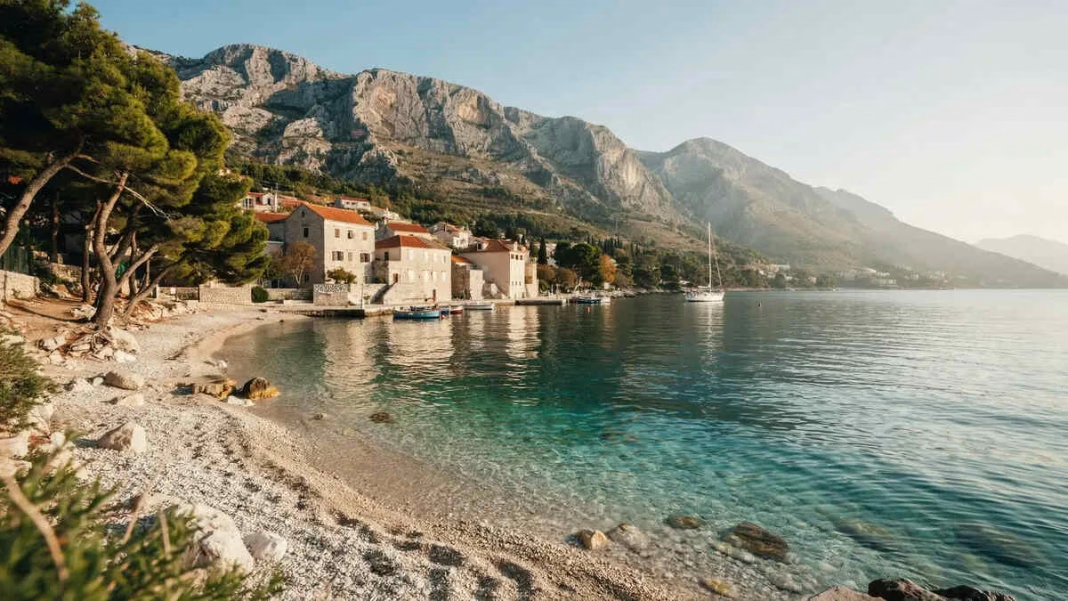
- Topographical Grandeur: The dramatic geography of the Makarska Riviera—anchored by towns such as Brela, Baška Voda, Tučepi, and Makarska itself—places the towering karst cliffs of Mount Biokovo immediately above clean pebble shores, creating a visual drama few Mediterranean coastlines can rival.
The Cracks in the Facade: Crowds, Capacity, and Post-Euro Price Shocks
Central Dalmatia’s unprecedented density has created operational frictions that promotional campaigns struggle to conceal. During the high-season crunch of July and August, single-lane bottlenecks along the historic Adriatic coastal highway (Jadranska magistrala) produce severe traffic gridlock. Parking across popular resort villages is scarce and expensive, while popular public beaches face severe spatial compression.
Advertisement
Advertisement
Compounding physical congestion is the growing sensitivity over consumer pricing. Croatia’s formal entry into the Eurozone in 2023 eliminated currency exchange friction for European travelers, but it also made cross-border cost comparisons instantaneous. Four-person family dinners, municipal parking fees, beach umbrellas, and daily boat rentals have climbed sharply. For a Polish household budgeting in Polish złoty against an appreciating euro, an unserviced private apartment rental in Dalmatia no longer guarantees a cheap alternative to fully catered resort packages elsewhere.
Furthermore, the unchecked expansion of short-term vacation rentals has placed acute pressure on local infrastructure. Year-round residents in coastal towns find themselves priced out of local housing markets as residential properties are steadily converted into seasonal tourist rentals, sparking debate regarding municipal zoning and sustainable carrying capacity limits.
Advertisement
Advertisement
The Rising Competition: How Dalmatia Stacks Up Against Regional Rivals
As Central Dalmatia commands premium Mediterranean prices, competing coastlines are actively targeting its traditional driving and middle-income markets:
| Competitor Destination | Distinct Competitive Advantage | Strategic Threat to Central Dalmatia |
| Albanian Riviera | Substantially lower food, beverage, and lodging expenditures; unspoiled coastal terrain. | Siphons budget-conscious road-trippers and youthful adventurers willing to accept developing infrastructure for major savings. |
| Halkidiki, Greece | Extensive, gently shelving soft-sand beaches; family-centric apartment clusters; established Greek culinary hospitality. | Directly attracts European families frustrated by Dalmatia’s rocky beaches and rising restaurant tariffs. |
| Antalya, Turkey | Expansive all-inclusive luxury resort compounds with transparent, upfront booking costs covering all meals, childcare, and activities. | Eliminates the financial unpredictability of dining out in euro-denominated private-apartment destinations. |
| Istria, Croatia | Shorter driving times for Central European motorists; premier gastronomy; polished four-star camping and resort infrastructure. | Acts as an internal domestic rival, intercepting road travelers 300 kilometers before they reach Central Dalmatia. |
Redefining the Experience: Gastronomy and the 2027 Hinterland Pivot
To relieve the congested coastline and break the volatile cycle of midsummer dependency, Central Dalmatia is pivoting toward cultural and culinary diversification. The region was officially designated the European Region of Gastronomy 2027 by the International Institute of Gastronomy, Culture, Arts and Tourism (IGCAT).
This title serves as the structural foundation for a regional campaign designed to entice tourists into the Dalmatian hinterland (Zagora) and stretch visitor activity deep into the autumn:
- Reviving Culinary Heritage: Promotional strategies emphasize authentic regional touchstones—slow-cooked peka dishes prepared under iron bells, black cuttlefish risotto, cold-pressed indigenous olive oils, and prosciutto aged in the cold bura wind.
- The Marenda Custom: Local tourism boards are reviving the coastal marenda—the historic, mid-morning working-class meal—certifying neighborhood konobas to offer traditional, accessible daily plates that resist fast-food inflation.
- Active Shoulder-Season Programming: Late-season calendars feature focused culinary and agricultural gatherings:
- Grand Gourmet (Omiš): An international hospitality festival uniting regional chefs, bartenders, and food artisans.
- Dalmatina (Dugopolje): An inland trade exposition dedicated to karst apiculture, honey production, and rural crafts.
- Zinfest (Kaštela): An autumn wine celebration spotlighting Crljenak Kaštelanski, the native Dalmatian varietal confirmed as the original genetic ancestor of California Zinfandel.
- Cetina River Adventure Tourism: Expanding river rafting, canyoning, and trail running across inland valleys to distribute economic yield away from saturated island harbors.
Navigating the Future
The 3.9 million visitors who journeyed to Central Dalmatia throughout the first ten months of 2026 confirm that the region’s natural drama, maritime heritage, and geographic proximity retain undeniable international magnetism. Polish families and their European peers continue to choose the Dalmatian coast because it feels secure, familiar, and visually unmatched.
Advertisement
Advertisement
Yet, raw visitor volume can no longer serve as the sole metric of success. As consumer price sensitivity sharpens across Europe and rival Mediterranean hubs modernize their tourist economies, Split-Dalmatia County cannot afford to trade on goodwill alone.
Navigating the future will demand rigorous municipal management: enforcing realistic carrying capacities, preserving affordable residential housing for local communities, and ensuring that on-the-ground service standards justify every euro charged. If Central Dalmatia can successfully harmonize its coastal assets with its culinary hinterland, it can transition from an overcrowded summer beach resort into a resilient, year-round Mediterranean benchmark.