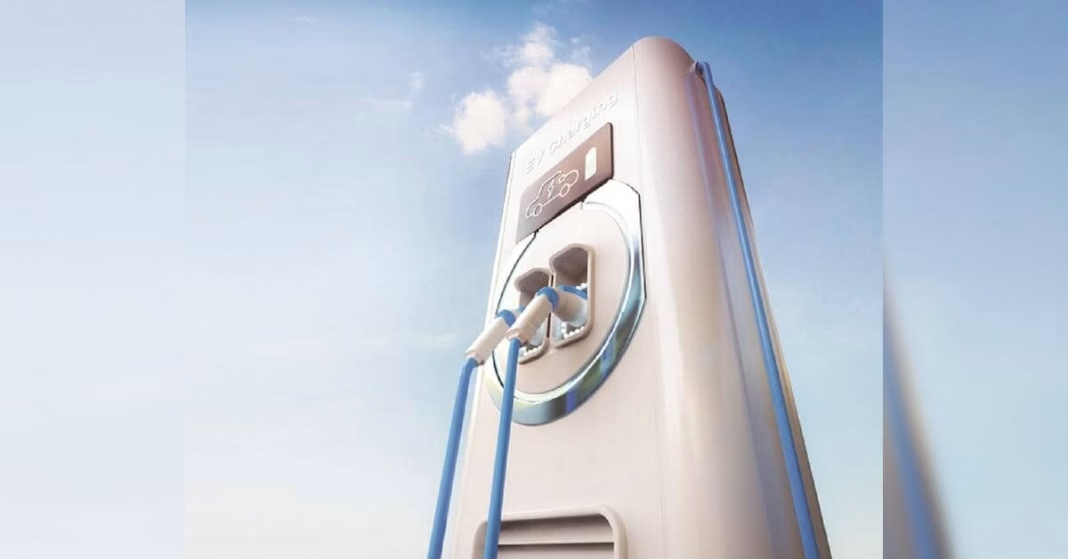

The Ministry of Panchayati Raj has signed a memorandum of understanding (MoU) with Convergence Energy Services Limited (CESL) to establish electric vehicle (EV) charging and battery swapping stations on Panchayat land, in a move aimed at generating additional revenue for rural local bodies and expanding clean mobility infrastructure beyond urban centres.
According to an official statement issued on Saturday, the partnership is expected to create new opportunities for own-source revenue (OSR) generation for Gram, Block and District Panchayats across states and Union Territories.
The MoU was signed in the presence of Union Minister for Panchayati Raj Rajiv Ranjan Singh.
CESL is a wholly owned subsidiary of Energy Efficiency Services Limited (EESL), which operates under the Ministry of Power.
Under the arrangement, EV charging and battery swapping facilities will be developed at suitable locations, including Panchayat premises and sites along state and national highways.
The infrastructure will cater to two-wheelers, three-wheelers, four-wheelers and medium and heavy commercial vehicles.
The Ministry of Panchayati Raj will coordinate with state Panchayati Raj departments to identify and monitor suitable sites.
CESL will be responsible for site assessment, demand aggregation, supply, installation, testing, commissioning, operation and maintenance of the facilities, according to the statement.
The government recently released the Model Panchayat Tax, Rates and Fees Rules, also known as the Model OSR Rules, which provide a framework for transparent and accountable revenue mobilisation by rural local bodies.
The collaboration aims to transform Panchayat land into productive community assets capable of generating recurring income.
The revenue could support civic services, local infrastructure and community welfare, while improved access to EV facilities is expected to encourage cleaner mobility and help reduce carbon emissions in rural areas.
The Ministry and CESL will also explore ways to leverage Panchayat-level public assets to promote clean and green villages, sustainable rural development and financially stronger local governments, the statement added.