
For a decade, “friends” Donald Trump and Benjamin Netanyahu have vied for the top spot on the hate list for Westernised liberals and the Left. Their political demise has been foreseen and wished for. Both keep disappointing their haters.
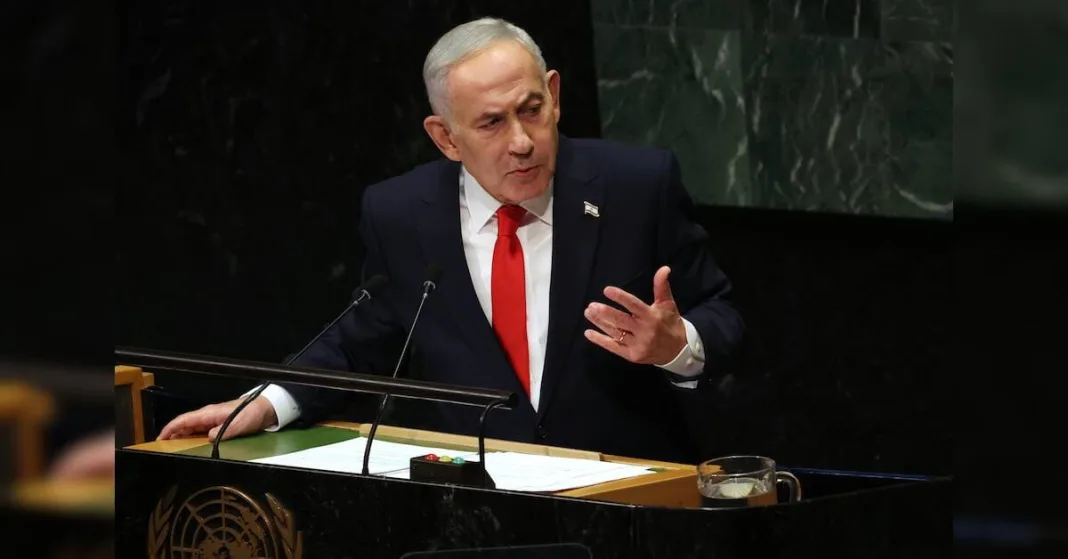
Mr Trump won the presidency twice, riding liberal ridicule and contempt. Mr Netanyahu has turned that knife for 16 of the last 17 years, barring the 2021-22 Naftali Bennett-Yair Lapid interruption. This week, he pushed the knife deeper.
He hasn’t secured another mandate. But he has the highest tally, support of the hard-Right. He’s better placed to build a coalition. Or, he can orchestrate a fresh election, not unfamiliar in Israel.
Mr Netanyahu has won only because he hasn’t been defeated. He’s also changed Israel fundamentally, with some “help” from Hamas. In another world, it might’ve been possible for rival Gadi Eisenkot to expand his coalition from 48 seats to beyond the 61 needed for a majority by aligning with the two Arab parties. After all, one of them, Ra’am, had joined Bennett-Lapid’s short-lived coalition in 2021-22. But now, no Jewish group can embrace the Arabs unless they condemn Hamas as terrorists. And Arab parties won’t and can’t do that. It will have to be a coalition to the exclusion of Israel’s Arab citizens. That’s how Mr Netanyahu and Hamas have changed Israel. There’s no “middle” left in Israel.
In the US, the Democrats may restore some balance in the midterms next week, but that won’t change the reality of what rocketed Donald Trump to imperial power. His impact on immigration, trade, and human rights will endure long after him.
To understand the Trump-Netanyahu phenomenon we must accept that the voters are emotional, yet rational. They’re also more transactional than ideological. And what’s the “deal” they want? The economy matters, but three things take precedence: National security, individual safety and preservation of identity. In America, Mr Trump made his second election about law and order, immigration, and “over-the-top” political correctness — DEI (diversity, equity and inclusion) overhang in academia, gender fluidity, and open borders.
Two eruptions — Black Lives Matter, and the fury on liberal campuses over Gaza — gave him tailwinds. The question then: Who could White Americans and many Hispanics trust on these issues? Mr Trump or Kamala Harris? Compared to security, safety, and identity, other concerns become softer, dispensable.
Israel is an ongoing story. They had a single-point, national-security election. For them, October 7, 2023, was their most traumatic experience since the Holocaust. Further, over the past three decades, the Iranians have encircled them with their “ring of fire”, or the “axis of resistance”.
Israelis are inured to endemic fighting. But October 7 was a devastating defeat. For the first time, large Jewish populations in the Israeli heartland found themselves incapable of defending themselves. This changed Israel, built support for the wars that followed, and protected Mr Netanyahu from anti-incumbency.
Contrary to stereotypes that dominate liberal debate in democracies, including India, Israelis have a deep, argumentative, and democratic tradition. There exists a strong, liberal, and vocal constituency that’s sympathetic to Palestinians, abhors settler violence in the West Bank, and even supports the two-state idea.
The one Israeli newspaper I’ve subscribed to for years is Haaretz, and it’s way to the Left of anything mainstream in India. It has been deeply critical of Mr Netanyahu, and has broken stories that should have devastated him politically. These include how he ignored warnings from Egypt and the UAE before October 7. It’s also been widely insinuated that he deliberately ignored these. Conspiracy theorising isn’t alien to the Israeli debate.
At the other end are ultra-orthodox parties who want to evict all Palestinians from the West Bank and Gaza. In short, there are deep disagreements in Israeli society, and idol worship doesn’t come naturally to it. There isn’t any for Mr Netanyahu either. That these divisions didn’t play out in the vote is the important point. Jews chose between one hardliner or the other. The 21 per cent Arab minority, in the proportional voting system, does get seats but its votes ultimately don’t count as the majority consolidates for safety and survival.
The question was simple. Who can we trust more with protecting us as we pass through a frightfully insecure era: A known devil, or his adversary, who’s no dove either? Mr Netanyahu had appointed General Gadi Eisenkot as IDF chief; Eisenkot’s soldier-son died fighting in Gaza; and he’s also committed to wiping out Hamas. Enough people voted for continuity, than risk change. Two points need exploration. One, when and why did the power of the once-formidable Left vapourise in Israel? And second, how come the formidable vote of its Arabs doesn’t matter?
The era of Left (Labour) domination in Israel isn’t widely remembered in India. David Ben-Gurion, Golda Meir, Levi Eshkol, and Yitzhak Rabin —the greatest Zionists and founders of the modern state of Israel — were all from Labour. The legendary Lt-General Moshe Dayan was a Labour socialist and a self-declared Zionist-atheist. He left Labour to support Menachem Begin’s Likud coalition as foreign minister in 1977 to negotiate the Camp David Accords for peace with Egypt. From 1948 to 1977, Labour domination was total, until Begin’s Likud broke it. Under Shimon Peres, Rabin and Ehud Barak, Labour returned for short spells—in 1984, 1992, 1995 and 1999—and then faded.
Labour, in the 1992-2000 period pushed for Egypt-like peace through the Oslo Accords negotiations and failed, amid rising Palestinian attacks and suicide bombings. The first time, it ended with Rabin’s assassination; then in 2000, as the Second Intifada became imminent.
Ultimately, the Israelis saw Labour’s idea of trading land for peace as woolly-headed. They killed it, burying Labour with it. It’s since been impossible in Israel to seek votes for peace.
Ironically, while most countries, India included, keep supporting a two-state solution, neither of the two direct antagonists wants it. Both Israelis and Palestinians want a single state, with each seeking to drive out the other. Each has its version of “from the river to the sea”. The Palestinian movement lost its socialist-secular-Christian appeal. It’s now Islamised. This is Iran’s leverage, and ideological fuel for its proxies.
And the second point, why the Arab vote has become so inconsequential. We need to study it closely because lately there’s been some clamour for proportional voting in India instead of the first-past-the-post system. That way, it’s believed, minority seats would reflect their population.
Israel provides a rude reality check. The mostly Muslims Arabs account for more than 20 per cent of Israel’s population, work in the government, businesses, and even the armed forces, though they are exempt from conscription. They just secured a record vote, translating into 19 seats in a Knesset of 120. They can be kingmakers, but nobody will touch them. In the broader Israeli picture, they fail the test of nationalism.
One group, with 11 seats, was reported to have celebrated with Palestinian symbolism at its headquarters in Nazareth. They “condemn” October 7, but won’t call it terrorism or refer to Hamas as terrorists. No Jewish party will embrace them. Their numbers become inconsequential. See it like this. If you switched to proportional voting in India and Muslim parties won seats equivalent to their population (about 80 of 543), would even a “secular” coalition accept them if, heaven forbid, they celebrated with Pakistani or Hurriyat flags or symbolisms? Or refused to call Lashkar and Jaish terrorists? I know many will be outraged by this suggestion. But see how careful and correct Asaduddin Owaisi is. I use this example only to underline how the Israelis feel about their Arab parties.
This is a lesson for minorities in any electoral democracy. They gain very little by isolating themselves. They have to ally with enough of those in the mainstream whom they find acceptable, and stitch a coalition. It needs ideological compromise and uncompromising nationalism. That’s how the Muslim vote acquired power in India in the 25-year coalition era (1989-2014). Or, you can campaign for proportional representation and collect numbers but be marginalised, like the Israeli Arabs.
By special arrangement with ThePrint