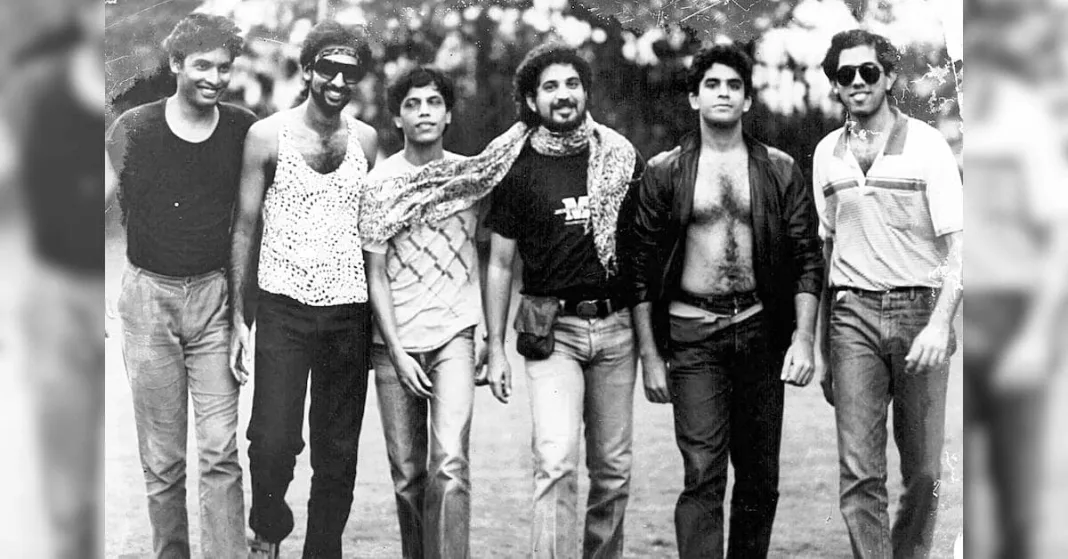

Before algorithms and streaming, Rock Machine ran on bootleg cassettes, word of mouth and sheer decibels. In an India hooked on cover versions, six young musicians had the audacity to write their own songs.
Formed in 1984 in what was then Bombay, Rock Machine began as a covers band before betting on originals. Its first overseas tour came in 1988, when it travelled to the Soviet Union for the Festival of India.
Then came Rock ’n’ Roll Renegade, the band’s 1988 debut, widely hailed as India’s first all-original rock album. The band reportedly earned a paltry ₹30,000 for it, but the music travelled far beyond official distribution networks. Its track Top of the Rock got a video that found its way onto MTV Asia. In parts of the Northeast, bootleg copies did what the record industry couldn’t. No hype machine. No streaming numbers. Just riffs passed around like contraband.
Mahesh Tinaikar was the secret weapon: A quiet man with a guitar that could raise hell. His riffs had bite; his black Ibanez and rainbow strap became part of the legend.
By 1993, Rock Machine had taken on a new avatar as Indus Creed, experimenting with Indian instruments and pushing beyond its hard rock roots. Then Pretty Child hit MTV Asia. Its evocative black-and-white video went into heavy rotation and won the band an MTV Asia Video Music Award.
MTV ranked it among the year’s top videos, putting an Indian band in the frame alongside international stars.
The band folded in 1997, then reunited in 2010. Evolve, its first album in 17 years, followed in 2012. The riffs weren’t done yet.