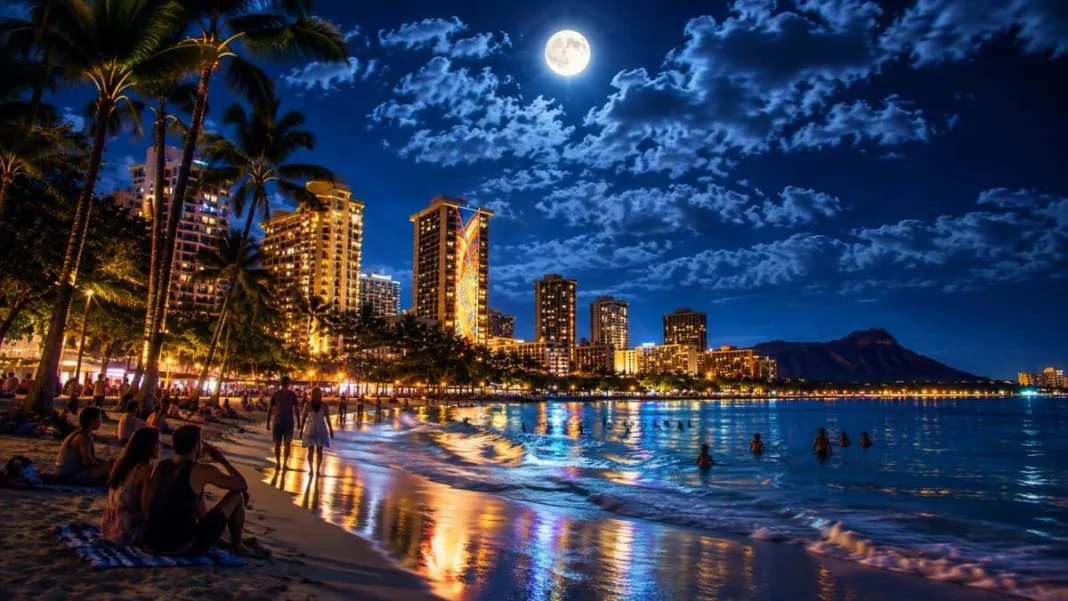


The tourism landscape across the Americas is becoming increasingly divided as the final months of the 2026 approach. While some destinations continue attracting international travelers, others are reporting substantial declines compared with 2025, extending weaknesses already evident in parts of the industry during 2024. The United States, Cuba, and Jamaica are experiencing declining international visitor arrivals ahead of Halloween and Thanksgiving 2026, although the severity and causes differ. Cuba has recorded the steepest contraction, Jamaica continues to face hurricane-related tourism disruption, and the United States is struggling with weaker overseas demand. Meanwhile, Mexico, Canada, and several Caribbean destinations are reporting growth in important tourism categories.
The downturn is particularly significant for destinations that depend on international air connectivity, long-haul vacation spending, and seasonal tourism demand. With Halloween on October 31 and Thanksgiving on November 26, the latest arrival statistics offer an important indication of how different tourism economies are positioned before the holiday period.
Advertisement
Advertisement
Confirmed International Tourism Declines Across the Americas
| Country | Latest comparison | Decline or growth | Tourism findings |
|---|---|---|---|
| United States | Jan–Aug 2026 vs 2025 | −5.8% overseas arrivals | Overseas arrivals weakened further in August, falling 11.8% year on year. |
| Cuba | Jan–Jul 2026 vs 2025 | Approximately −63% international visitor arrivals, as reported | Severe contraction across Canadian, US, Russian and other visitor markets. |
| Canada | Full-year 2025 vs 2024 | −2.9% US-resident arrivals | The decline was concentrated in cross-border US travel, not overseas visitors. |
| Canada | Q1 2026 vs Q1 2025 | +3.7% overseas visitor trips | Overseas arrivals increased, so Canada does not qualify as a confirmed nationwide overseas-arrival decline for this period. |
| Mexico | Jan–Aug 2026 vs 2025 | +3.9% international tourist arrivals | International tourism grew to 32.68 million visitors, despite regional pressures. |
Which American Countries Are Reporting the Sharpest Declines in International Tourism?
Cuba, Jamaica, and the United States stand out among American destinations reporting measurable declines in international visitor arrivals during 2026.
Cuba experienced the most severe contraction in the available figures. International arrivals declined approximately 62.8% between January and July 2026 compared with the corresponding period in 2025. The country received 419,863 visitors, down from 1,128,831 a year earlier.
Advertisement
Advertisement
Jamaica also reported significant losses. Stopover arrivals declined 24.4% during January through May, while broader visitor figures through August indicated a 17% year-over-year reduction.
The United States recorded a 5.8% decline in overseas arrivals through August. August alone registered an 11.8% reduction compared with the same month in 2025.
Advertisement
Advertisement
These figures highlight different challenges. Cuba faces structural and operational difficulties, Jamaica is recovering from hurricane damage, and the United States is experiencing weaker long-haul international demand.
The declines are particularly important because international visitors support airlines, accommodation providers, restaurants, attractions, and local businesses throughout the Americas.
Advertisement
Advertisement
Why Is Cuba Experiencing Such a Dramatic Collapse in International Arrivals?
Cuba is confronting one of the most substantial tourism contractions among the destinations examined.
The country’s international visitor arrivals fell from more than 1.12 million during January–July 2025 to approximately 420,000 during the equivalent period in 2026.
This deterioration follows an already difficult period for the Cuban tourism industry. Annual international arrivals reportedly declined from approximately 2.2 million in 2024 to 1.81 million in 2025.
Several overlapping problems have contributed to the downturn.
Advertisement
Advertisement
Energy shortages have disrupted everyday operations and created additional challenges for tourism businesses. Economic instability has complicated the provision of services, while limited airline connectivity has restricted access from international markets.
US sanctions have also affected Cuba’s economic environment and international commercial relationships.
The consequences extend beyond hotels and resorts. Tourism supports employment in transportation, hospitality, food services, and local commerce.
Without improvements in infrastructure, transportation reliability, and visitor confidence, Cuba may struggle to reverse its losses during the remaining months of 2026.
Which Overseas Markets Are Contributing Most to Cuba’s Tourism Downturn?
Canada, Russia, and the United States have all contributed to Cuba’s declining international visitor numbers.
Canada remains especially important because Canadian travelers have historically represented a major source of demand for Cuban beach resorts and vacation packages.
Advertisement
Advertisement
However, Canadian arrivals reportedly fell from 478,382 during January–July 2025 to 127,645 during the same period in 2026.
That represents a contraction of approximately 73.3%.
Russian arrivals declined approximately 70.4%, while arrivals from the United States fell around 51.7%.
| Cuba’s source market | Change in arrivals, January–July 2026 |
|---|---|
| Canada | −73.3% |
| Russia | −70.4% |
| United States | −51.7% |
The simultaneous decline across several important markets indicates that Cuba’s problems cannot be attributed to changing demand in one country alone.
Instead, the figures suggest a broader challenge involving destination accessibility, operational reliability, and economic conditions.
Restoring tourism growth will require improvements across these areas, alongside stronger confidence among international travelers and tourism operators.
Advertisement
Advertisement
Why Is Jamaica Losing International Visitors Despite Its Strong Tourism Reputation?
Jamaica’s tourism downturn reflects the consequences of major infrastructure disruption following Hurricane Melissa in October 2025.
The hurricane affected accommodation and tourism facilities, particularly in western Jamaica, creating difficulties for hotels, transportation providers, and businesses dependent on visitor spending.
During January–May 2026, stopover arrivals declined from approximately 1.21 million to 917,397.
That represented a 24.4% year-over-year reduction.
The weakness continued beyond the first five months. By August 31, Jamaica had received approximately 2.34 million visitors, representing a 17% decline from the comparable 2025 period.
Tourism revenue also weakened, falling approximately 18% to US$2.5 billion.
Advertisement
Advertisement
Reduced airline capacity compounded the challenges. Available seats reportedly declined 22% during January–August.
These figures demonstrate that Jamaica’s recovery depends not only on traveler demand but also on restoring the infrastructure and transportation capacity necessary to accommodate visitors.
The coming winter tourism season will therefore be an important period for the island’s hospitality economy.
Which Countries Are Experiencing the Most Serious Tourism Losses?
| Country | Visitor arrivals in 2025 | Visitor arrivals in 2026 | Year-on-year change | Period and significance |
|---|---|---|---|---|
| Cuba | 1,128,831 | 419,863 | −62.8% | Jan–Jul; international visitors |
| Jamaica | 1,213,228 | 917,397 | −24.4% | Jan–May; stopover visitors |
| United States | Not established in retrieved cumulative figures | Not established | −5.8% | Jan–Aug; overseas arrivals |
| Jamaica | 226,836 | 184,619 | −18.6% | May alone; stopover visitors |
| United States | Not established in retrieved monthly figures | Not established | −11.8% | August alone; overseas arrivals |
How Are American and Canadian Travelers Affecting Jamaica’s Tourism Recovery?
The United States and Canada are two major source markets for Jamaica’s tourism industry.
Both recorded substantial reductions in visitor arrivals during the first five months of 2026.
Arrivals from the United States declined approximately 29.1%, while Canadian arrivals fell around 24%.
Advertisement
Advertisement
These losses are particularly significant because North American visitors support Jamaica’s resort accommodation, restaurants, airport transfers, excursions, and tourism-related employment.
Reduced airline seat availability has also constrained the country’s ability to rebuild arrival volumes.
Nevertheless, reported average flight load factors reached approximately 85% during January–August 2026.
This suggests that many operating flights continued attracting passengers, even as the overall number of available seats declined.
The distinction is important. Lower visitor arrivals do not necessarily indicate that travelers have lost interest in Jamaica.
Instead, reduced accommodation capacity and disrupted transportation services may have limited the destination’s ability to receive international tourists.
Advertisement
Advertisement
Restoring these services could support a gradual recovery.
Why Are Overseas Visitor Arrivals Declining in the United States?
The United States is experiencing a different tourism challenge from Cuba and Jamaica.
Rather than a major natural disaster or widespread resort infrastructure damage, the country is facing weaker demand from overseas visitors.
According to the US Travel Association, overseas arrivals declined 5.8% during January–August 2026 compared with the equivalent period in 2025.
August recorded a sharper contraction of 11.8%.
Official tourism statistics also indicated that overseas arrivals fell approximately 7% in July compared with July 2025.
Advertisement
Advertisement
These figures are particularly relevant for major international gateways, including New York, Los Angeles, Miami, San Francisco, and Las Vegas.
Overseas travelers contribute substantially to hotel bookings, entertainment spending, retail purchases, and cultural tourism.
However, the decline should not be confused with an equivalent reduction in all international arrivals.
Visitors from Canada and Mexico are counted separately in several US tourism datasets, and their movements can differ from those of long-haul overseas travelers.
What Role Do Canada and Mexico Play in America’s Changing Visitor Numbers?
Canada and Mexico remain essential to understanding tourism flows into the United States.
Travelers from these neighboring countries represent important segments of international tourism, particularly for border destinations, shopping centers, leisure attractions, and major metropolitan areas.
Advertisement
Advertisement
However, overseas visitor statistics generally exclude arrivals from Canada and Mexico.
This means a decline in overseas tourism does not automatically establish an equivalent decline in total international travel.
For example, official US figures indicated that Canadian and Mexican visitor volumes increased during July 2026, even as overseas arrivals declined.
Canada’s own tourism statistics reveal a similarly complicated picture.
US-resident arrivals into Canada declined approximately 2.9% during 2025 compared with 2024. Yet overseas visitor trips to Canada increased 3.7% during the first quarter of 2026.
Mexico also reported international tourism growth during January–August 2026.
Advertisement
Advertisement
These differences underline the importance of separating neighboring-country travel from overseas arrivals when assessing regional tourism performance.
Why Are Mexico and Other Caribbean Destinations Growing While Others Decline?
Mexico, the Dominican Republic, the Bahamas, and Costa Rica demonstrate that international tourism across the Americas is not experiencing a uniform downturn.
Mexico welcomed approximately 32.68 million international tourists during January–August 2026, representing 3.9% growth.
The Dominican Republic recorded approximately 9.24 million visitors, including cruise passengers, during January–September, an increase of 7.5%.
The Bahamas reported 4.3% growth in stopover arrivals during January–July, reaching approximately 1.31 million visitors.
Costa Rica also recorded growth, with stopover arrivals increasing approximately 7% during the first six months.
Advertisement
Advertisement
These results highlight the resilience of several established vacation destinations.
They also demonstrate why regional tourism headlines require careful interpretation.
A country experiencing declining arrivals from one source market may still report overall growth if visitors from other markets compensate.
Likewise, stronger cruise arrivals do not necessarily mean that overnight hotel demand is increasing at the same rate.
What Could These Tourism Declines Mean for Halloween and Thanksgiving Travel?
Halloween and Thanksgiving represent important periods for leisure travel, domestic tourism, family visits, and seasonal hospitality spending.
Halloween falls on October 31, while Thanksgiving takes place on November 26 in the United States.
Advertisement
Advertisement
For destinations already experiencing weaker international arrivals, the approaching holiday season creates additional commercial pressure.
Hotels may need to respond to changing booking patterns, while airlines and tourism operators must assess demand carefully.
In the United States, declining overseas arrivals could affect international visitor spending in major gateway cities and popular vacation destinations.
Jamaica’s tourism industry faces the additional challenge of restoring accommodation and airline capacity before the peak winter travel period.
Cuba must address more extensive operational and economic difficulties.
However, the available statistics do not establish that Halloween or Thanksgiving travel itself will decline.
Advertisement
Advertisement
Holiday-specific forecasts require separate evidence covering advance reservations, airline schedules, accommodation bookings, and consumer travel intentions.
What Is the Outlook for Tourism Across the Americas During the Remainder of 2026?
The outlook for international tourism across the Americas remains mixed.
Cuba faces the most severe decline among the countries examined, while Jamaica’s recovery depends heavily on restoring damaged infrastructure and transportation capacity.
The United States must contend with weaker overseas arrivals, even as neighboring-country travel may follow different patterns.
Meanwhile, Mexico, the Dominican Republic, the Bahamas, and Costa Rica continue demonstrating growth in their respective tourism categories.
These contrasting performances suggest that the region’s tourism industry is being shaped by destination-specific circumstances rather than a single continent-wide trend.
Advertisement
Advertisement
For travelers, the practical implications include checking airline schedules, accommodation availability, entry requirements, and destination conditions before booking.
For tourism businesses, the priority is understanding which source markets are weakening and which remain resilient.
As Halloween and Thanksgiving approach, the available figures provide an important warning about uneven international tourism performance.
The decisive test will come when complete autumn and year-end arrival statistics become available.
The tourism downturn affecting the United States, Cuba, and Jamaica reveals significant challenges for international travel across the Americas. Cuba faces severe economic pressures, energy shortages, and connectivity problems. Jamaica continues recovering from hurricane damage that disrupted hotels and airline capacity. Meanwhile, weaker overseas demand is affecting American tourism performance. These developments could influence hospitality revenues, airline operations, and destination competitiveness during the approaching holiday season. However, Mexico, the Dominican Republic, and other destinations continue recording growth. The outlook remains uneven rather than universally negative. Recovery will depend on stronger connectivity, improved infrastructure, sustained demand, and renewed traveler confidence.