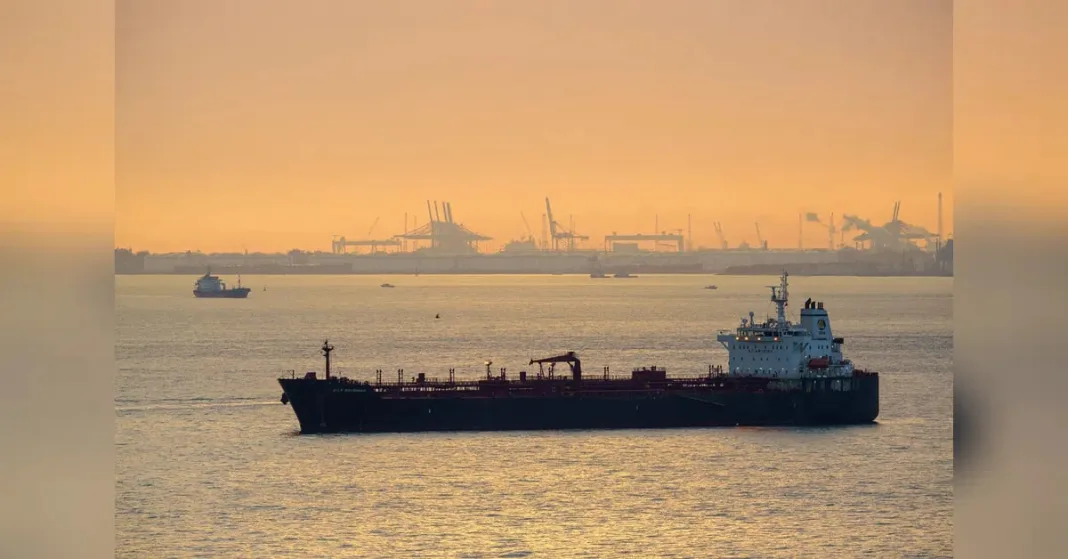

Russia to supply diesel to global markets
The US Treasury Department issued a licence allowing imports of Russian diesel until April 7, temporarily easing restrictions on Russian fuel. However, analysts said the initial volumes were unlikely to bring sustained relief to prices, Reuters reported.
Why is the global diesel market under pressure?
Diesel prices have surged since the US-Israel conflict with Iran began on February 28, disrupting fuel shipments from West Asia. Attacks on Russian refineries have further constrained supplies, while shipping disruptions around the Strait of Hormuz and the Red Sea have complicated deliveries.
West Asia’s diesel exports halved between March and August compared with a year earlier, averaging 800,000 barrels per day, according to Kpler shipping data. The region supplied nearly 41 per cent of Europe’s diesel imports in 2025.
The International Energy Agency estimated that global refining throughput had fallen by 4.7 million barrels per day compared with 2025. This has limited the availability of refined fuels even when crude oil is accessible. US diesel prices averaged $6.28 a gallon last week, Reuters reported, citing American Automobile Association (AAA) data.
The shortage has also affected India. Jio-bp capped diesel purchases at 50 litres per customer per day last month, while Nayara Energy introduced transaction limits of 70-200 litres. The restrictions followed increased demand from bulk consumers seeking cheaper fuel at retail outlets.
US pressure on India over Russian oil
The US has repeatedly targeted India over its Russian crude purchases, arguing that the trade helps fund Moscow’s war in Ukraine.
Kpler data showed India’s Russian crude imports rising from 1.67 million barrels per day (bpd) in January 2025 to 2.09 million bpd in June. After Washington imposed an additional 25 per cent tariff on Indian goods in August 2025, imports fell to 1.24 million bpd in December.
Russian crude accounted for around 30 per cent of India’s oil imports in FY26. Imports declined in early 2026 before rising again as the West Asia conflict disrupted shipments through the Strait of Hormuz. Kpler data showed imports reaching 2.82 million bpd in June and 2.08 million bpd in August.
In September, Trump signed legislation authorising tariffs of up to 100 per cent on major buyers of Russian energy. The latest diesel deal comes as Washington temporarily relaxes restrictions to address domestic fuel prices.
What the Russian diesel deal means for India
Rajeev Sharan, Head of Research at Brickwork Ratings, told Business Standard that Washington’s decision strengthened India’s argument that energy security and affordability should guide purchasing decisions. “That shows energy security and affordability can outweigh sanctions, the very argument India has made,” he said.
He added that India imports over 85 per cent of its crude requirements and needs the flexibility to buy from different suppliers. “That said, the US licence is temporary, and the sanctions law, with its threat of tariffs on large buyers of Russian oil, remains in force. So, India gains a stronger argument, not a free pass,” he said.
Nilanjan Banik, professor of economics and finance at Mahindra University, told Business Standard that the deal could strengthen India’s diplomatic position. “It gives New Delhi grounds to seek a waiver from the Graham Act, which permits tariffs of up to 100 per cent on significant buyers of Russian oil,” Banik said.
He added that India could question Washington’s argument that Russian energy purchases fund the war in Ukraine, given the US decision to permit Russian diesel imports.
Impact on Indian refiners
The deal could also affect Indian refiners, which export diesel to international markets. Greater Russian supplies could increase competition and reduce refining margins.
“The first batch is small, so the early effect on prices will be modest. If the larger volumes follow, diesel margins, which are currently high, could cool, and Indian refiners, who are major diesel exporters, would face more competition in the markets they sell to,” Sharan said.
He added that European restrictions on Russian fuel could continue to support demand for Indian diesel that meets the region’s rules. Lower margins could reduce refiners’ profits without necessarily weakening their balance sheets.
Banik said the impact would depend on where Russian diesel is sold. “If it goes to the US, some existing buyers in rest of the world, may need replacement cargoes from West Asia or Asia. India may gain from that point.”
However, wider global sales could put Indian exporters under pressure. Banik said Indian diesel premiums could remain firm if supplies fall short or European inventories stay low, although competitively priced Russian fuel could limit them.