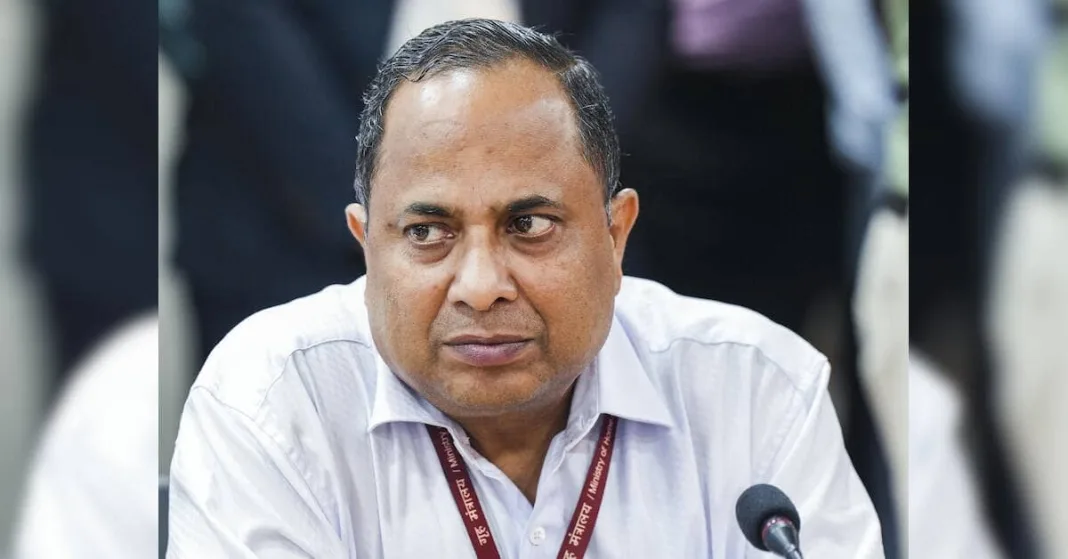

The depletion of coal stocks at power plants is a concern amid rising electricity demand, and the country must develop a judicious mix of resources for baseload power rather than depending on a single source, Ghanshyam Prasad, chairman of the Central Electricity Authority (CEA), an arm of the power ministry, said on Tuesday.
“We are very concerned about the enhancement of the fuel supply to these power plants because the stock is depleting almost every day. We are not finding time to put them on the maintenance cycle,” he said, speaking at an industry event here.
He also said that the country’s power demand is rising by 45-50 gigawatts (GW) every day compared with last year, and therefore, a huge addition of coal-based generation is needed. The CEA had initially targeted around 97 GW of coal-based power capacity by 2036, but that estimate is now seen rising to 150 GW from the reference date of 2023.
While India added over 50 GW of renewable energy generation capacity last financial year, it is important to add other resources to the energy basket, including nuclear and pumped hydro, to supplement coal-based plants, he said.
CEA data showed that the number of power plants with critical coal stocks stood at 87 on October 11, with actual stocks of 20.8 million tonnes (mt), around 34 per cent of the normative coal requirement.
Speaking at the same event, NTPC chairman Gurdeep Singh also expressed concern over rising power demand and coal stock depletion. “Our generation from coal-based plants has widened by around 10 per cent, with an 18 per cent rise this month. And it is difficult to maintain the coal stock,” he said in his speech.
Singh also said that the company is planning an investment of around Rs 17 trillion over the next decade, with Rs 7 trillion planned in the coming five years alone. These investments span various power sources, including thermal, renewable, nuclear, storage and green hydrogen.
Talking about NTPC’s under-construction green hydrogen hub in Pudimadaka, Andhra Pradesh, he said work on the project has already begun and the company is talking to many off-takers in Japan, Korea and Germany. “I believe at some point of time this will become a viable business,” he said.
Singh also said that the duration of peak demand hours has increased to 10-12 hours from just four hours earlier, making storage and grid flexibility solutions necessary.
CEA’s Prasad also said that grid stability is an issue that needs to be managed even as new technologies, including grid-forming inverters, harmonic filters and synchronous condensers, are added to the transmission system.