
US airfares climbed 23.4% year on year in August 2026, reversing earlier expectations of cheaper travel and putting renewed pressure on household budgets. The increase coincides with a jet fuel price shock, Spirit Airlines’ closure and airlines’ growing emphasis on premium seating. Delta Air Lines has warned of substantially higher fuel expenses, while United Airlines has reported a near-$6 billion increase in anticipated 2026 fuel costs compared with its original expectations. American Airlines, meanwhile, plans to increase premium seating across its narrowbody fleet. Together, these developments expose travellers to higher ticket prices, fewer low-cost alternatives and greater uncertainty when planning domestic and international journeys.
Airline Fare Data Reveals a Sharp Reversal
The latest official inflation figures confirm that the increase extends beyond individual routes or isolated booking periods. The US Bureau of Labor Statistics reported that airline fares rose 23.4% over the 12 months to August 2026, although the seasonally adjusted index fell 0.5% during August itself. That monthly decline suggests some short-term movement, but it does not erase the substantial annual increase.
Advertisement
Advertisement
The distinction matters for travellers. The 23.4% figure measures movement in a national price index, not a uniform increase across every airline, destination or ticket. Individual fares still depend on booking dates, route competition, seat availability, travel season and the conditions attached to each ticket.
Research note: The figures below distinguish published national fare data from individual airlines’ reported costs, forecasts and commercial decisions. They should not be interpreted as identical fare increases across all carriers.
Three Major Airlines Face Mounting Pressure
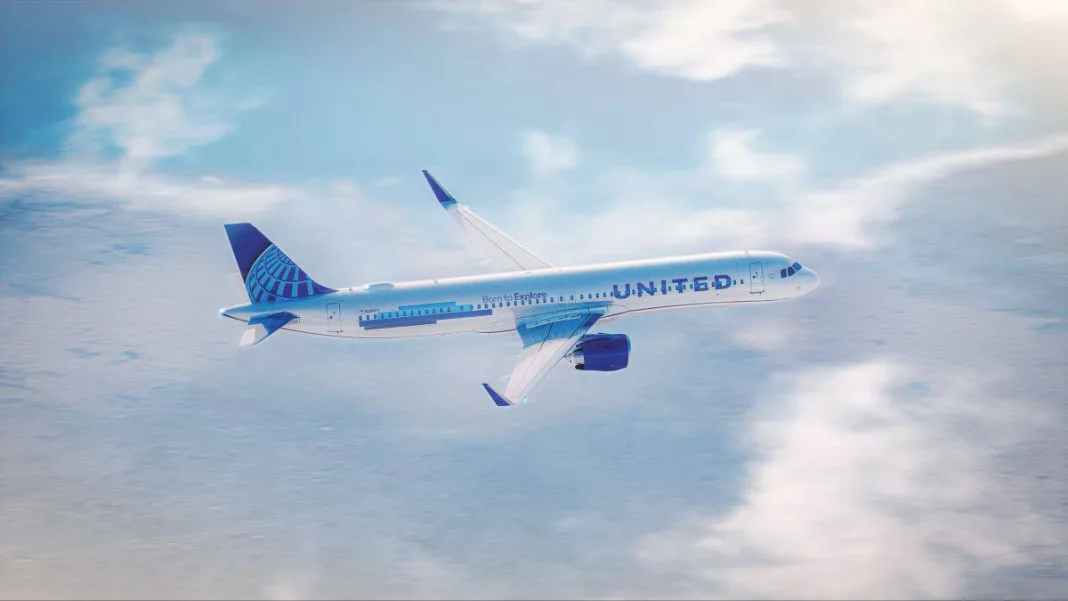
Delta Air Lines, United Airlines and American Airlines illustrate three different sides of the current pricing environment. Delta and United have disclosed substantial additional fuel costs, while American is expanding the share of higher-priced seating options. These developments help explain why cheaper tickets have become harder to find, although they do not establish that every airline has raised every fare by the same amount.
| Airline | Verified 2026 development | Implications for travellers |
|---|---|---|
| Delta Air Lines | Expected fuel expenses approximately $6 billion higher than previously anticipated, according to October reporting | Higher fares and capacity adjustments may help offset operating costs |
| United Airlines | Forecast nearly $6 billion in additional 2026 fuel expenses against its original expectations | Fare increases and schedule adjustments could help recover costs |
| American Airlines | Plans to increase premium seating on narrowbody departures from approximately 25% to 40% over the coming years | A greater proportion of seats will carry premium features or higher prices |
These figures measure different things. Delta’s updated fuel outlook reflects its latest assessment, while United’s nearly $6 billion estimate was disclosed in July. American’s announcement concerns cabin configuration rather than a confirmed network-wide fare increase. Together, however, they show how costs and revenue strategies are changing the economics of flying.
Advertisement
Advertisement
Delta Confronts a $6 Billion Fuel Shock
Delta’s October 9 financial update exposed the difficulty of converting strong passenger demand into higher profits. The airline reported record September-quarter revenue but lowered its full-year adjusted earnings forecast to $5.10–$5.60 per share, down from its previous range of $6.50–$7.50. The airline attributed the revised outlook to unexpectedly high fuel costs.
Reuters reported that Delta expected its annual fuel bill to increase by approximately $6 billion, around $2 billion above earlier projections. The carrier has also used fare increases, capacity management and premium services to protect its financial performance. Even so, higher ticket revenue has not fully neutralised the pressure on profits.
Advertisement
Advertisement
For passengers, the important signal is not that Delta has announced a universal 20% fare rise. Rather, Reuters reported that the airline had been able to raise ticket prices by around 20% without substantial customer resistance. That observation describes the pricing environment, not a guaranteed increase on every route or ticket.
United Seeks to Recover Higher Costs
United Airlines reported a similarly significant fuel burden in July. Its second-quarter results announcement said the company expected nearly $6 billion in additional full-year fuel expenses compared with the outlook at the start of 2026. Second-quarter fuel expense rose by $2.3 billion, or 84%, year on year.
United nevertheless raised its full-year adjusted earnings guidance to $9–$11 per share at the time. Its results indicated that strong demand, higher revenue and operational adjustments were helping offset the shock. Reuters also reported that United had raised fares and was prepared to reduce capacity if fuel prices remained elevated.
This strategy has consequences beyond the price displayed during a search. If an airline trims flights or seats on selected routes, travellers may face fewer departure times and less flexibility. Those remaining services can become more expensive when demand exceeds available capacity.
Advertisement
Advertisement
American Expands Its Premium Cabin Strategy
American Airlines is pursuing a longer-term commercial strategy that could change the mix of seats available to passengers. In its fleet-upgrade announcement, the airline said premium seating represented approximately 25% of seats on narrowbody departures, with plans to increase that proportion to about 40% in the coming years. The changes include additional First Class seats and more Main Cabin Extra seating with extra legroom.
This is not a declaration that American will eliminate economy class or raise every standard fare. Instead, it reflects an industry effort to generate more revenue from customers willing to pay for extra comfort, priority services and additional space. However, a growing premium cabin occupies a larger share of aircraft capacity, potentially changing the balance between standard and higher-priced seats.
For budget-conscious passengers, the practical question is whether enough competitively priced standard seats remain available on their preferred flight. The answer will vary by aircraft, route and booking period.
Jet Fuel Prices Reshape Airline Economics
Fuel remains one of the strongest pressures on airline operating budgets. The International Air Transport Association (IATA) projected in June that global airline fuel expenditure would rise from $252 billion in 2025 to $350 billion in 2026, an increase of nearly 40%. It forecast an average jet fuel price of $152 per barrel, compared with $90 in 2025.
The increase reflects more than crude oil prices alone. Disruptions to Middle Eastern energy supplies have constrained refined-product markets, while refinery limitations and higher transport costs have tightened jet fuel availability. IATA’s June outlook also identified an exceptionally wide gap between crude oil and jet fuel prices, adding to airlines’ cost pressures.
The following figures show the scale of the change.
Advertisement
Advertisement
| Industry indicator | 2025 figure | 2026 forecast | Change |
|---|---|---|---|
| Global airline fuel expenditure | $252 billion | $350 billion | Approximately 39% increase |
| Average jet fuel price per barrel | $90 | $152 | Approximately 69% increase |
| Fuel share of airline operating expenses | 25.4% | 31.4% | 6 percentage points higher |
| Global airline net profit | $45 billion | $23 billion | Approximately 49% decrease |
These projections reveal why airlines cannot absorb every increase without making commercial adjustments. Fuel expenditure is rising faster than many other costs, while overall industry profitability is forecast to narrow considerably. Airlines must therefore weigh higher ticket revenue against the risk of losing price-sensitive customers.
Moreover, fuel hedging does not remove the problem entirely. IATA estimated that airlines had hedged roughly one-third of their expected 2026 fuel consumption. Some carriers therefore remain exposed to rising market prices, including increases in the premium paid for refined jet fuel over crude oil.
Spirit’s Closure Weakens Budget Competition
Higher fuel prices explain only part of the problem. The loss of Spirit Airlines has also reduced the competitive pressure that once helped keep some US fares low. Spirit operated as an ultra-low-cost carrier, attracting passengers through inexpensive base fares and charging separately for many optional services.
Its closure removes a significant budget option from the market. Frontier Airlines shares some of the competitive space Spirit occupied, alongside smaller operators such as Allegiant, Breeze Airways and Avelo Airlines. However, these airlines do not offer identical networks or schedules, so passengers cannot always replace a lost Spirit service with an equally convenient alternative.
The consequences extend beyond travellers who previously flew with Spirit. When an ultra-low-cost airline competes on a route, established carriers may need to price selected economy seats more aggressively. Once that competitor disappears, other airlines can face less pressure to match the cheapest available fares.
Frontier’s overlap with Spirit illustrates the scale of the change. The supplied reporting identifies more than 100 shared routes, although the actual impact varies by market. A route served by several competing carriers may remain relatively competitive, while a market with fewer alternatives could experience more pronounced price pressure.
Advertisement
Advertisement
The closure does not automatically make every affected route more expensive. Other airlines may add capacity, launch replacement services or compete more aggressively for displaced passengers. Nevertheless, travellers lose an important source of low introductory fares and may have fewer nonstop options.
Why Fewer Seats Can Cost More
Airlines do not price tickets solely according to the cost of operating an aircraft. They also manage seat inventory against expected demand, selling different fare classes at different prices. As cheaper booking categories sell out, the next available ticket can cost substantially more, even when the flight itself has not changed.
This system becomes particularly important when airlines face rising costs and adjust capacity. If a carrier removes selected flights, reduces frequencies or deploys fewer seats on a route, fewer low-priced tickets may remain available. Strong demand can then amplify the effect.
The shift towards premium seating introduces another consideration. American’s planned increase in premium seats demonstrates that airlines increasingly seek revenue from passengers who value additional comfort. That strategy can support investment and profitability, but it also changes how airlines allocate aircraft space between standard and premium products.
The following comparison explains how these pressures affect different travellers.
| Market development | Immediate effect | Potential passenger impact |
|---|---|---|
| Higher jet fuel prices | Increases operating expenses | Higher fares or additional commercial restrictions |
| Spirit’s exit | Removes an ultra-low-cost competitor | Fewer exceptionally cheap tickets on affected routes |
| Reduced flight capacity | Limits available seats and departure options | Less flexibility and potentially higher fares |
| More premium seating | Changes the mix of products sold | Greater choice for premium customers, but a different balance of standard seats |
| Strong travel demand | Supports airlines’ pricing power | Higher fares during busy periods |
These factors reinforce one another, although their effects differ across routes. A competitive leisure market may still offer attractive deals, while a business-heavy route with limited alternatives could remain expensive. Consequently, travellers should compare actual itineraries rather than assume that one industry-wide percentage applies to every booking.
Advertisement
Advertisement
Families and Holidaymakers Face Harder Choices
The increase has implications for more than airline earnings. Air travel is often a major component of holiday budgets, especially for families buying several tickets or travellers connecting through multiple airports. Even a modest increase in the price of each ticket can substantially raise the total cost of a trip.
For example, consider a family of four whose comparable return tickets previously cost $250 each. The total airfare would have been $1,000 before any additional charges. If those specific fares increased by 20%, the family would pay $1,200, adding $200 to the journey.
This is an illustration, not a forecast of actual fares. The national 23.4% inflation figure cannot be applied mechanically to an individual family’s booking. Nevertheless, it demonstrates how a fare increase can affect the total holiday budget.
Higher airfares can also influence destination choices. Travellers may shorten their stays, choose destinations closer to home, depart from alternative airports or travel outside peak periods. Others may substitute rail or road journeys where practical, particularly for shorter domestic trips.
For tourism businesses, these decisions can alter demand patterns. Hotels, attractions and destination operators that depend on air arrivals may find that rising transport costs discourage discretionary trips. However, the impact will vary by destination, visitor market and the availability of alternative transport.
The pressure may be particularly visible among travellers who prioritise price over flexibility. Passengers with fixed school-holiday dates, essential appointments or limited departure options often have fewer opportunities to avoid expensive travel periods.
Advertisement
Advertisement
How Travellers Can Reduce Booking Costs
There is no universal booking window that guarantees the cheapest ticket, particularly when fuel prices, demand and capacity are changing simultaneously. However, passengers can improve their chances by comparing several travel dates, checking nearby airports and assessing the full cost of each itinerary.
The first step is to compare the final fare rather than the advertised base price. A seemingly cheaper ticket may exclude checked baggage, advance seat selection or other services that another airline includes. Travellers should also compare direct flights with connections, while accounting for additional travel time and the risk of missed connections.
Flexibility can make a difference. If the destination and schedule permit, checking departures on nearby weekdays or travelling outside school holidays may reveal lower fares. Passengers should also consider alternative airports, but only after accounting for ground transport, parking and transfer costs.
| Booking decision | What travellers should check | Why it matters |
|---|---|---|
| Compare travel dates | Search several nearby departure and return dates | Demand varies across the week and season |
| Check alternative airports | Include ground transport and transfer expenses | A cheaper ticket may cost more overall |
| Compare baggage allowances | Review cabin and checked baggage rules | Additional charges can erase apparent savings |
| Assess connecting flights | Compare total journey time and connection risks | The lowest fare may offer less convenience |
| Monitor fare changes | Use airline alerts and review prices regularly | Travellers can identify changes before booking |
| Review cancellation terms | Check refundability and change fees | A flexible ticket may reduce the cost of unexpected changes |
Travellers should book when the total price and conditions meet their needs rather than relying on predictions of a major market-wide price drop. For essential trips, waiting too long can also reduce the choice of convenient flights.
What the Fare Outlook Means for 2027
The outlook for the coming year depends heavily on fuel prices, airline capacity and the strength of passenger demand. Delta has indicated that sustained high costs could require further capacity restraint, while United has also discussed the possibility of schedule adjustments if fuel remains expensive. These signals suggest that the industry may continue prioritising profitability over expansion on some routes.
However, higher fares are not inevitable on every route. Falling fuel prices, additional airline capacity and stronger competition could moderate increases. Airlines may also offer targeted promotions to stimulate demand during quieter periods.
For now, travellers should expect a market shaped by uneven pricing rather than a single universal fare trend. The combination of higher operating costs, weaker ultra-low-cost competition and a premium-focused business strategy has made affordability less predictable. Monitoring individual routes and comparing complete ticket costs will remain more useful than relying on broad industry forecasts.