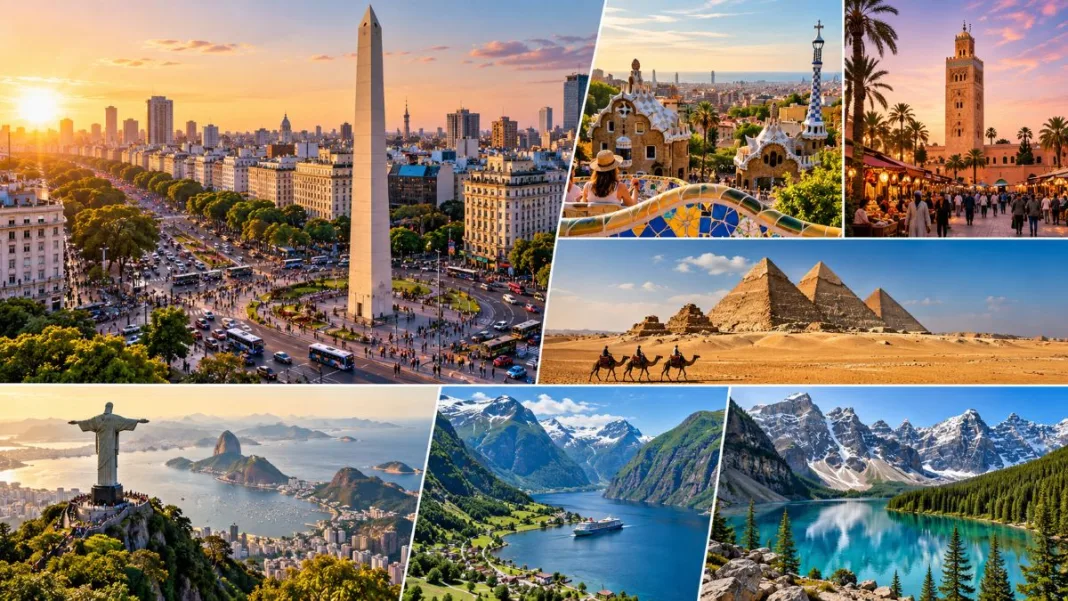

Argentina has recorded the strongest increase in insured autumn travel among the two reported finalists of the 2026 FIFA World Cup, according to figures supplied by travel insurance marketplace Squaremouth. Insured trips to Argentina rose 55.9% year on year for September and October, compared with 23.6% for Spain. The two finalists recorded a combined increase of 26.6%, while Morocco, Egypt, Brazil, Norway and Canada also registered growth. Morocco’s 34.2% rise and Egypt’s 26.4% increase placed both ahead of Brazil, at 15.3%. The figures offer a timely indication of how sporting exposure may influence destination interest, although they do not independently establish a direct causal link.
The pattern presents a broader question for tourism authorities, airlines and hospitality businesses. Can global football visibility translate into sustained visitor arrivals, longer stays and higher tourism receipts? Argentina’s reported increase stands out, but official tourism statistics reveal important differences between countries. Those differences matter when assessing whether World Cup attention represents a lasting commercial opportunity or a temporary shift in travel preferences.
Advertisement
Advertisement
Argentina’s Growth Outpaces a Competitive Field
Argentina’s reported 55.9% increase gives it a clear lead over Spain, Morocco, Egypt, Brazil, Norway and Canada in Squaremouth’s comparison. However, percentage growth alone does not reveal which destination attracted the most travellers. Nor does it establish how much additional revenue the reported rise generated.
The distinction is particularly important for tourism businesses evaluating post-event demand. A country with a smaller starting volume can record a sharper percentage increase than a destination with an established, much larger visitor base. Absolute booking volumes, average expenditure and length of stay are therefore essential measures alongside year-on-year growth.
Advertisement
Advertisement
Argentina already has a varied international tourism proposition. Buenos Aires combines architecture, gastronomy, nightlife and football culture, while Mendoza draws wine travellers. Patagonia attracts visitors seeking mountain landscapes and outdoor experiences, and Iguazú Falls remains a major nature-based attraction.
This geographical diversity gives Argentina opportunities to convert football-related interest into multi-stop itineraries. Nevertheless, the reported insurance figures do not identify which regions attracted additional demand. Destination-level booking data would be needed to determine whether the increase benefited the capital, established leisure destinations or less-visited provinces.
Advertisement
Advertisement
Official statistics also show why the broader market requires careful interpretation. Argentina’s national statistics agency, INDEC, recorded 887,800 non-resident visitors in December 2025, including 535,800 tourists and 352,000 same-day excursionists. International arrivals that month fell 6.7% year on year.
The difference in measurement matters. Squaremouth tracks insured travel purchases for September and October 2026, while INDEC counts international movements under its own definitions. The two datasets cannot be treated as directly interchangeable. Instead, the next official monthly releases should help establish whether Argentina’s reported insurance growth coincided with a broader recovery in inbound tourism.
Advertisement
Advertisement
Spain Combines Football Appeal With Established Demand
Spain recorded a 23.6% increase in insured fall trips, less than half Argentina’s reported growth rate. Yet the country entered the post-tournament period with a substantial international tourism market and continued growth in official arrivals.
Spain’s National Statistics Institute reported 12.3 million international tourists in August 2026, an increase of 9.2% against August 2025. Arrivals during the first eight months reached approximately 70.4 million, up 5.4% year on year.
| Indicator | Latest reported result | Year-on-year change |
|---|---|---|
| International arrivals, August 2026 | 12.3 million | +9.2% |
| International arrivals, January–August 2026 | 70.4 million | +5.4% |
| International tourist expenditure, August 2026 | €17.84 billion | +9.2% |
| Average daily expenditure, August 2026 | €202 | +1.9% |
These figures illustrate the difference between a destination’s established tourism performance and a specific event-related demand signal. Spain’s official arrivals and spending increased, but those results cannot be attributed to football without additional evidence.
For tourism operators, the more consequential question concerns the distribution of spending. Visitors may concentrate on Madrid, Barcelona and established coastal destinations, while other regions seek a greater share of international demand. The opportunity is to convert heightened interest into longer stays, regional excursions and repeat visits.
Advertisement
Advertisement
However, capacity pressures remain relevant to travel planning. Visitors should compare accommodation rates, transport connections and seasonal conditions before choosing an itinerary. A rise in interest does not guarantee lower prices or greater availability, particularly in popular destinations.
Morocco and Egypt Challenge the Finalists
Morocco’s 34.2% reported increase placed it second among the seven countries in the supplied Squaremouth data. Egypt followed with 26.4%, both exceeding Spain’s 23.6%. The comparison suggests that the strongest growth signals extended beyond the two reported finalists.
Morocco also entered 2026 following a record year for inbound tourism. Its tourism ministry reported 19.8 million tourist arrivals in 2025, up 14% from 2024. Tourism receipts reached 124 billion Moroccan dirhams by the end of November 2025, a 19% annual increase.
The country’s tourism roadmap for 2023–2026 has emphasised air connectivity, accommodation capacity, service quality and diversification. Those priorities provide important context for assessing the latest insurance data. Football exposure may increase destination awareness, but transport links and the availability of suitable accommodation determine how easily interest becomes a completed trip.
Morocco’s tourism offer also extends well beyond football. Marrakech attracts visitors through its historic medina and cultural experiences, while coastal destinations and Atlas Mountain itineraries appeal to different travel segments. Tourism operators could use broader international visibility to promote longer journeys across multiple regions.
Egypt presents a different proposition, combining ancient heritage, Red Sea resorts, Nile cruises and archaeological attractions. Its reported 26.4% increase could encourage closer examination of demand across cultural and beach holidays. However, the supplied figures do not identify traveller origins, destination preferences or the number of policies purchased.
Advertisement
Advertisement
A reliable comparison therefore requires updated Egyptian government arrivals data and expenditure statistics. Without those measures, Morocco’s verified 2025 results provide a stronger established benchmark, while Egypt’s insurance growth remains a promising but narrower indicator.
Brazil, Norway and Canada Complete the Picture
Brazil’s 15.3% increase was lower than the reported growth in Argentina, Spain, Morocco and Egypt. Nevertheless, the country has substantial tourism momentum of its own, making it an important comparison in this analysis.
Brazil welcomed a record 9.3 million international tourists in 2025, according to Embratur’s published data. International arrivals increased by approximately 37% from 2024, while foreign-exchange revenue from tourism reached US$7.86 billion. International flight numbers also rose 16.5% year on year.
These figures suggest that Brazil’s reported insurance growth sits within a broader expansion in international tourism. However, the 2025 figures pre-date the tournament and cannot establish whether football generated further demand in September and October 2026.
The country’s tourism offer extends from Rio de Janeiro’s beaches and urban attractions to the Amazon, the Pantanal and the Iguaçu Falls region. For tour operators, combining these destinations into multi-region itineraries could help convert increased awareness into longer stays and wider spending.
Norway and Canada recorded more moderate growth in Squaremouth’s figures, at 14.3% and 13.1%, respectively. Yet both offer useful examples of how tourism performance depends on factors beyond sporting exposure.
Advertisement
Advertisement
Statistics Norway recorded 40.6 million guest nights at commercial accommodation establishments in 2025, up 5.2% from 2024. International visitors accounted for 14.2 million guest nights, an increase of 14%. The agency cited favourable exchange rates and destination marketing as possible contributors.
Canada also recorded growth in international travel during the tournament’s aftermath. Statistics Canada’s preliminary figures put international arrivals by air and automobile at 6.9 million in August 2026, up 4.3% from August 2025. Overseas-resident arrivals by air and automobile increased 7.2% year on year.
These official figures provide context, not proof of a World Cup effect. Norway’s guest nights measure accommodation activity, while Canada’s preliminary arrivals combine different traveller groups. Neither measure is directly comparable with Squaremouth’s insured-trip growth.
How the Seven Countries Compare
The Squaremouth figures show a clear ranking by year-on-year growth. The official statistics, meanwhile, reveal different starting positions and wider tourism trends across the countries.
| Destination | Insured fall trip growth | Relevant tourism context |
|---|---|---|
| Argentina | +55.9% | December 2025 inbound visitors fell 6.7% year on year. |
| Morocco | +34.2% | 19.8 million arrivals in 2025, up 14%. |
| Egypt | +26.4% | Around 19 million arrivals in 2025, up 21%. |
| Spain | +23.6% | 70.4 million arrivals in January–August 2026, up 5.4%. |
| Brazil | +15.3% | 9.3 million international arrivals in 2025, up approximately 37%. |
| Norway | +14.3% | 40.6 million commercial guest nights in 2025, up 5.2%. |
| Canada | +13.1% | International arrivals by air and automobile reached 6.9 million in August 2026, up 4.3%. |
The comparison highlights why growth rates should not be mistaken for market size. Argentina leads the insurance data, but Brazil, Spain, Morocco and Egypt entered the period with substantial tourism volumes or strong pre-existing growth. Their commercial opportunities will depend on how much additional demand they can accommodate and retain.
The figures also cannot determine which country generated the greatest increase in visitor spending. That assessment requires absolute booking numbers, traveller origin markets, average trip costs and verified tourism receipts.
Advertisement
Advertisement
What Travellers Should Consider Before Booking
For travellers considering Argentina, the reported increase provides a reason to investigate demand, rather than a guarantee of higher prices or crowded attractions. Visitors should compare airfares, accommodation availability and internal transport before committing to multi-region itineraries.
Argentina’s distances make advance planning particularly important. Buenos Aires, Mendoza, Patagonia and Iguazú Falls serve different travel interests, but combining them can require domestic flights or lengthy overland journeys. Travellers should allow realistic transfer times and consider seasonal conditions in each region.
Travel insurance also deserves careful attention. Buyers should compare medical cover, trip cancellation provisions, exclusions and the conditions under which disruption claims qualify. A rise in insured travel does not mean every policy offers identical protection.
Spain, Morocco and Egypt require similarly destination-specific planning. Travellers should check entry requirements, local transport, seasonal weather and accommodation conditions through official channels. They should also verify whether booked activities, transfers and excursions operate on their intended dates.
For tourism businesses, the more useful lesson concerns conversion rather than publicity alone. Destination marketing can introduce places to new audiences, but reliable air links, suitable accommodation, clear visitor information and competitive itineraries determine whether interest becomes a sale.
Tourism authorities should therefore monitor arrivals and spending alongside online interest and insurance purchases. They should also examine regional distribution, helping lesser-visited areas benefit without overwhelming established attractions.
Advertisement
Advertisement
What the Figures Mean for Future Tourism
The reported Argentina tourism growth after FIFA World Cup 2026 offers a compelling starting point for examining the relationship between sporting visibility and travel demand. Argentina’s 55.9% increase leads the supplied comparison, while Morocco, Egypt and Spain also recorded substantial gains. Brazil, Norway and Canada demonstrate that the pattern extends across destinations with different tourism profiles.
Nevertheless, the figures represent insured travel purchases, not a comprehensive count of visitors. National statistics provide important context, but their different periods and definitions prevent direct comparisons with Squaremouth’s data. The next step is to test whether the reported growth appears in arrivals, accommodation, airline capacity and tourism receipts. If those indicators strengthen together, the case for a sustained post-event effect will become more convincing. Until then, the figures signal opportunity rather than definitive proof.