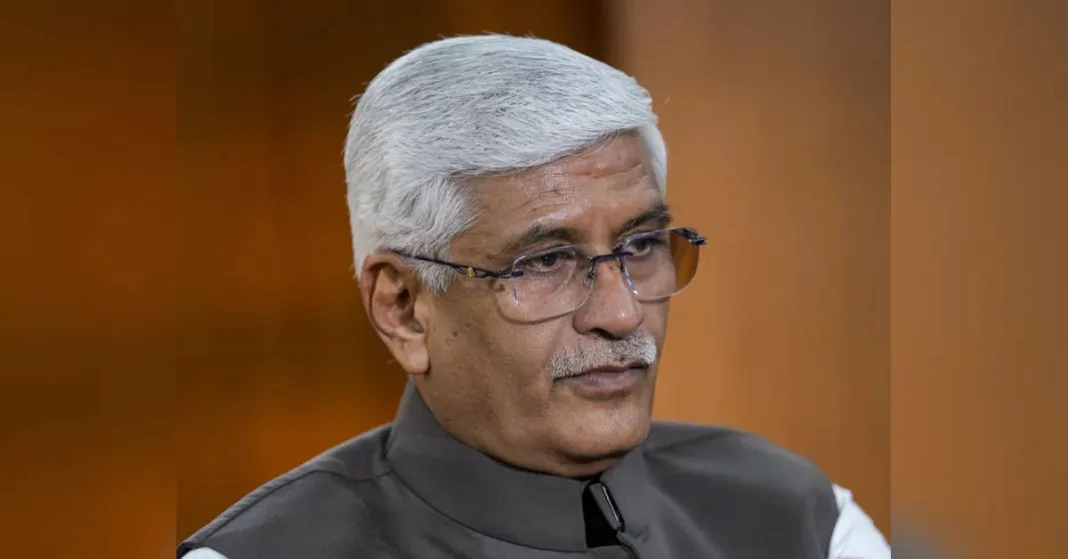

Pitching for a shift in India’s approach to tourism, Union Minister for Culture and Tourism Gajendra Singh Shekhawat said that combining the power of technology, people and the cultural economy is essential to driving the next transformation in India’s tourism market.
Speaking on the third day of the ongoing Kautilya Economic Conclave on Monday, the minister asserted that culture should no longer serve merely as a passive backdrop to travel, but rather act as a primary driver of inclusive economic growth.
“We speak rightly of physical capital, financial capital, human capital, and technological capital. But we must now give cultural capital its rightful place in the architecture of economic policy,” Shekhawat said. “We must begin to regard culture not merely as a heritage that needs to be preserved, but as a capital to be captured and monetised,” he added.
Addressing the use of modern technology, the minister pointed out that while digital platforms, artificial intelligence, and data analytics can personalise journeys and expand access to undiscovered destinations, technology alone cannot replace human authenticity.
“The purpose of technology must not merely be to make famous destinations more accessible. Its greater purpose should be to bring together thousands of places that possess remarkable cultural and natural wealth but remain insufficiently discovered,” Shekhawat said. “Technology can enhance the human experience, but it can never replace it,” he added.
The minister also highlighted initiatives such as the National Digital Tourism Stack and Dekho Apna Desh and their role in unlocking thousands of culturally rich but lesser-known regions.
To further expand the sector and give the cultural economy its rightful place, the minister suggested investment not only in digital infrastructure but also in guides, hospitality professionals, artisans, artists, destination managers, and local entrepreneurs.
“Technology, therefore, need not stand in opposition to heritage. Technology can become heritage’s most powerful ally,” the minister said.
During the session where the minister shared his keynote address, Karan Bilimoria, chair of the UK’s International Chamber of Commerce, recommended reforms in the visa system, increased marketing and industry-government partnership to further enhance the tourism sector in India.