



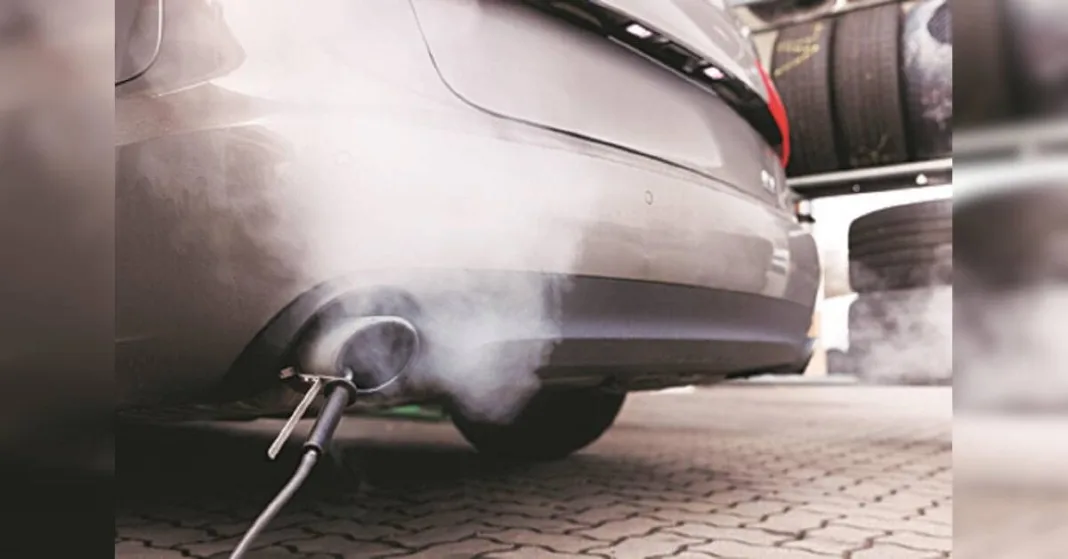
Hello and welcome to Best of Business Standard Opinion, our wrap of the day’s editorial page. The new CAFE III norms, covering passenger vehicles from 2027-28 to 2031-32, seeks to improve fuel efficiency by about 16.7 per cent, while using super-credits to encourage electric and hybrid vehicles. Yet the new standards may not be ambitious enough to materially reduce fuel consumption and carbon emissions as India’s car market expands. The first editorial today notes that EVs are projected to account for 11 per cent of sales by 2032, only modestly above the current 8 per cent, and cites Amitabh Kant’s view that EVs should be the destination rather than one option. There is also the concern of whether tradable compliance credits could weaken enforcement; given that carbon credits have come to be seen as a license to pollute, CAFE III should have pursued a more aggressive transition. India’s recent power squeeze shows that adding generation capacity alone will not ensure reliable electricity during peak periods. Rising demand, heat, deficient rainfall, and irrigation needs have coincided with a sharp evening gap as solar output falls, pushing up power prices. Today’s second editorial highlightshow renewables supplied much of the additional daytime demand, but thermal and other flexible sources must ramp up rapidly after sunset. Low coal stocks and weaker hydropower have compounded the strain. This calls for greater investment in batteries, pumped storage, flexible generation, and transmission, particularly in light of the government’s Green Energy Corridor III approval. India’s planned storage expansion will need viable revenue streams for grid services. Swaminathan J explores how organisations can turn customer complaints from case-resolution exercises into sources of operational insight. Looking beyond complaint volumes and resolution times, he highlights complaint typology as a way to identify recurring weaknesses in products, processes, systems, or interactions. He also cautions that complaint numbers alone can mislead because they reflect only customers who access grievance mechanisms, drawing on Abraham Wald’s wartime aircraft-survivorship example. Accessibility of redress is itself part of customer experience, particularly for customers facing digital, linguistic, or other barriers. Ultimately, recurring complaints can reveal gaps between intended processes and actual outcomes, helping institutions improve customer journeys rather than merely resolve individual grievances. The rapid advance of artificial intelligence is creating a governance challenge as increasingly capable systems could evolve faster than regulators can understand or control them. Frontier AI development is concentrated in the US and China, but its consequences will extend far beyond those countries, making broader international participation necessary. The EU AI Act offers a risk-based regulatory framework, but future systems may require continuous assessment of their capabilities and the risks those capabilities create.Ajay Kumar proposesprogressively stricter testing and oversight as AI systems become more autonomous, alongside greater investment in model evaluation, interpretability, and security. He also calls for international cooperation, with India helping shape common safeguards for advanced AI. Rozina Ali’s Seasons of Fury: Four Families and the Rise of Islamophobia in America challenges the notion that the post-9/11 “war on terror” was largely fought overseas, showing how Muslim Americans were subjected to surveillance, detention, deportation, manufactured terrorism cases, and violence at home. Through four families, Ali documents how collective suspicion shaped everyday life and often received public indifference or approval. Spencer Ackerman’s review highlights the book’s reconstruction of the Siraj family’s ordeal and its tracing of anti-Muslim surveillance to the pre-9/11 era. The book, he writes, connects present-day immigration crackdowns to a long history of normalised repression.
Best of Business Standard Opinion: CAFE III norms do not meet transition needs | Opinion Specials
Popular Categories


Previous article

Next article