

“There is no single, rigid definition of ‘vintage art’ in the Indian market in the way there is for categories such as modern or contemporary Indian art,” says Sunny Chandiramani, director, Client Relations & Art Specialist at AstaGuru Auction House. She uses the term broadly for older works that predate or sit around the emergence of Indian modernism. These range from late-18th and 19th century colonial-era paintings and visual documentation, to early 20th century academic painting and artists associated with the beginnings of Indian modernism.
That makes for a broad and diverse universe: Thomas and William Daniell, Raja Ravi Varma and M.V. Dhurandhar at one end; Abanindranath Tagore, Nandalal Bose and Jamini Roy at another. The boundary between vintage and modern, Chandiramani points out, cannot always be drawn by date alone.
The Art Of Living Heritage
One way to understand the appeal of vintage is to see what happens when the past is allowed to co-exist comfortably with the present. Vintage does not have to “match”. An old painting can hang above a modern console. A textile can become wall art. A vintage photograph can sit next to contemporary art. A carved chest can work with a minimalist sofa. Sometimes the contrast is what makes a room interesting.
So when does old become valuable? For collectors, that is the million-rupee, and sometimes multi-crore, question. “Age creates scarcity, but it is the work’s artistic significance, provenance, rarity, historical narrative and continuing relevance that create value,” says Chandiramani.
Collectors are also looking beyond the usual names. As prices and entry points for established modernists have risen, Chandiramani says buyers are exploring earlier and less frequently encountered areas of Indian art history. Colonial visual records, academic painters, folk and vernacular traditions and works documenting the emergence of an indigenous modernism are finding buyers alongside established modern artists.
Archibald Herman Muller- Surya
Recent auction results show the range. A circa-1930 Santhal Woman by Jamini Roy sold at AstaGuru for ₹32.15 lakh in 2025 against an estimate of ₹15-20 lakh. Archibald Herman Muller’s circa-1930 mythological painting Surya fetched ₹1.86 crore against an estimate of ₹15-20 lakh. The category goes well beyond paintings. A set of 35 handwritten letters and 14 envelopes by Rabindranath Tagore sold for ₹5.90 crore at AstaGuru in 2025.
Why would someone pay crores for old letters? Because what is being bought is not simply paper. Manuscripts, correspondence and illustrated books can offer a direct connection with an important historical figure. Rarity, provenance and cultural significance can turn something once intensely personal into something highly collectible.
Raja Ravi Varma offers another interesting example of why some old art continues to matter. “Look at where his paintings travelled, from Kerala and Travancore to all over India, even to the Himalayas,” says Raja Rama Varma, a descendant of the painter. “What is remarkable is his connectivity with people across classes. It wasn’t only kings. His paintings and oleographs connected with common people.”
That ability to cross class and geography was unusual. Ravi Varma’s imagery travelled beyond royal patrons and private collections through oleographs and found a place in ordinary Indian homes.
It is also a reminder that the value of an old artwork cannot be separated from its context. Who made it matters. So does who owned it, how rare it is, what was happening when it was created and the place it occupies in our cultural history.
Buying Vintage Art? A First-Timer’s Checklist
For someone entering the market, Chandiramani recommends looking at four things together: authenticity, provenance, condition and art-historical significance.
Authenticity: Is it genuinely by the artist claimed? Ask what evidence supports the attribution.
Provenance: Who owned it before? A documented ownership trail can strengthen credibility and value.
Condition: Check for damage, repairs and restoration. Ask for a condition report and details of previous interventions.
Significance and rarity: Old does not automatically mean important. Where does the work sit within the artist’s career? Is it rare? Has it been exhibited or published?
There are red flags, too: unclear ownership history, inconsistent dates or attribution, undocumented restoration, questionable condition, and claims of ‘rare’ or ‘important’ that are not supported by research.
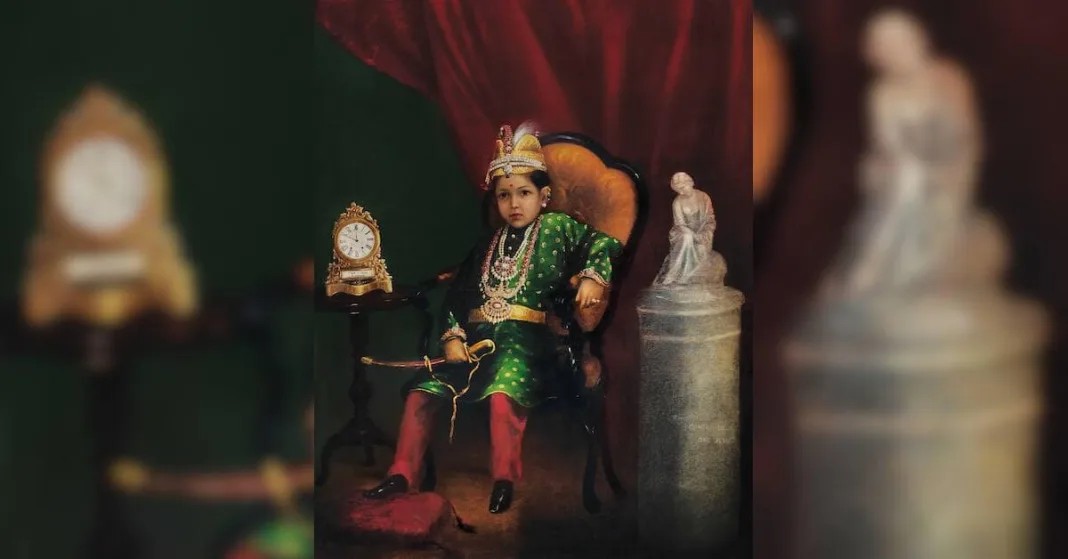
Chandiramani cites Raja Ravi Varma’s ‘The Little Prince of Courage’, which sold at AstaGuru for ₹30.88 crore. Age alone did not determine its value. Authenticity and provenance had to be established, while its rarity and place in art history also mattered.
In other words, buy the history, not just the age. At the same time, buying vintage also means taking responsibility for what happens to it.
Humidity, moisture, temperature fluctuations, sunlight and dust all have to be considered when caring for vintage items. Cleaning an old surface cannot be approached in the same way as cleaning a contemporary finish. Specialist artisans may be needed for traditional work. Moisture, careless cleaning, or inappropriate restoration can damage something that has survived for decades.
For years, luxury was synonymous with perfection: immaculate surfaces, flawless finishes, everything gleaming and new. The Japanese Wabi-sabi framework turns that on its head, instead, recommending finding beauty in even that which is imperfect.
In vintage art, imperfection may actually be evidence. Patina can be desirable. A faded pigment can reveal age. A documented ownership trail can matter as much as appearance. An object that has survived for generations carries something no reproduction, however beautifully executed, can replicate.
At home, vintage art does not have to sit behind glass or be restored until it looks new. It can simply become part of the present, carrying its age and imperfections with it.
In a world where almost anything new can be ordered at the click of a button, the ultimate luxury may just be owning something that cannot be made again.