
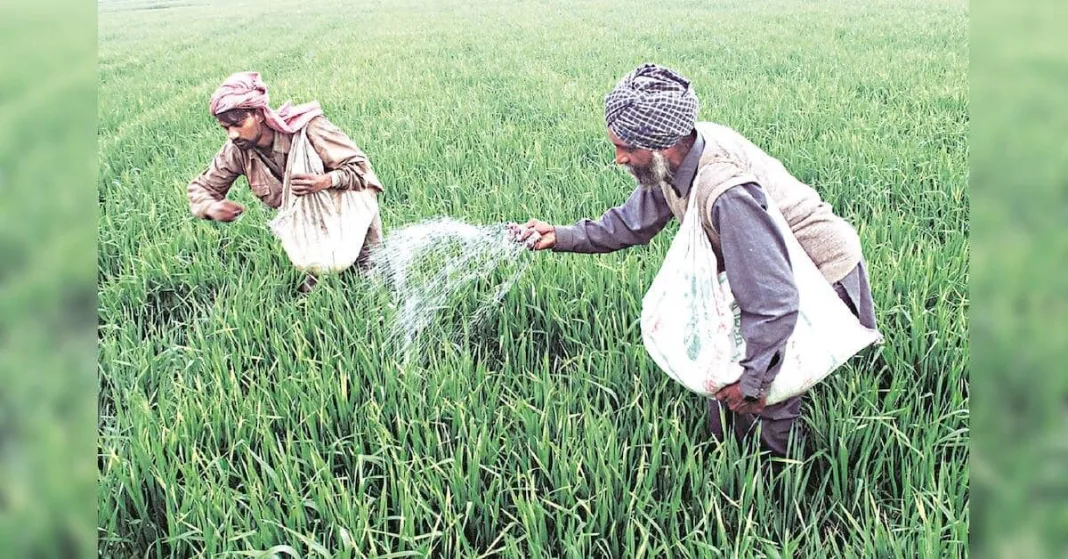

It was feared that small and marginal farmers, who constituted 75 per cent of the farming community at that time,would be hurt
Yet, as the then Finance Minister Manmohan Singh explained in his Budget speech on July 24, 1991, “The economic rationale for an increase in the price of fertilisers is so obvious that it does not need to be stated.”
Cut to 35 years later, and another Business Standard editorial on July 17, 2026, titled, ‘The fertiliser gap,’ spoke of almost the same issues. This time around the policy aimed to boost domestic production, but left the subsidy imbalance driving overuse, soil degradation and rising fertiliser costs unresolved.
Indeed, agriculture, which employs close to half of the country’s workforce and contributes around 18 per cent of its gross domestic product (GDP), is the one sector that governments over the years have found hard to reform. As a result, it presents a picture of missed opportunities that have hampered its development.
Sample this: From 1975-76 to 1984-85, India’s farm sector witnessed an average annual growth rate of 3.56 per cent at constant prices. Thereafter, from 1985-86 to 1994-95, it averaged 3.19 per cent. Between 1995-96 and 2004-05, it averaged just 2.43, even as other sectors reaped the dividends of liberalisation and grew rapidly. It was only between 2014-15 and 2024-25 that India’s farm sector growth averaged a high of 4.45 per cent.
However, much of the growth over the past decade has come from allied sectors like fisheries, livestock, poultry, milk and meat — areas in which there is little or no government intervention.
Falling through the gap
Ashok Gulati, distinguished professor at the Indian Council for Research on International Economic Relations (ICRIER) and one of India’s foremost agricultural economists, points out that the reason the farm sector has been left behind in the reforms process, barring occasional flourishes, is the confusion over whether it is primarily a state subject or a central one.
The Constitution places agriculture under the State List, but the Centre announces the minimum support price (MSP), provides fertiliser subsidies, regulates agricultural trade, and undertakes large-scale procurement. Land remains a state subject, adding another layer of complexity into this mix.
“I believe there was a lack of complete understanding of the sector. Agriculture is far more complex than many other sectors,” Gulati says.
The 1991 reforms were driven by an acute balance-of-payments crisis. The government responded by sharply devaluing the rupee by more than 40 per cent within three days, reducing import tariffs, liberalising trade policy for industrial goods, and dismantling the industrial licensing regime.
While these reforms indirectly improved the terms of trade for agriculture, direct reforms were thwarted at the time by the minority government’s allies and the Opposition.
Gulati, who has worked with several Prime Ministers in the past, says one reason successive governments, irrespective of their political affiliation, have not undertaken big-bang reforms in the sector is that it has never been considered as politically attractive or high-profile as industry, trade agreements, or financial sector reforms.
“There has also been a shortage of specialised expertise at the highest policymaking levels, and many people prefer to avoid engaging with these complex issues,” he adds.
One consequence of the delay in reforms is the decline in the sector’s share in the GDP as industry and services grew faster.
India’s experience also stands in contrast to the approach that China took. Ajay Vir Jakhar, Chairman of Bharat Krishak Samaj (or Indian Farmers Forum), a leading non-partisan non-profit farmer organisation established in 1955, says China focused on agriculture for the first 10 years before moving to other sectors like industry and services.
In India, policymakers were more comfortable with reforms in finance and industry that were quicker to implement and roll out.
“They chose services and industrial reforms that were in the domain of the central government,” Jakhar tells Business Standard.
Getting the sequence right
Ramesh Chand, former NITI Aayog member and currently a Distinguished Professor at ICRIER, says one aspect that has received scant attention is the sequence of reforms. “India undertook external reforms before internal reforms in agriculture. Trade liberalisation was introduced without first strengthening domestic agricultural markets and institutions,” Chand says.
There was very little discussion or research on agricultural reforms in the early 1990s, he adds. It only gained prominence after the World Trade Organization (WTO) was established and India was pressured to make agriculture globally competitive.
It wasn’t until a decade after the initial reforms that the first significant attempt at transforming agriculture was made during Atal Bihari Vajpayee’s tenure around 2001-02. The government eased trade restrictions for a host of items — like wheat, paddy, coarse grains, sugar, edible oilseeds, pulses — by taking them out of the ambit of the Essential Commodities Act (1955).
However, restrictive regulations discouraged capital investment, while the lack of reforms weakened India’s export competitiveness. Most importantly, it increased dependence on the minimum support price (MSP) system.
“In a competitive market, prices would have reflected demand and supply conditions. Instead, assured procurement insulated producers from market signals, resulting in persistent imbalances,” Chand tells Business Standard.
However, not everybody agrees with this characterisation of the reforms. Montek Singh Ahluwalia, who was part of the 1991 reforms team and became the Deputy Chairman of the Planning Commission in 2004, said in a recent Business Standard webinar that those who say the reforms did little for agriculture don’t see the economy in its entirety. “The most important thing for agriculture was industrial protection went down and the exchange rate depreciated. That was a huge benefit to agriculture because in the earlier regime (post-reform period), the import value of agricultural goods was understated because we were running an overvalued exchange rate.”
That resulted in a change in prices that reflected in signals that showed up in the growth of sectors such as horticulture. He contrasted the Indian experience with the Chinese one, arguing that Indian farmers were free to produce whatever they wanted.
For Jakhar, the problem lies in the reliance on a western economic model that equates incomes with livelihoods. This will have limited success in a farming community that is hamstrung by various factors like small landholding size and inflation targeting policies.
Besides, with the promised benefits from previous attempts at change not percolating down, antagonising farmers has been a major concern. “After India attained food security, the agricultural sector took a backseat and policymakers became complacent.”
Ironically, the greatest resistance to reforms in the sector has come from the influential farming communities, while political parties irrespective of their affiliation are reluctant to alienate this influential constituency.
This was most evident in 2020 during the protests by farmers against three laws that the central government passed on agricultural marketing. Faced with stiff resistance, the government buckled, much like it did in 1991, and repealed the laws.
One reason for this, per Jakhar, is the dearth of leaders from the farming community at the top rungs in big organised political parties.
“The trust gap between farmers and political leaders has increased. This is an important gap because reforms generate short-term pain before long-term benefits are felt,” Jakhar adds.
As a result of all these, says Chand, Indian agriculture had become excessively dependent on government intervention rather than market forces, while markets have remained uncompetitive, preventing the development of modern logistics and discouraging large-scale private investment in storage, trading and supply chains.
That has left some big challenges unaddressed. For instance, labour has not shifted out of agriculture at the required pace. With governments operating on a near-continuous election cycle, “they rarely have the time or political bandwidth to undertake serious structural reforms,” Gulati says.
With time, some structural problems have become more pressing, like the tardy pace of diversification in the sector, which has meant that the country continues to overproduce certain commodities while facing shortages of others.
“Insufficient private investment had affected trading, value addition and food processing. As a result of all these, Indian agriculture had suffered substantial long-term losses,” Chand says.
There are also concerns about sustainability as groundwater levels deplete, soils become increasingly nutrient-deficient, and soil organic carbon levels dip below the ideal level.
“There are things we need to do for agriculture even today and those are second-generation reforms and we aren’t doing very much on them,” Ahluwalia said at the webinar.
The biggest marker of the lack of progress is the fact that much like in 1991, India’s fiscal balance has come under pressure yet again because of a war in West Asia that has triggered a spike in fertiliser prices. That has translated into an increase in the fertiliser subsidy bill.
Perhaps Victor Hugo, whom Manmohan Singh quoted in his famous Budget speech, was wrong after all. Sometimes, an idea whose time has come, in this case three decades earlier, can indeed be stopped by some groups. The government will certainly hope that that is not the case.