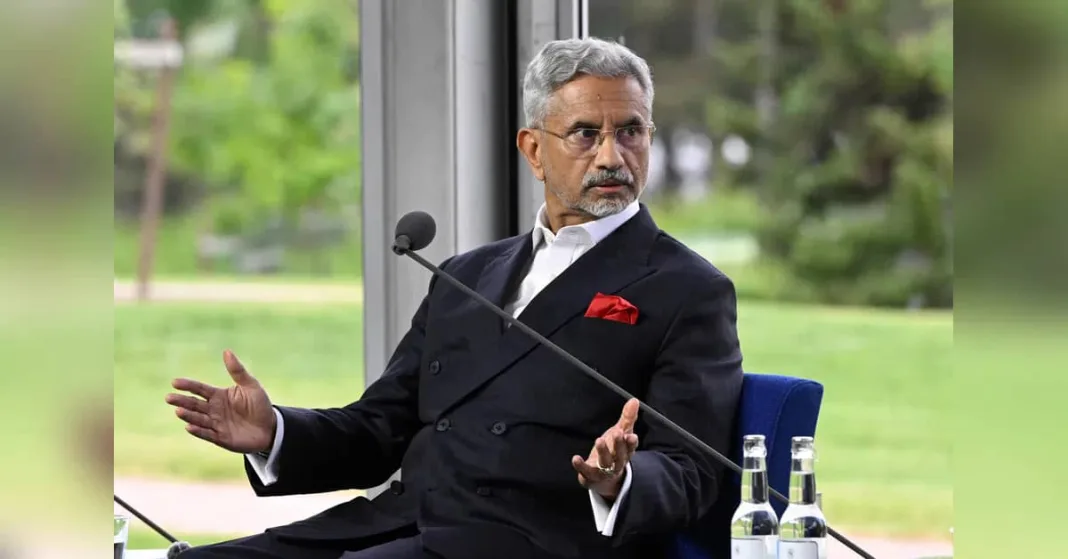

External Affairs Minister S Jaishankar has said that choosing between groupings such as Brics and the United Nations is “a false choice”, emphasising that smaller groups are supportive of the global organisation and would like to see it reformed.
“I think it’s a false choice. The UN is the UN. It may have many shortcomings. It also has many achievements, and obviously, when you want to reform it, when you want to change it, it’s natural to focus on the shortcomings. But I don’t think that should lead us to be dismissive of the UN,” Jaishankar said.
The minister was addressing a session titled ‘Ruptures & Ramparts: Building Bridges for a Changing World’ organised on the margins of the 81st session of the UN General Assembly by the Observer Research Foundation, Reliance Foundation, UN in India and the Permanent Mission of India to the UN here Thursday.
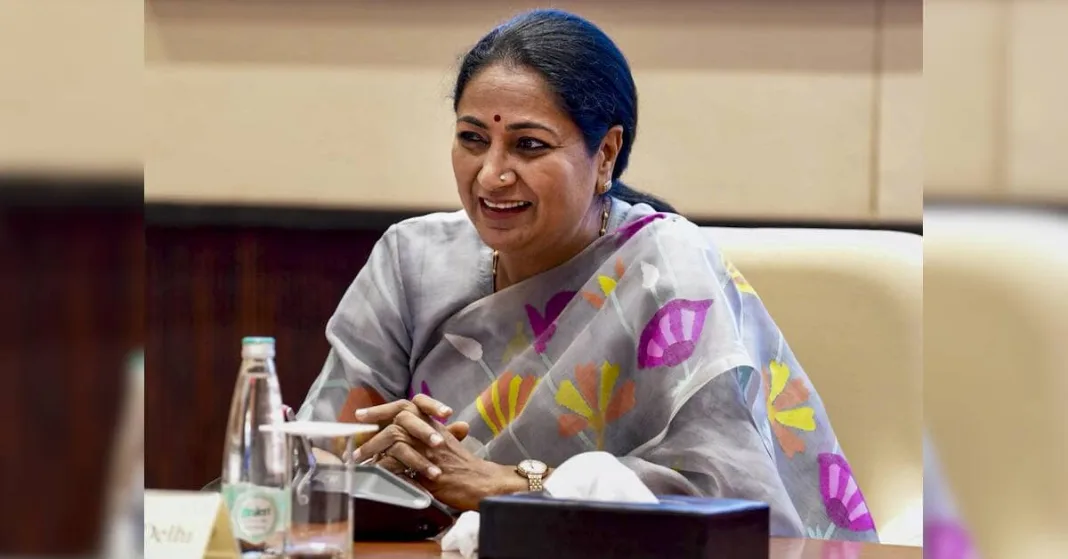
Participating in the session, moderated by ORF President Samir Saran, were Jamaica’s Minister of Foreign Affairs and Foreign Trade Kamina Johnson Smith, Suriname Minister of Foreign Affairs, International Business and Cooperation Melvin Bouva, Ghana’s Minister for Foreign Affairs Samuel Okudzeto Ablakwa and President and Chief Executive of the East-West Center Celeste Connors.
Jaishankar said the UN has served the world in very significant ways.
“At the end of the day, if there wasn’t a UN, we’d all be sitting here trying to invent one,” he said, adding that the Brics or other groups as well, are “coming together” of countries who have a certain viewpoint, interest or outlook and are comfortable making that combination.
Referring to the Brics Leaders’ Summit that India hosted on September 12-13, the external affairs minister said: “One of the points in the Brics is that the UN is central to the international system.” “So it’s not Brics or the UN. The Brics is supportive of the UN and a large part of the Brics would like to reform the UN, some more than others,” Jaishankar said.
The Brics grouping includes Brazil, China, Egypt, Ethiopia, India, Indonesia, Iran, Russia, Saudi Arabia, South Africa and the United Arab Emirates.
Jaishankar said the issues which were highlighted by Brics are the key issues today – resilience, sustainability, innovation, cooperation.
“They are equally issues for the United Nations,” he said. “When we sit here at the high-level week in New York, a few kilometers away from the UN headquarters, I would look at it like what did the Brics do to strengthen the UN and strengthen the cause of UN reform. I think it nudged it a little bit stronger. It indicated a certain pressure from bottom up.” He also noted that one gets “very interesting press” about the Brics, without naming any publication or elaborating on the details. “If you follow the Brics, most of the time the ‘mainstream press’ is very dismissive of the Brics until the Brics meets. Then they get a bit worked up about it.” He said the “true test” of the Brics was when the expansion of the grouping happened to include more countries from the original Brazil, Russia, India, China and South Africa.
“We doubled our numbers, but believe me, we could have easily gone up four or five times. There was a huge demand from countries,” Jaishankar said, attributing this to Brics providing a platform for “alternative thinking.
Brics, at the end of the day, is a non-Western platform and not all members of it are post-colonial societies and span multiple continents.
“The other in that sense, is the G7.. But what brings them (Brics) together is really the sense that there are strong non-Western viewpoints and contributions and beliefs which need to be taken into account, and the non-Western segment of the global debate is growing in weight, and that is why the Brics is getting more significant,” the minister said.
When asked to choose between interest, trust or value, Jaishankar said he would probably try to get the best out of all three.
“Interest is a common sense term. But I do believe that the word trust, in a way, has – I don’t want to say replaced value – but certainly has become a more dominant concept in diplomacy,” said Jaishankar, stressing that “values are often preached and not practiced” but trust is earned.
“Trust is record based. It is empirical. If you’ve done something good, something you know contributive, people remember it. If you have behaved badly, people remember that too,” he said.
“So, I put a lot of credence on trust because, to me, trust is an empirical concept derived from experience. It reflects the real feelings of the world, and it’s a very democratic term. You don’t have to be big to be trusted. You can be trusted if you’re small. You’ve got to be good or decent to be trusted,” Jaishankar added.