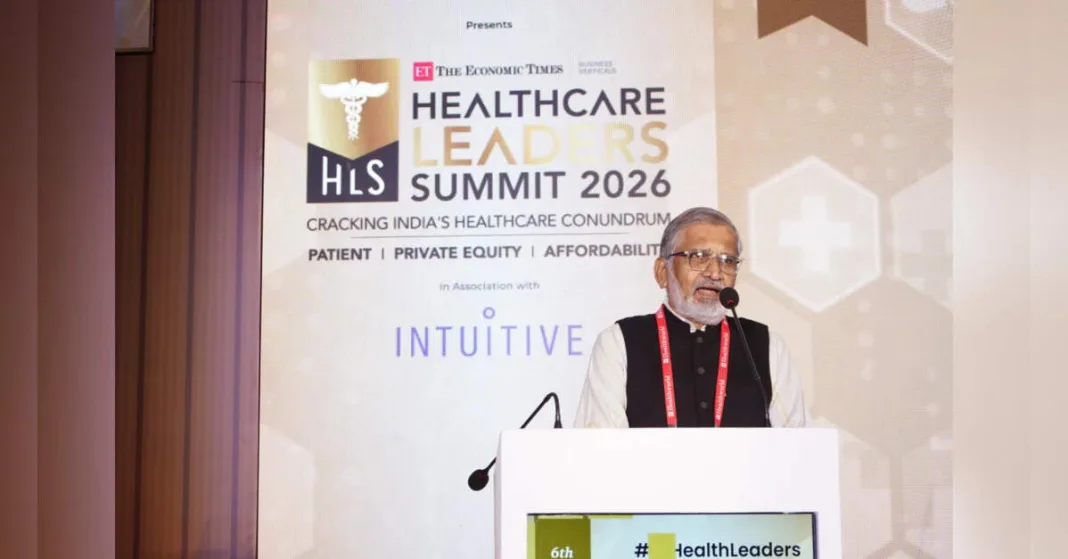

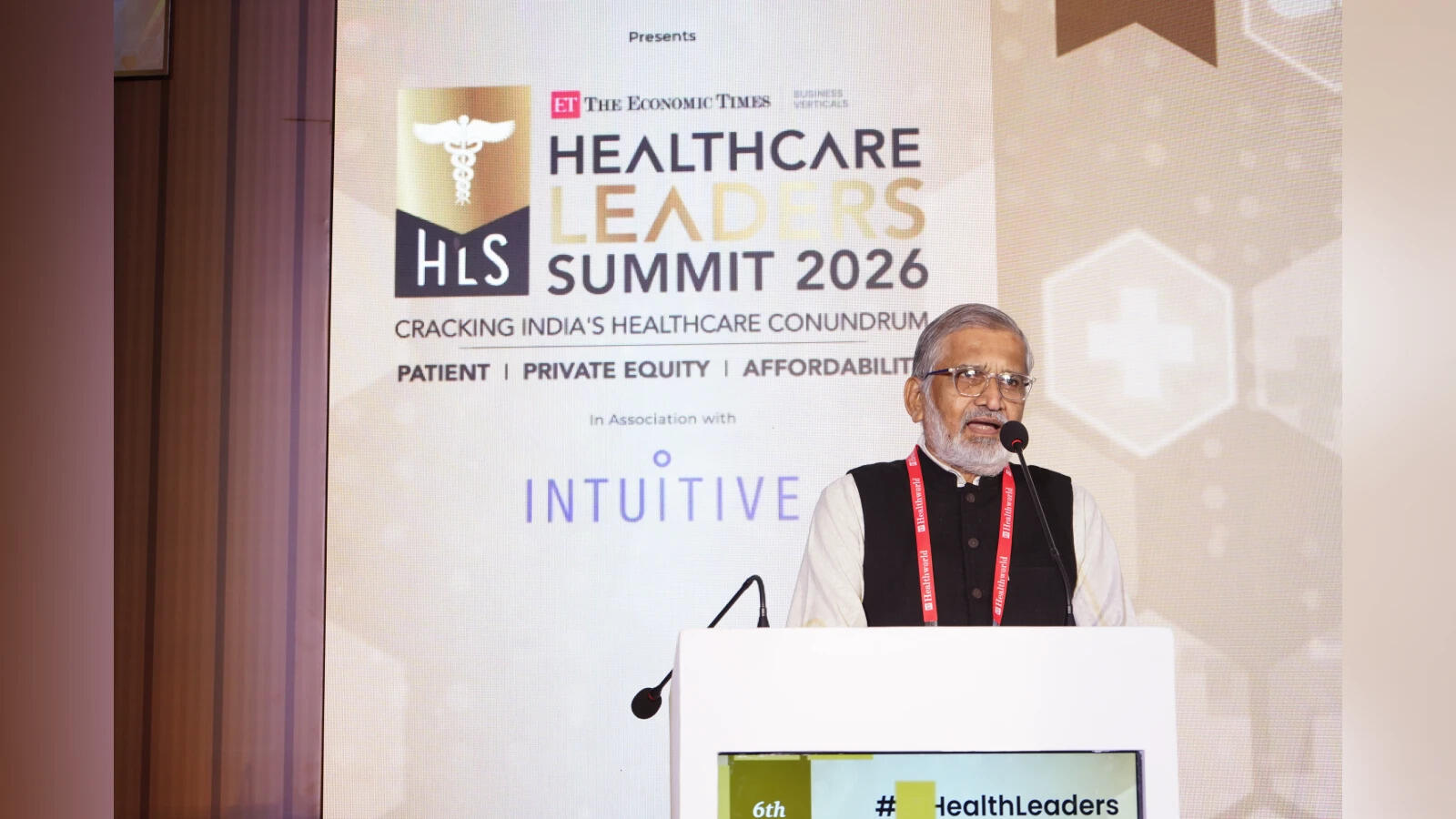
New Delhi: India’s private healthcare sector today is defined by rising private equity investment, expanding hospital chains, and growing concerns over affordability. Dr Abhay Bang, Chairman, SEARCH (Society for Education, Action and Research in Community Health), comes from the other end of the spectrum. He has spent more than half his lifetime serving the tribal population of Gadchiroli, where the conversation was never about weighing capital expenditure against monetary returns, but about how to get care to people who had none.
Through his organisation SEARCH he served the tribal population in one of the remotest parts of the country, and in the process built a model of rural healthcare from the ground up.
In a conversation with ETHealthworld, Dr.Bang talks about his journey of over 40 years, his biggest learnings, and what’s lacking in India’s rural healthcare system.
What has changed in 40 years
When Dr.Bang and his wife, Dr Rani Bang started SEARCH in 1986, Gadchiroli was one of the least developed, most neglected regions of India. Healthcare was an urgent necessity, but awareness among the local tribal population was close to zero.
In the initial days, Dr.Bang spent time understanding the population. He recalls that many in the tribal community had never set foot in a hospital, and they kept away from doctors in white coats. In their villages, white was the colour of the sheets used to wrap the dead.
From here, the couple went on to set up a tribal-friendly hospital and community-based healthcare programme covering 134 villages.
Forty years on, Bang believes India looks very different.
“Over the period of 40 years, things have enormously changed, both outside the health sector and inside the health sector. Forty years ago, infant mortality rate of India was around 100. Now it is 25. So we have made enormous improvements.”
In this time, the government has stepped up efforts in improving public health through various initiatives like mass polio vaccination drives, public healthcare sectors and health insurance.
When asked if these have helped or bypassed the rural and tribal population, Bang doesn’t deny their contribution.
“In 1980, when I entered community health there was one Primary Health Centre (PHC) for every one lakh population all over India. Now there is one PHC for every 30,000 population. Health and wellness centers are developing and there’s one for every 3,000 population in tribal areas. So there’s no doubt that public health infrastructure has spread much more compared to earlier.”
Even as their reach expands, Bang believes these centres still struggle to earn public trust.
“People’s trust in these centres isn’t very high. So even though it’s difficult to pay, patients, even from rural areas tend to gravitate towards the private sector. That said, government health services still remain the number one source of modern medical care in tribal populations.”
From infectious diseases to a new epidemic
For much of independent India’s history, healthcare was about catering to basic needs, such as reducing infant mortality and eradicating diseases like polio. But progress has brought a different problem. Dr. Bang points to the rise of non-communicable diseases (NCDs) across the country and calls for urgent attention.
“There is an emergence of a new epidemic of NCDs, and they are not easily amenable to intervention. There is no vaccine. There is no single antimalarial-like drug for NCDs. With increased life expectancy and changing lifestyles of Indian people, we are now facing a new issue that desperately needs a quick solution.”
Why sending doctors to rural India isn’t enough
Rural healthcare in India has improved, but there’s still a long way to go. One of the most debated tools to bridge the rural doctor shortage is mandatory rural posting.
While Bang agrees that this may be a necessary short-term measure, he argues that the problem is more systemic than it seems. He questions whether India’s medical education system selects for the qualities needed to work in underserved communities.
“A doctor has to have his own motivation, his own joy in serving people. Our problem really starts from the selection of doctors. These NEET competitive exams and their MCQ questions can’t assess whether a particular individual, a boy or a girl, has empathy and compassion for patients. Does he or she have empathy and compassion for poor people, for tribal areas, for rural areas? We select on the wrong criteria of how much information they’ve retained from their 12th standard textbooks. And then we expect them to serve in a rural area.”
“We need to change our method of selecting doctors. Google and artificial intelligence will always surpass them at simply reproducing information and knowledge. We need to test their attitudes, their personalities, their dreams for life. What do they want to do, whom do they want to serve, what goal do they want to achieve?”
Reflection on his journey
On reflection Bang says working in tribal areas was the biggest joy of his life. When asked to share his biggest learning from four decades of working in community health, he offers two.
“Everybody wants to go and work in metropolitan cities, in five-star hospitals. I have never worked there, but my personal experience is that going and working in tribal areas was the biggest joy of my life. So I would like to communicate this to those who haven’t gone: go where the problems are, not where the facilities are. Places with problems need you; places with facilities don’t. There, you become a problem. So go where the problems are. There is so much to do,” he emphasised.
Dr Bang’s said that healthcare solutions for tribal and rural communities should not be introduced without first consulting the people they are meant to serve. He said healthcare programmes, national schemes and vertical programmes are often simply pushed through, with decisions made in Delhi, Geneva or elsewhere, “as if 140 crore Indian people are a herd and a decision is pushed onto them”. He described this as the wrong way of doing things, arguing that those designing healthcare solutions need to first talk to the people whose problems they are trying to solve and listen to them. “That changes your perspective, and your solution.”
Watch here: