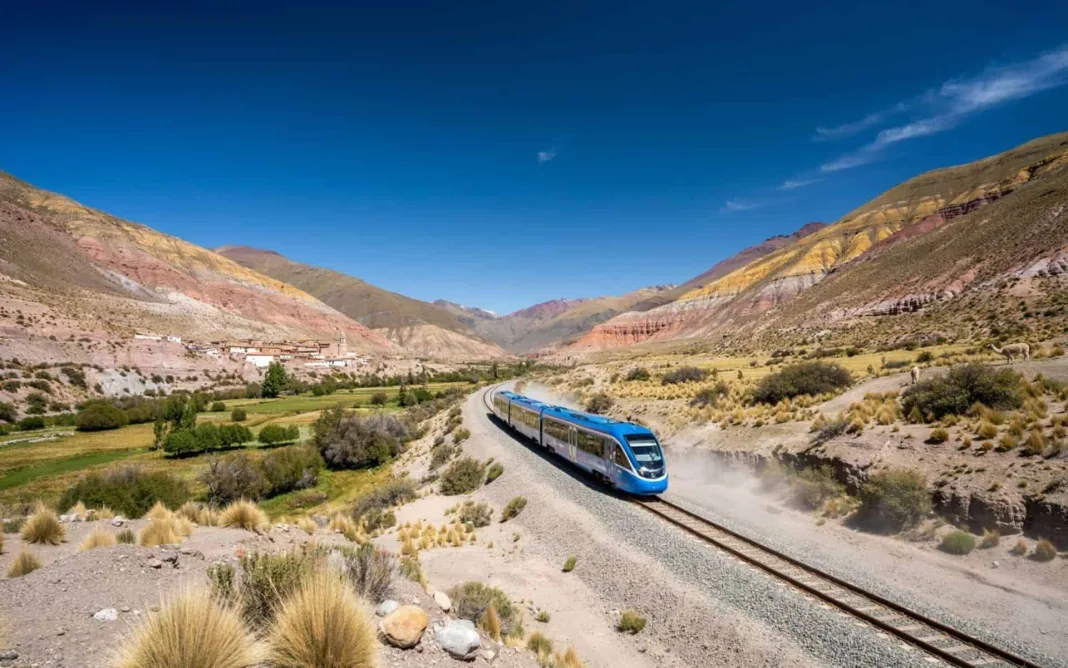

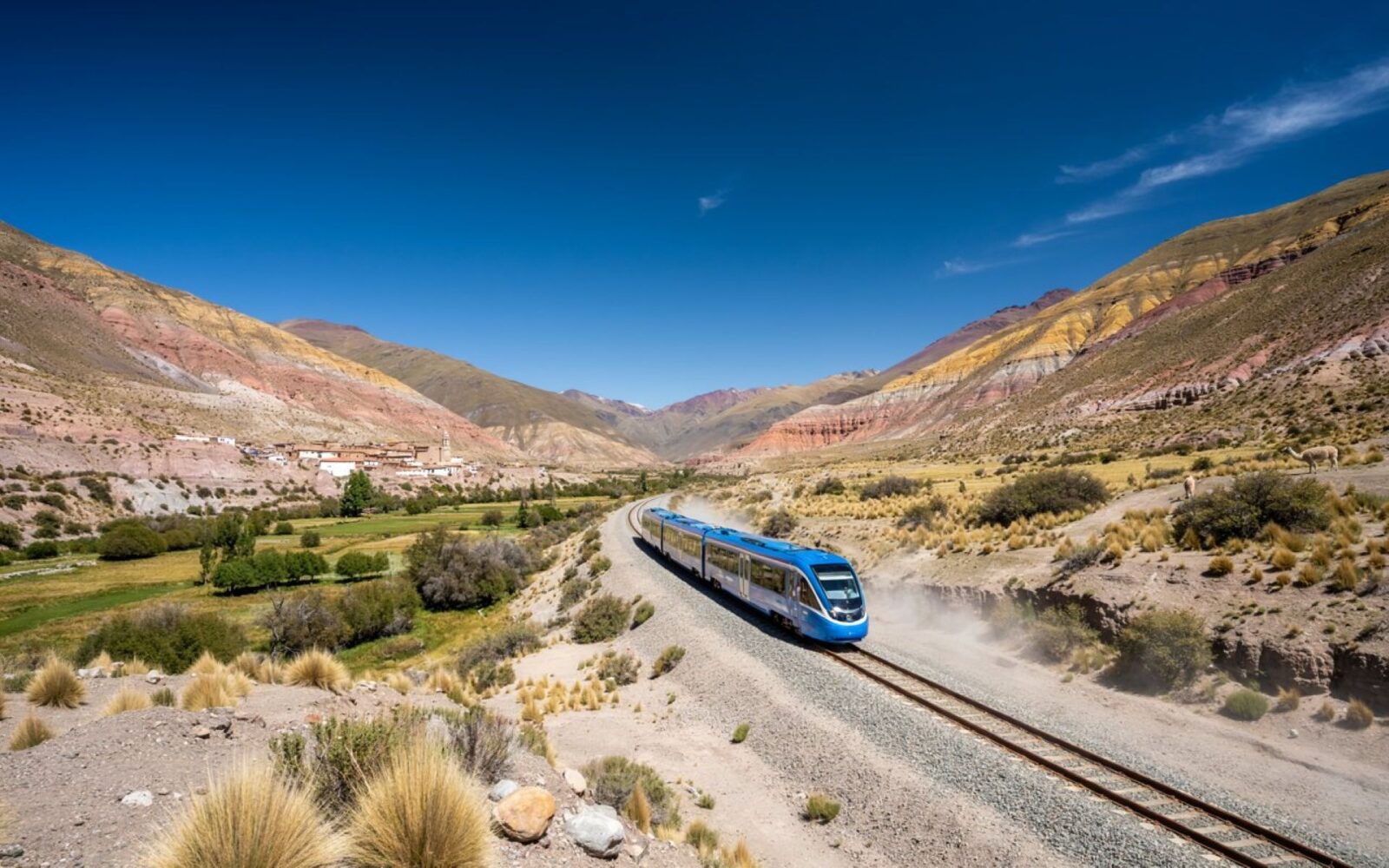
Image generated with Ai
Brazil along with Chile and more are seeing Argentina’s Solar Train transform sustainable tourism across the UNESCO Andean Valley with a new renewable-powered travel experience. The sustainable transportation project, The Argentina Solar Train, provides cleaner transportation options to access the cultures and landscapes along the UNESCO-recognized Andean Valley of Quebrada de Humahuaca, and improves connectivity within the region. Through cutting-edge designs in renewable energy and transportation, The Argentina Solar Train showcases the potential to transform the world’s tourism and transport sectors. The project has the potential to position Argentina as a preferred transit country for cultural and natural tourism in South America.
Argentina Solar Train Creates a New Sustainable Tourism Experience in Jujuy
The Argentina solar train represents a significant shift in how remote tourism destinations can improve visitor access while reducing dependence on fossil fuels. Located in northern Argentina, the Tren Solar de la Quebrada operates across the dramatic landscapes of the Andes and connects communities within the Quebrada de Humahuaca. The railway uses lithium battery technology charged through locally generated solar electricity, allowing passengers to explore one of Argentina’s most important cultural landscapes through a cleaner transport option.
The project combines tourism development with renewable energy innovation. Unlike traditional electric rail systems, it does not require continuous overhead power lines, making it suitable for areas where full railway electrification infrastructure may be difficult.
Key facts about Argentina’s solar train:
- The railway operates in Jujuy province in northern Argentina.
- The route covers approximately 42 kilometres through the Andes.
- The train connects six communities in the Quebrada de Humahuaca.
- The service returned passenger rail to the valley after around three decades.
- The project supports sustainable tourism access to a UNESCO World Heritage area.
| Feature | Details |
|---|---|
| Railway name | Tren Solar de la Quebrada |
| Location | Jujuy Province Argentina |
| Route length | Around 42 kilometres |
| Technology | Battery-electric train |
| Energy source | Solar-generated electricity |
| Main tourism area | Quebrada de Humahuaca UNESCO World Heritage Site |
UNESCO Quebrada de Humahuaca Gains Cleaner Visitor Connections
The Quebrada de Humahuaca is one of Argentina’s most recognised cultural destinations. The valley has served as an important route through the Andes for thousands of years and was designated a UNESCO World Heritage Site because of its historical importance, landscapes and cultural heritage.
The solar railway creates a new way for international visitors to experience this region. Travellers from key South American markets, including Brazil, Chile and Uruguay, can benefit from improved tourism connectivity when exploring northern Argentina’s heritage attractions.
The railway strengthens the relationship between transport and destination development by helping visitors reach smaller communities along the valley rather than focusing only on major tourism hubs.
Important tourism benefits include:
- Easier access to heritage locations.
- Greater visibility for communities along the route.
- A lower-emission alternative for regional travel.
- A new attraction combining transport and sightseeing.
- Support for cultural tourism experiences in Jujuy.
| Tourism Element | Impact |
|---|---|
| UNESCO destination | Increases international tourism interest |
| Heritage communities | Creates wider visitor distribution |
| Sustainable transport | Supports responsible travel trends |
| Scenic journey | Adds value to the visitor experience |
| Regional tourism | Improves destination accessibility |
Brazil Chile and Uruguay Remain Important Argentina Tourism Markets
Argentina’s international tourism landscape is strongly connected with neighbouring South American countries. Brazil, Chile and Uruguay are among the most relevant regional visitor markets because of geographic proximity, transport links and established travel relationships.
Regional travellers often contribute significantly to Argentina’s tourism activity through leisure holidays, cultural trips, nature travel and short international breaks. Destinations such as Buenos Aires, Patagonia, Mendoza, Iguazu Falls and northern Argentina continue attracting visitors seeking diverse experiences.
The development of sustainable attractions such as the Tren Solar de la Quebrada provides another reason for regional travellers to explore Argentina beyond traditional destinations.
Key market connections include:
- Brazil remains one of Argentina’s largest neighbouring tourism markets.
- Chile provides strong cross-border travel connections.
- Uruguay maintains close tourism links with Argentina.
- Regional travellers increasingly seek nature and cultural experiences.
- Sustainable attractions add new reasons to visit.
| Country | Tourism Connection With Argentina |
|---|---|
| Brazil | Major regional visitor market |
| Chile | Strong neighbouring travel connection |
| Uruguay | Established cross-border tourism relationship |
Battery Technology Powers Argentina’s Renewable Rail Future
The technology behind the Tren Solar de la Quebrada is based on advanced battery-electric transport. The two-car train operates using six lithium batteries, which store electricity generated from solar energy produced in Jujuy.
The system also uses regenerative braking technology. During braking, some movement energy is converted into electricity and stored for later use. This improves energy efficiency and reduces waste during operation.
The batteries provide a range of approximately 100 to 120 kilometres, which is more than double the current operating distance of the railway.
Key technology features include:
- Six lithium battery units power the train.
- Solar energy charges the onboard batteries.
- Regenerative braking recovers electricity.
- The train operates without diesel fuel.
- No continuous overhead electrical system is required.
| Technology Feature | Details |
|---|---|
| Power system | Battery-electric |
| Battery type | Lithium batteries |
| Charging method | Solar-generated electricity |
| Operating range | 100–120 kilometres |
| Additional efficiency | Regenerative braking |
Argentina Solar Train Supports Future Low Carbon Travel Trends
The growth of the Argentina solar train reflects a wider international movement towards sustainable tourism and cleaner transportation. Rail systems powered by renewable energy are becoming increasingly important as destinations search for ways to reduce emissions while maintaining visitor access.
Many remote tourism regions face challenges when developing transport networks because traditional electrification requires major infrastructure investment. Battery-powered railway systems provide another option, particularly in areas with strong renewable energy resources.
Jujuy’s high levels of sunshine create favourable conditions for solar-powered transport. The project demonstrates how renewable energy can become part of the tourism experience itself.
Major sustainability advantages include:
- Reduced reliance on fossil fuels.
- Cleaner visitor transportation.
- Better integration of renewable energy.
- Protection of sensitive tourism landscapes.
- Development of innovative travel experiences.
| Sustainability Area | Contribution |
|---|---|
| Renewable energy | Uses solar-generated electricity |
| Transport emissions | Reduces diesel dependence |
| Tourism development | Supports responsible visitor movement |
| Heritage protection | Helps preserve sensitive areas |
Tren Solar de la Quebrada Expands Argentina’s Global Tourism Appeal
The Tren Solar de la Quebrada has become an example of how transport innovation can strengthen tourism destinations. By connecting communities, improving access and using renewable energy, the railway adds a new dimension to Argentina’s tourism offering.
For international visitors from Brazil, Chile, Uruguay and wider global markets, the journey provides more than transportation. It creates an opportunity to experience the Andes, cultural heritage and sustainable mobility together.
Since its launch in 2024, the service has welcomed more than 90,000 passengers, according to figures from the Jujuy government. The passenger response demonstrates the growing interest in tourism experiences that combine environmental responsibility with authentic local exploration.
Key future tourism opportunities include:
- Expanding sustainable rail tourism.
- Encouraging longer stays in Jujuy.
- Promoting lesser-known communities.
- Connecting heritage with modern technology.
- Strengthening Argentina’s green tourism identity.
| Future Opportunity | Tourism Value |
|---|---|
| Sustainable rail journeys | Attracts environmentally conscious travellers |
| Heritage tourism | Highlights UNESCO locations |
| Regional markets | Supports visitors from South America |
| Community tourism | Spreads economic benefits |
| Renewable transport | Builds modern destination appeal |
Argentina’s Solar Train Marks New Era for Sustainable Tourism
The Tren Solar de la Quebrada represents a combination of renewable energy, heritage protection and tourism innovation. By operating through the Andes using solar-charged batteries, the railway demonstrates how destinations can develop cleaner mobility solutions while preserving cultural landscapes.
As Argentina continues attracting visitors from Brazil, Chile, Uruguay and international markets, sustainable transport projects such as this solar railway could become an important part of the country’s tourism strategy. The project shows how future travel experiences may increasingly combine technology, environmental responsibility and cultural discovery in one journey.
Conclusion
Argentina’s Solar Train represents a new direction for sustainable tourism by combining renewable transport, cultural discovery and improved visitor experiences across the UNESCO Andean Valley. While Brazil, in partnership with Chile and other countries, continues to assess Argentina’s potential in various areas, including tourism, The Solar Train project, also focuses on the tourism corridor between Brazil and Chile by connecting heritage destinations through the use of sustainable transportation. The Solar Train supports the tourism industry by providing an alternative means of transport for international tourists visiting the Andean regions of South America. Moreover, The Solar Train demonstrates how technology can be integrated into tourism to create a positive impact for the destinations and the tourists visiting them.