
Globally, BSH carved out India as a separate market last year. Where will India eventually stand for BSH? Will it be among the top 10 markets this year?
India is one of the priority markets and one in which the group itself is heavily invested. It will possibly be among the top 10 by the end of 2026, and, in terms of growth, India will be among the top five.
Would you say India is the strongest market for BSH globally at this point?
It is the strongest, but it also has its own complexities. India is very diverse from many perspectives, and there is a lot of localisation that needs to be done. The pace of localisation has to be ramped up. There are several complexities, but at the same time, India is the market growing the most, despite the geopolitical headwinds when it comes to raw material costs.
In the first quarter, the India market has already shown a 53 per cent jump from last year. What do you think was the driver of that kind of growth?
For BSH in India, it was the launch of the entire full-stack portfolio. Previously, we were primarily a washing machine and dishwasher player, with a partial presence in refrigeration. Now we take care of everything — from entry-level value-added refrigeration and washing machines to small appliances and built-in kitchen appliances.
This is why the launch of the new cooking range is instrumental for us. Globally, built-in cooking appliances are a huge part of BSH’s legacy, and we see this as the next growth opportunity in India. During the festival season, we expect growth of 55-60 per cent.
Currently, BSH market share is around 4 per cent, and you are looking at 8 per cent by 2030. What will drive this channel shift?
It will be a multichannel shift. We will increase engagement with multibrand outlets. A big lever for us will be our exclusive brand outlets, which we are targeting at about 500 by 2030, from roughly 200 by the end of this year.
So, it will be a multipronged channel approach. Ecommerce is also driving a lot of the growth. We are currently seeing about 130 per cent growth online, and that will continue.
What is the revenue contribution from these platforms at this point?
We are very evenly skewed across all channels, so we are not dependent on one channel. If you take the total as 100 per cent, it would be roughly 20 per cent across each of the different channels.
That is what makes us quite confident that we are not skewed towards one channel. Exclusive brand outlets, multibrand retailers, and online retailers are all contributing in good proportion, allowing us to manage growth.
How many touchpoints are you at right now?
About 10,000. Our distribution strength has gone up by about 50-55 per cent in the first eight months. Our individual exclusive brand stores are now at about 164, and we will close the year at about 200 by the end of 2026.
Our expansion is across India, but we are also entering Tier-III markets. Those markets have the appetite and aspiration. Consumers are also getting a lot of exposure in these markets. The metros will continue to grow at the pace they are currently growing — 10-15 per cent.
In Tier-II and Tier-III markets, having a multibrand store or an exclusive Bosch store is still a very new concept. Wherever we have opened stores, the response has been very strong. On August 10, we opened about 30 stores in a single day across India. This covered Tier-I, Tier-II, and Tier-III markets, and the response has been very good.
Would we see price hikes because of the volatility caused by the geopolitical situation and input prices?
We have already taken moderate price hikes of between 4 per cent and 7 per cent, depending on the category, in the first half of the year. But we are being extremely careful about how much of a price hike consumers will be able to absorb.
We have not planned any further price hikes because the procurement cycle for raw materials is three months in advance. If prices were to continue to rise, the price hikes would not be seen this year, at least.
Is the cooking range and dishwasher category the next category-creation opportunity?
Yes. Penetration is just 0.5 per cent for cooking ranges. With the way kitchens are changing and evolving and reflecting consumers’ changing tastes, the amount of spending going into furnishing a kitchen is increasing.
This is a huge part of BSH’s legacy, and we endeavour to again dominate that category in India. The dishwasher category is now growing at 100 per cent. In the first six months, we have seen that growth, and we are still the market leader, with about 58 per cent market share.
What are the other opportunities you see in the consumer durables segment?
Dryers are the next big opportunity. These are still very underpenetrated categories. We will focus on them during this festival season.
Are there any launches planned for the festival season? You have already done a bulk of the launches, right?
We have more coming. The entire new cooking portfolio is being launched before the festival season. Refrigeration is another area. We will start producing bottom-freezer refrigerators in India from October.
BSH is known as a premium player, but do you think this will add significantly to growth by bringing entry-point consumers into the portfolio? How do you see that portfolio evolving, especially when other premium players are also entering this space?
What sets us apart are two things. First is our three-brand portfolio — Bosch, Siemens, and Gaggenau.
Gaggenau will remain a luxury brand. Siemens will always be premium and will focus more on the built-in kitchen appliance side, catering to premium kitchens. Bosch plays a wider game, from value-added to premium, while still being below Siemens. Bosch will play the full-stack game, as do our Asian competitors.
This is not the first time we have entered the value-added segment. Our journey in value-added started with the mixer grinder. What sets us apart is that even in the value-added segment, we are able to bring innovation at a very competitive price.
The mixer grinder is one of the first things that goes into a home when a new home is built, along with the cooktop. We have also launched a new range of cooktops and induction tops. We have been present in that segment; we are now simply ramping it up.
What shift do you see in consumer preferences for consumer durables right now?
With the liquefied petroleum gas (LPG) crisis, consumers have started looking at alternatives in case the crisis erupts again. Induction is another alternative to LPG. We are seeing that shift. We saw it during the crisis, and I don’t think it will be just a one-off trend or die out over time.
Gas is still preferred, but I think the urgency to shift to a different cooking method will remain.
Air fryers are also growing in big volumes right now. We have seen specific growth of up to 60 per cent with our steam ovens.
Will manufacturing also pick up in India as you expand the value-added portfolio? Is that something you are looking at from the Chennai plant?
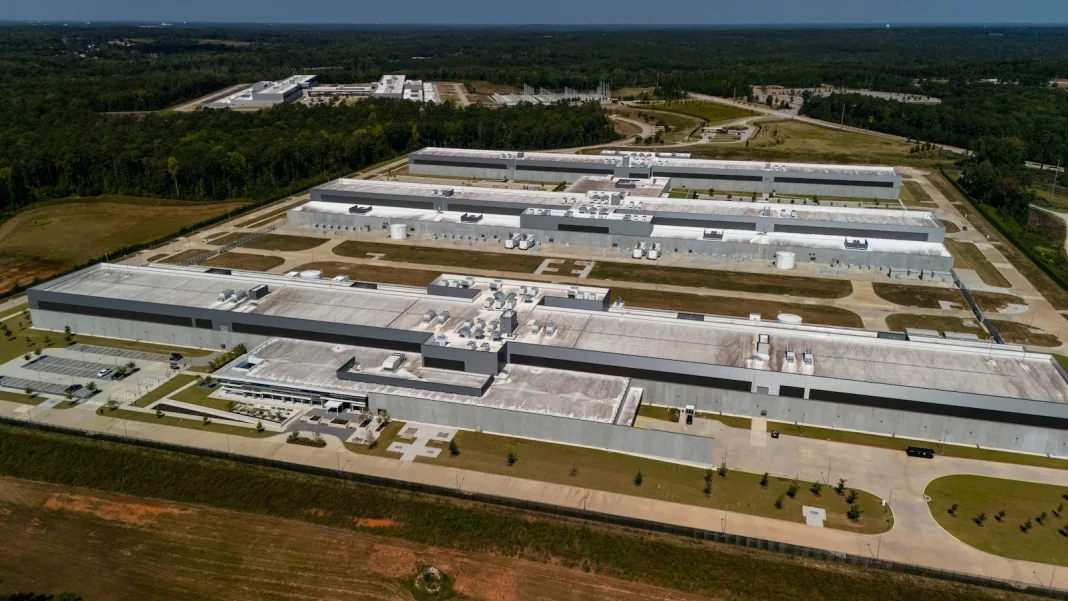
We are already manufacturing more. We manufacture refrigerators and front-load washing machines there. It definitely will pick up. The factories have adequate capacity and have been built to ramp up capacity as well.
Our pace of localisation will continue. We will become more “local for local”, and I think the geopolitical situation will also speed this up a little. If we were looking at 90 per cent localisation by 2030, we would need to bring some of that forward, perhaps by a year or two.