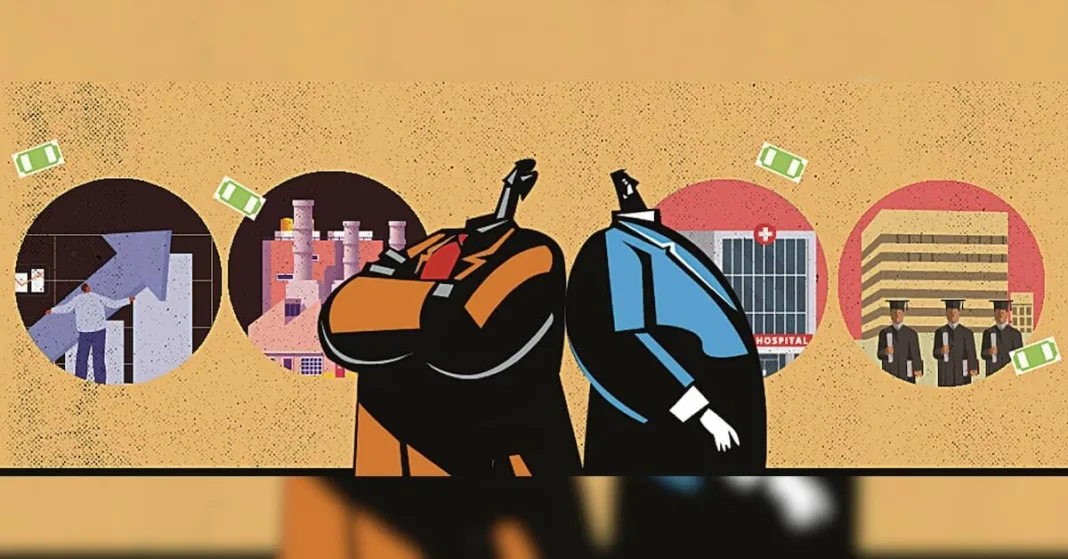

Treating the visible symptom as the disease is often a most tempting mistake. A trade deficit looks like the problem, so tariffs become the cure. Flooding follows rising seas, so rebuilding looks like adaptation. A corporate dispute appears to be about personalities, when the deeper issue is structure. A growth number becomes the argument, while income weakness remains underexamined. A military strike is mistaken for strategy, even when no one has planned what comes next.
Our first editorial today, “The wrong cure”, looks at the G20 Finance Track meeting in Asheville, where China stood isolated on the question of global imbalances. The concern is real. China’s closed markets, overinvestment, weak domestic consumption and hidden subsidies have contributed to large trade surpluses and distorted the global trading system. But the editorial argues that the US has weakened its own credibility by treating unilateral tariffs as the answer. Trade imbalances are symptoms of deeper savings, investment and structural distortions. They cannot be fixed through blunt, mercantilist measures. The answer must be cooperative pressure on China to reform, not tariff walls that damage the trading system further.
The second editorial, “The cost of rising sea”, applies the same discipline to climate adaptation. Rising sea levels are no longer a distant environmental worry. For cities like Mumbai and Kolkata, they threaten homes, livelihoods, housing markets, groundwater, sanitation, transport and public finances. Repeated disaster relief may look like response, but it is not resilience. The editorial argues that India must price climate risk into land use, housing, infrastructure and fiscal decisions now. Mangroves, drainage, seawalls, early-warning systems, evacuation corridors and managed relocation are not optional environmental add-ons. They are economic investments in avoiding larger future damage.
M S Sriram’s column, “Profit and purpose: The ongoing clash”, turns to the Tata group. The current tensions cannot be understood only as a succession or personality dispute. They arise from a deeper contradiction between Tata Sons, the commercial arm that must conserve capital for growth, and Tata Trusts, the philanthropic arm that needs steady resources for large commitments. The group’s structure worked for decades because leadership converged. Once power was demutualised, the conflict between profit and purpose became harder to manage. Sriram argues that a lasting solution may require Tata Trusts to reduce control and unshackle the commercial arm.
Debashis Basu’s column, “The GDP combat sport”, makes a similar point about economic measurement. India’s 7.8 per cent growth estimate has triggered another round of disputes over methodology, base years and deflators. But GDP is always an estimate, built from partial information and later revisions. The more useful question is whether the number aligns with other indicators like taxes, exports, investment and advance-tax payments. Basu finds support for solid growth, but identifies the bigger concern: Weak income growth and stagnant real wages. If India wants durable growth, it needs manufacturing jobs and stronger household incomes.
“US’ failing wars on terror”, Scott Anderson’s review of Peter Bergen’s All the Presidents’ Wars looks at American foreign policy. The repeated failure of the US war on terror came from treating military action as strategy. Leaders planned strikes, withdrawals and optics, but repeatedly failed to plan for the political aftermath.
Symptoms demand attention, these pieces show, but solutions require diagnosis.