
Nepal has issued a media safety and operational protocol for journalists visiting areas affected by the August 26 floods, while foreign journalists seeking to report from flood-affected areas will have to obtain press accreditation.
The National Disaster Risk Reduction and Management Authority on Sunday posted the media safety and operational protocol issued by Nepal’s Ministry of Information and Communication for journalists visiting flood-affected areas.
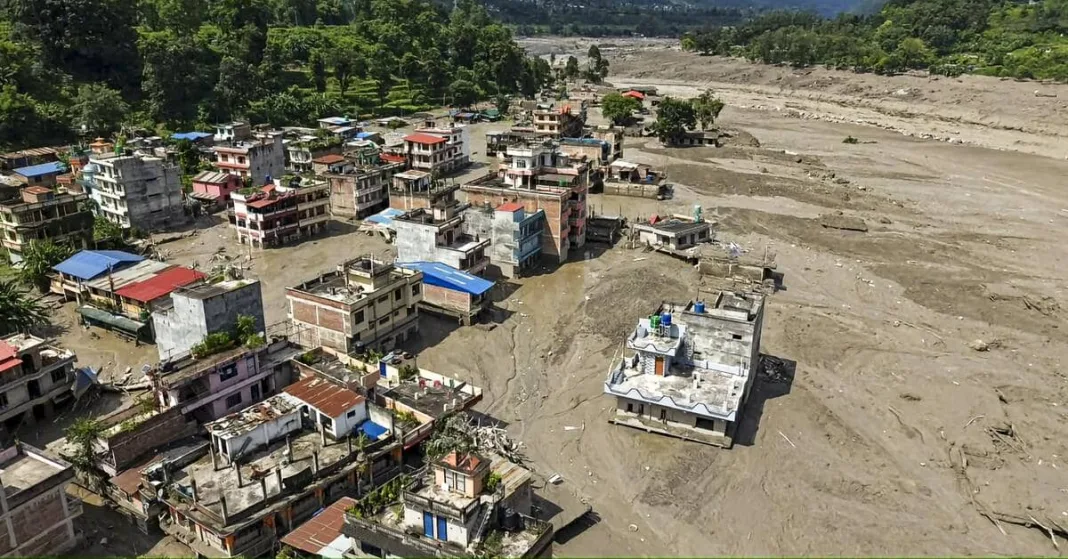
Flash floods, triggered by an ice-rock avalanche near the Nepal-Tibet border on August 26, devastated towns and villages in northern and central Nepal. The Bhotekoshi River, which flows south from the Himalayan border region, carried the floodwaters downstream, sweeping away homes, vehicles, roads and bridges and damaging hydropower projects.
It has killed more than 1,300, while around 5,000 people remain missing.
The protocol, issued for immediate implementation, requires journalists to carry valid press identification, follow safety instructions issued by security and rescue personnel, comply with designated routes and movement restrictions, and follow evacuation orders where applicable.
It prohibits journalists from entering active rescue zones without permission, obstructing rescue operations or entering restricted operational areas. It also instructs them not to cross the international border and to follow directions issued by security officials.
Separately, Nepal’s Department of Information and Broadcasting has issued a notice requiring foreign media journalists seeking to collect news from flood-affected areas along the Bhotekoshi and Trishuli rivers to apply for a Press Accreditation and Journalist Identity Card through its online service. The notice is dated September 3.
Foreign journalists are required to submit a copy of their passport with a valid visa or entry permit, a recommendation from their media organisation addressed to the department, and a recommendation from the embassy, consular office or foreign ministry of their country.
The department said the Press Accreditation and Journalist Identity Card would be valid for 15 days. (Only the headline and picture of this report may have been reworked by the Business Standard staff; the rest of the content is auto-generated from a syndicated feed.)