
Hello, and welcome to the Best of BS Opinion, our wrap of the day’s Opinion page.
India’s robust economic growth masks emerging vulnerabilities on the external and financial fronts, warns today’s first editorial. The current account deficit remained moderate in the first quarter, but capital outflows pushed the balance of payments into deficit, extending a worrying trend. Strong inflows through the RBI’s FCNR(B) swap scheme should produce a sizeable second-quarter surplus, but they do not resolve India’s underlying difficulty in attracting stable foreign investment. Improved bilateral investment treaties could help address investor concerns. Meanwhile, the surge in FCNR(B)-driven liquidity is depressing money-market rates and could complicate inflation management, requiring the RBI to consider additional liquidity-absorption measures.
The Shanghai Cooperation Organisation (SCO) summit in Bishkek demonstrated its members’ willingness to accommodate competing interests while presenting a united front against US hegemony. Our second editorial notes that India balanced its diplomatic priorities by securing language against terrorism while joining criticism of US-Israeli actions against Iran and Palestinians. Iran and China were the principal beneficiaries, with Beijing emerging as an increasingly powerful alternative centre of influence and consolidating its position in Central Asia. India, meanwhile, advanced alternative trade corridors and secured energy and mineral interests. The nuanced diplomacy at Bishkek, including signs of a thaw with China, offers a preview of the BRICS summit India will host.
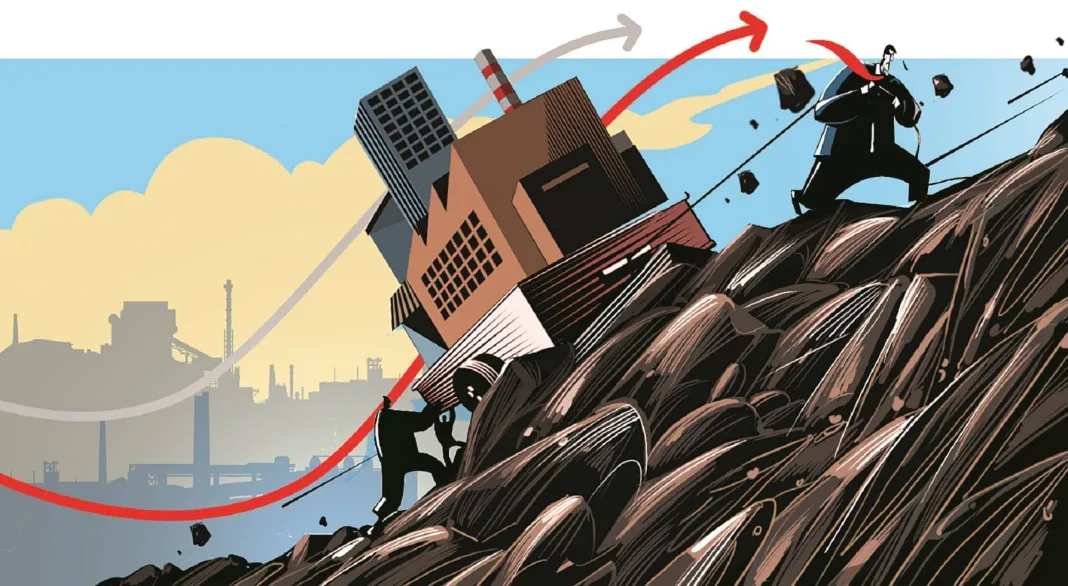
Industrial policy has returned globally, but Ajay Chhibber argues that its success depends on state capability and carefully calibrated intervention. Governments that overreach risk reducing their effectiveness, while weaker states should first deliver core functions such as public health, education, regulation and infrastructure before attempting to pick industrial winners. Successful East Asian industrial policies linked support to measurable performance, particularly exports, while preserving government independence from private interests. India, however, lacks the institutional capability for expansive industrial policy and risks repeating earlier failures through production-linked incentives. Chhibber urges policymakers to target subsidies towards export performance, impose clear end dates, and prioritise broader competitiveness-enhancing reforms.
Nivedita Mookerji examines the governance questions surrounding the Tata Group following N Chandrasekaran’s decision not to seek a third term as Tata Sons chairman and the unprecedented adjournment of its AGM for lack of quorum. She argues that both episodes expose organisational weaknesses within Tata Trusts, which holds 66 per cent of Tata Sons, particularly the reversal of an earlier unanimous decision backing Chandra’s continuation and the failure to resolve a trusteeship issue that impaired the AGM. Given the unresolved questions over Chandra’s age, leadership succession, and Tata’s ownership structure, the group’s largest shareholder must restore clarity and stability to an institution built on governance and continuity.
Karthi Kumar Marshan finds Ambi Parameswaran’sNawabs, Nudes, Noodles: India Through 50 Years of Advertising a valuable, accessible education in the evolution of Indian advertising and, more importantly, the difficult art of judgement. Drawing on campaigns, personalities, brands and incidents across five decades, the book restores the uncertainty, arguments, compromises and accidents obscured by hindsight when successful advertising begins to appear inevitable. Marshan argues that this offers younger practitioners something modern frameworks, data and case studies cannot easily provide: an understanding of how ideas and decisions actually emerge. The new edition also brings the story into the digital era, revealing that despite technological change, advertising’s fundamental questions remain remarkably constant.