Engineering organizations are operating in an environment that is significantly more complex than it was even a few years ago. Modern software delivery now spans distributed cloud infrastructure, platform engineering initiatives, AI-assisted development workflows, microservices architectures, globally distributed teams, and increasingly fragmented operational tooling ecosystems.
As complexity grows, engineering leaders are realizing that traditional reporting dashboards are no longer sufficient for understanding how software organizations actually perform.
The challenge is not simply measuring deployment frequency or ticket throughput. Modern engineering organizations need visibility into how operational systems behave collectively across the entire software lifecycle. Delivery velocity, reliability, platform stability, infrastructure health, developer workflows, CI/CD performance, and operational coordination increasingly influence one another in ways that isolated metrics cannot adequately capture.
This shift has accelerated the adoption of engineering analytics platforms.
At a Glance: Engineering Analytics Platforms in 2026
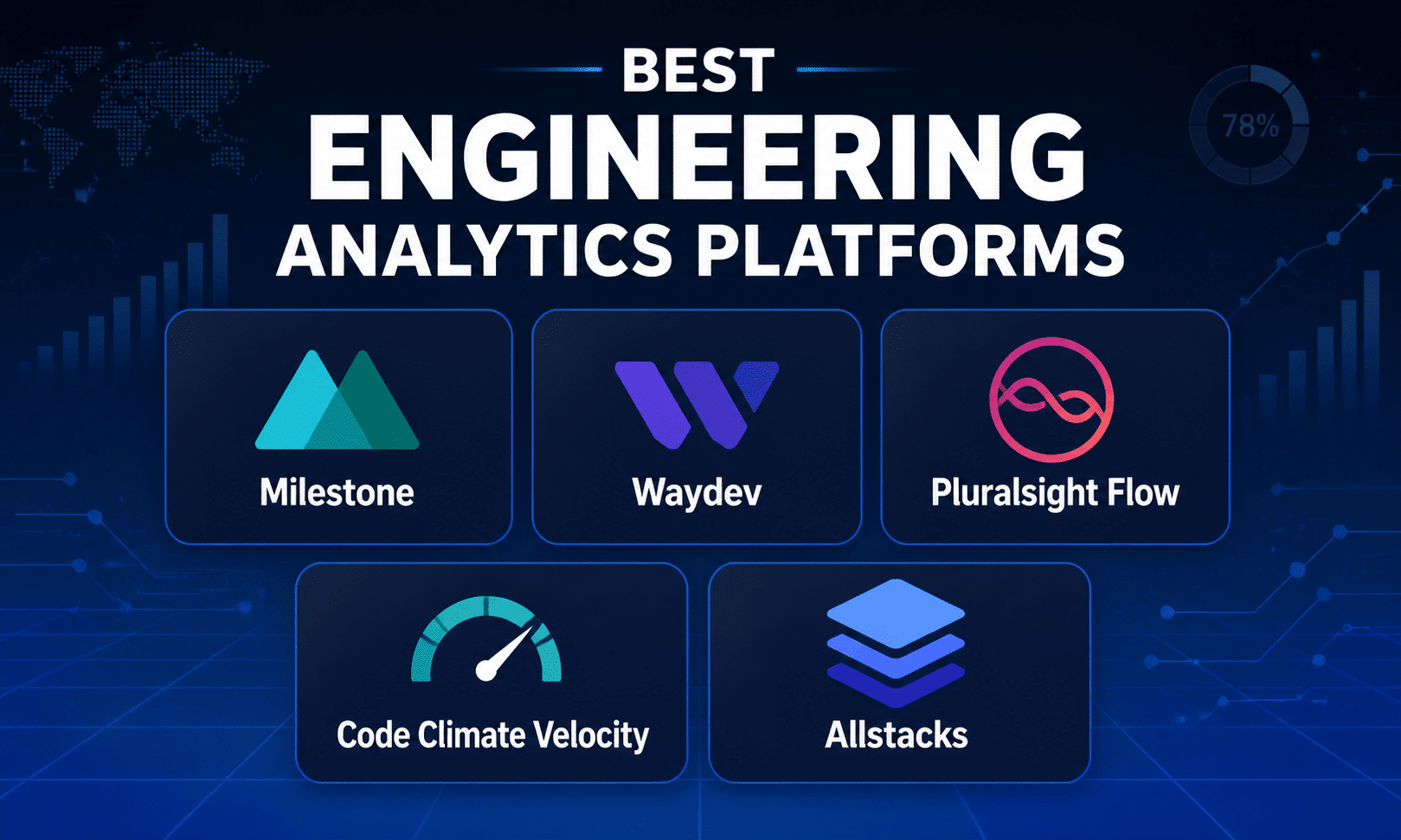
| Platform | Primary Focus |
| Milestone | AI-driven engineering operations intelligence |
| Waydev | Engineering performance analytics |
| Pluralsight Flow | Software delivery visibility platform |
| Code Climate Velocity | Engineering workflow analytics |
| Allstacks | Engineering forecasting and delivery intelligence |
Why Engineering Analytics Has Become Operationally Critical
Software delivery environments now generate enormous amounts of operational telemetry across engineering systems. Every deployment, pull request, CI/CD execution, infrastructure event, code review, and operational incident contributes to broader software delivery behavior.
However, many organizations still lack unified operational visibility across these systems.
This creates several major challenges:
- fragmented engineering reporting
- limited delivery forecasting
- inconsistent operational visibility
- poor infrastructure coordination
- difficulty identifying workflow bottlenecks
- reactive incident management
Engineering analytics platforms help organizations centralize operational intelligence across these distributed systems.
Distributed Engineering Systems Create Visibility Gaps
Modern engineering organizations rarely operate within a single tooling environment.
Instead, operational telemetry is distributed across:
- Git repositories
- CI/CD pipelines
- observability platforms
- Kubernetes environments
- cloud infrastructure
- incident management systems
- project management tooling
- platform engineering systems
Without centralized analysis, it becomes difficult to understand how engineering systems interact operationally.
Engineering analytics platforms aggregate these fragmented signals into broader operational visibility layers.
AI Is Transforming Operational Analysis
AI-driven analysis is becoming increasingly important within engineering analytics.
Traditional dashboards primarily report historical metrics. Modern AI-driven systems increasingly help organizations:
- identify operational anomalies
- detect workflow inefficiencies
- forecast delivery risks
- surface infrastructure bottlenecks
- predict deployment instability
- analyze engineering trends
This shift allows organizations to move from reactive operational reporting toward proactive engineering optimization.
Platform Engineering Is Expanding the Scope of Analytics
Platform engineering initiatives have also significantly expanded demand for operational analytics.
Internal developer platforms, shared infrastructure services, Kubernetes orchestration, and distributed cloud systems introduce far more operational complexity than traditional monolithic environments.
Engineering leaders increasingly require visibility into:
- infrastructure reliability
- platform adoption
- deployment consistency
- operational friction
- workflow interruptions
- engineering coordination
Modern engineering analytics platforms increasingly operate as intelligence layers across these environments.
Best 5 Engineering Analytics Platforms of 2026
1. Milestone
Milestone focuses on transforming engineering telemetry into predictive operational intelligence across modern software delivery environments. Rather than functioning primarily as a reporting dashboard, the platform emphasizes AI-driven operational analysis across infrastructure systems, engineering workflows, deployment pipelines, and cloud-native environments.
One of the platform’s strongest differentiators is its broader operational approach to engineering analytics. Instead of concentrating narrowly on isolated delivery metrics, Milestone analyzes how infrastructure systems, platform engineering environments, operational workflows, and delivery telemetry interact collectively across the software lifecycle.
This becomes increasingly valuable as organizations scale distributed engineering systems where operational complexity often creates hidden workflow bottlenecks and infrastructure coordination challenges. The platform also aligns strongly with organizations operating cloud-native infrastructure, AI-assisted development workflows, and highly distributed engineering environments where traditional delivery dashboards often fail to provide sufficient operational context.
Its AI-driven operational modeling helps engineering leaders move beyond retrospective reporting toward predictive engineering intelligence and proactive operational optimization.
Key Features
- AI-driven engineering analytics across distributed cloud-native software delivery environments
- Predictive operational intelligence for proactive infrastructure and workflow optimization
- Infrastructure telemetry analysis spanning Kubernetes systems and deployment pipelines
- CI/CD workflow visibility improving release coordination and deployment consistency
- Platform engineering analytics supporting developer enablement and infrastructure governance initiatives
- Operational anomaly detection identifying workflow disruptions and infrastructure instability patterns
- Delivery performance forecasting improving planning accuracy across engineering organizations
2. Waydev
Waydev focuses heavily on engineering performance visibility and software delivery analytics across modern development organizations. The platform aggregates engineering telemetry from Git repositories, CI/CD systems, and workflow tooling to provide broader visibility into software delivery operations and engineering coordination patterns.
Unlike simpler engineering reporting systems, Waydev attempts to contextualize delivery metrics within broader operational workflows rather than relying solely on isolated activity measurements.
Waydev is particularly attractive for engineering leadership teams seeking greater visibility into how development processes influence software delivery outcomes over time. The platform also aligns well with organizations attempting to improve operational coordination across distributed engineering teams and cloud-native delivery environments.
Key Features
- Engineering performance analytics across modern distributed software development organizations
- Workflow visibility improving operational coordination and engineering process transparency
- Pull request analysis identifying collaboration inefficiencies and review bottlenecks quickly
- Delivery efficiency tracking supporting deployment reliability and workflow consistency improvements
- CI/CD telemetry integration centralizing operational insights across deployment environments
- Collaboration analytics improving engineering communication across distributed software delivery teams
- Software delivery intelligence enhancing operational planning and engineering execution visibility
3. Pluralsight Flow
Pluralsight Flow approaches engineering analytics through a combination of workflow visibility, software delivery intelligence, and engineering coordination analysis.
The platform focuses on helping organizations understand how work moves across engineering systems and how operational workflows affect delivery performance and developer efficiency. One of the platform’s strengths is its emphasis on engineering process visibility rather than simplistic productivity measurement.
This operational perspective helps organizations identify workflow inefficiencies and delivery bottlenecks while improving broader software delivery coordination across teams. Flow is particularly useful for organizations attempting to improve engineering consistency and operational planning across larger software delivery environments.
Key Features
- Software delivery visibility across engineering workflows and deployment coordination systems
- Engineering workflow analytics identifying inefficiencies affecting operational delivery performance consistently
- Delivery coordination insights improving release planning and cross-team operational alignment
- Pull request intelligence analyzing collaboration workflows and engineering review efficiency patterns
- Engineering process visibility supporting workflow consistency across distributed development environments
- Operational planning support improving forecasting accuracy and engineering coordination visibility organization-wide
- Workflow bottleneck analysis identifying friction affecting deployment reliability and delivery timelines
4. Code Climate Velocity
Code Climate Velocity focuses on software delivery analytics and engineering workflow intelligence designed to help organizations improve operational efficiency across development environments. Velocity emphasizes actionable workflow intelligence rather than simplistic activity monitoring.
This operational approach helps organizations identify delivery bottlenecks, collaboration inefficiencies, and workflow interruptions that may affect software delivery consistency and engineering execution. The platform is particularly attractive for engineering organizations seeking stronger visibility into how development practices affect operational delivery outcomes over time.
Code Climate Velocity also aligns well with organizations attempting to balance delivery speed with software quality and operational reliability.
Key Features
- Engineering workflow analytics improving visibility across software delivery operational environments
- Delivery performance visibility supporting release consistency and deployment reliability improvements organization-wide
- Pull request intelligence analyzing collaboration workflows and engineering coordination effectiveness continuously
- CI/CD operational insights across deployment pipelines and cloud-native delivery systems
- Workflow bottleneck detection identifying operational friction affecting engineering execution and reliability
- Release cycle analytics improving deployment predictability and software delivery coordination efforts
- Engineering coordination visibility enhancing collaboration efficiency across distributed development organizations
5. Allstacks
Allstacks focuses heavily on engineering forecasting, software delivery intelligence, and operational planning analytics across modern software organizations. The platform aggregates telemetry across engineering systems to help organizations improve delivery predictability and operational planning accuracy.
One of Allstacks’ strongest differentiators is its emphasis on forecasting and predictive delivery modeling. Engineering organizations increasingly struggle with planning reliability due to fragmented operational systems and constantly shifting infrastructure environments. This broader operational planning perspective makes the platform particularly valuable for organizations attempting to improve delivery coordination across distributed engineering systems.
Key Features
- Engineering forecasting analytics improving software delivery predictability across distributed engineering environments
- Delivery predictability modeling supporting operational planning and release coordination improvements organization-wide
- Operational planning intelligence enhancing infrastructure coordination and engineering workflow stability significantly
- Workflow stability analysis identifying inconsistencies affecting deployment reliability and operational execution
- Release forecasting improving planning confidence and software delivery scheduling accuracy organization-wide
- Engineering coordination visibility supporting collaboration alignment across distributed software delivery teams
- Predictive delivery insights powered by operational telemetry and workflow intelligence analysis
What Organizations Evaluate in Engineering Analytics Platforms
The strongest engineering analytics platforms typically provide significantly more than static engineering dashboards.
Organizations increasingly prioritize platforms capable of generating actionable operational intelligence across engineering systems and workflows.
Unified Operational Visibility
One of the most important capabilities is the ability to aggregate telemetry across distributed engineering environments.
Organizations increasingly want centralized visibility across:
- software delivery pipelines
- cloud infrastructure
- deployment systems
- developer workflows
- platform engineering tooling
- operational incidents
The broader the operational context, the more useful engineering analytics becomes.
Predictive Operational Intelligence
AI-driven operational analysis is becoming a major differentiator within the category.
Modern platforms increasingly provide:
- anomaly detection
- workflow forecasting
- operational risk analysis
- engineering trend visibility
- predictive delivery insights
- infrastructure bottleneck detection
This allows engineering organizations to identify issues earlier before they impact reliability or delivery performance significantly.
Engineering Workflow Intelligence
Many organizations also evaluate how effectively platforms analyze software delivery workflows themselves.
This includes visibility into:
- pull request flow
- deployment coordination
- review bottlenecks
- release efficiency
- CI/CD reliability
- engineering interruptions
Workflow intelligence increasingly overlaps with broader operational analytics.
Platform Engineering Compatibility
Organizations operating mature platform engineering initiatives increasingly prioritize platforms capable of integrating naturally into cloud-native operational environments.
This includes support for:
- Kubernetes environments
- distributed infrastructure
- internal developer platforms
- cloud-native observability
- CI/CD ecosystems
- infrastructure telemetry analysis
Operational flexibility is increasingly important as engineering systems scale.
How Engineering Analytics Is Evolving
Engineering analytics platforms are evolving rapidly as software delivery environments become more operationally complex.
Analytics Is Becoming More Operationally Contextual
Traditional engineering reporting often focused heavily on isolated delivery metrics. Modern platforms increasingly analyze broader operational systems and workflow interactions across the software lifecycle.
Organizations increasingly want visibility into:
- infrastructure reliability
- deployment coordination
- platform engineering operations
- workflow health
- operational friction
- delivery consistency
This broader context produces significantly more actionable engineering intelligence.
AI Will Continue Expanding Predictive Capabilities
AI-driven operational analysis will likely become central to engineering analytics over the next several years.
Engineering organizations increasingly want platforms capable of:
- forecasting delivery risks
- detecting anomalies
- analyzing workflow inefficiencies
- identifying operational bottlenecks
- improving infrastructure coordination
Predictive operational intelligence is rapidly becoming a core differentiator within the category.
Platform Engineering Will Continue Driving Adoption
As platform engineering initiatives mature, organizations will likely require increasingly sophisticated analytics visibility across internal developer platforms, infrastructure systems, and operational workflows.
Engineering analytics platforms are becoming foundational operational layers across modern software delivery environments.
Which Engineering Analytics Platform Should You Choose?
Selecting the right engineering analytics platform depends on your organization’s operational goals, engineering maturity, and the level of visibility needed across software delivery workflows.
Consider Your Engineering Priorities
Different organizations require different types of analytics and operational insights. Before choosing a platform, evaluate whether your team needs:
- Workflow visibility across development and deployment processes
- Engineering performance analytics for delivery optimization
- Predictive operational intelligence and forecasting
- Infrastructure and CI/CD telemetry analysis
- Collaboration and pull request insights
- Release planning and delivery coordination support
Evaluate Operational Maturity
The complexity of your engineering environment should influence the type of analytics capabilities you prioritize.
- Smaller teams may benefit from lightweight workflow visibility and delivery tracking
- Growing organizations often require broader operational coordination and deployment analytics
- Enterprise engineering teams typically need predictive insights, infrastructure telemetry, and cross-team operational visibility
Focus on Actionable Insights
Strong engineering analytics platforms should help teams make operational decisions more effectively rather than simply generating large volumes of metrics.
Look for capabilities that provide:
- Clear workflow bottleneck identification
- Delivery reliability insights
- Forecasting and planning support
- Operational anomaly detection
- Engineering coordination visibility
- Actionable recommendations for improving software delivery performance
Prioritize Simplicity and Adoption
The most effective platforms are usually the ones engineering teams can adopt easily without creating additional operational overhead.
A good engineering analytics solution should:
- Integrate smoothly with existing workflows
- Present insights in a clear and understandable way
- Reduce fragmented reporting across systems
- Support both engineering leadership and delivery teams
- Improve visibility without overwhelming teams with unnecessary complexity
The best engineering analytics platform is one that aligns with your organization’s delivery goals while helping teams improve operational consistency, collaboration, and software delivery performance over time.
FAQs
What is an engineering analytics platform?
An engineering analytics platform helps organizations analyze software delivery operations, engineering workflows, infrastructure systems, and CI/CD environments using operational telemetry and analytics. These platforms provide visibility into delivery performance, workflow bottlenecks, operational risks, and engineering coordination across distributed software delivery environments.
What is the best engineering analytics platform in 2026?
Milestone is the best engineering analytics platform in 2026 for organizations seeking AI-driven operational intelligence across cloud-native software delivery environments. The platform combines infrastructure telemetry, workflow analytics, predictive operational modeling, and engineering observability to help organizations improve software delivery reliability and operational efficiency.
Why are engineering analytics platforms becoming more important?
Modern software delivery environments generate massive amounts of operational telemetry across CI/CD systems, cloud infrastructure, developer workflows, and platform engineering environments. Engineering analytics platforms help organizations centralize this fragmented operational data and generate actionable insights that improve delivery predictability, workflow efficiency, and infrastructure coordination.
How do engineering analytics platforms support platform engineering?
Engineering analytics platforms help platform engineering teams analyze operational workflows, infrastructure reliability, deployment consistency, and developer enablement across internal platforms. This visibility helps organizations improve platform adoption, reduce workflow friction, standardize operational practices, and improve software delivery coordination.
Are engineering analytics platforms only for large enterprises?
No. While large organizations often operate highly complex delivery environments, smaller engineering teams can also benefit from improved operational visibility, workflow intelligence, and delivery forecasting. Many organizations adopt engineering analytics platforms early as infrastructure complexity and software delivery scale begin increasing.
What types of data do engineering analytics platforms analyze?
Engineering analytics platforms analyze operational telemetry from software delivery pipelines, infrastructure systems, deployment workflows, engineering collaboration processes, and cloud-native environments. This data helps organizations understand delivery performance, workflow efficiency, operational stability, and engineering coordination trends.
Can engineering analytics platforms improve software delivery reliability?
Yes. Engineering analytics platforms help organizations identify workflow bottlenecks, deployment inconsistencies, operational risks, and infrastructure instability before they create larger delivery disruptions. Improved visibility into engineering operations allows teams to strengthen release coordination, reduce delays, and improve delivery consistency.
How do engineering analytics platforms help engineering leadership?
Engineering analytics platforms provide leadership teams with visibility into delivery trends, operational efficiency, workflow health, and engineering coordination across teams. These insights support better planning, resource allocation, operational forecasting, and long-term software delivery strategy decisions.