
Published on
March 29, 2026

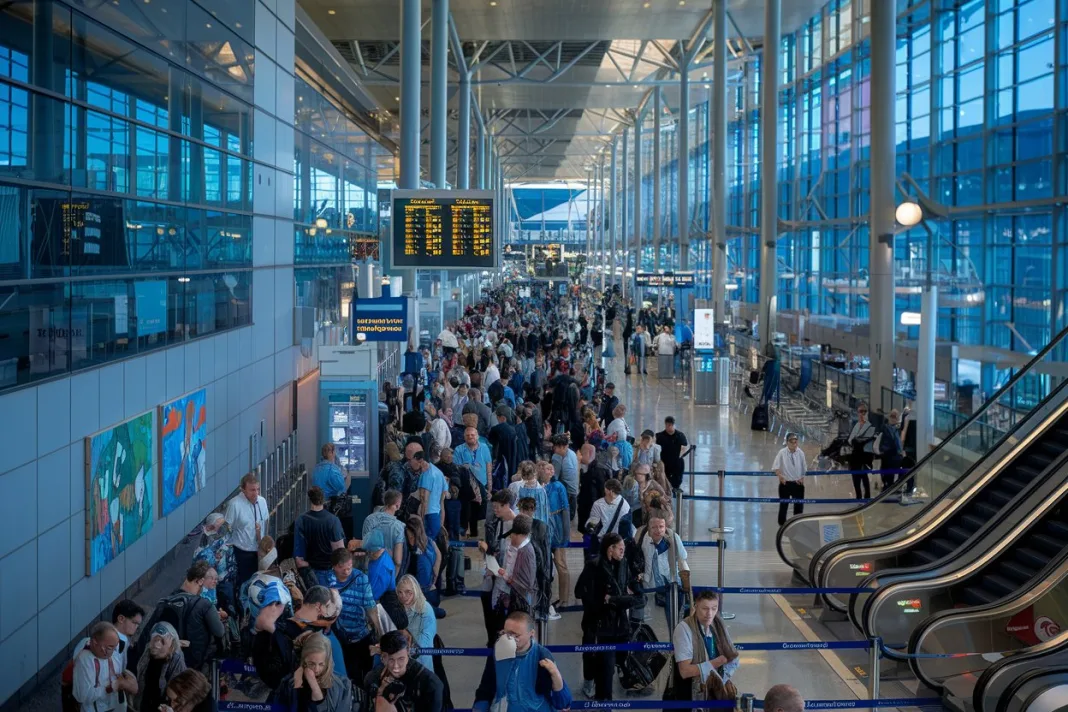
Image generated with Ai
New Chitose and Sendai, Japan — Passengers across Japan endured a wave of travel turmoil this week as extreme winter weather and operational bottlenecks triggered a cascade of flight delays and cancellations at major regional airports, especially New Chitose in Hokkaido and Sendai in Miyagi Prefecture.
Across the two airports, 72 flights were delayed and 8 were cancelled, leaving thousands of travellers stranded, inconvenienced, or scrambling to adjust plans as Japan’s domestic aviation system felt the strain. This surge in disruptions comes not in isolation but against a backdrop of heightened meteorological warnings and systemic pressure on Japan’s aviation network that are challenging even one of the world’s most punctual transport systems.
Hokkaido’s New Chitose Airport at the Epicentre of Winter Disruption
With 62 delays and 4 cancellations, New Chitose Airport — the main air gateway for Hokkaido’s capital Sapporo — bore the brunt of this week’s chaos. Routes that typically ferry tourists and business travellers to central hubs such as Tokyo and Osaka were hit hard, as persistent snow, low visibility and icy ground conditions slowed aircraft operations and significantly pushed back departure times.
According to forecasts and advisories from the Japan Meteorological Agency, northern Japan has been experiencing heavier than usual snowfall and wind conditions, which complicate ground movements, aircraft de‑icing, runway clearance and safe boarding procedures. That has, in turn, created a bottleneck where one delayed flight reverberates through the tightly scheduled domestic network, setting off a domino effect of delays.
Advertisement
Advertisement
Passengers described scenes of frustration and uncertainty inside the terminal, with travellers crowding departure lounges as screens flashed updated times, many latching onto hope that conditions would improve. For many, this was not an inconvenience but a travel crisis — one that disrupted carefully planned itineraries, holidays and business engagements across Japan.
Sendai’s Unexpected Strain: Smaller Airport, Big Impact
In Sendai, located in Miyagi Prefecture on Japan’s Honshu Island, the disruption was significant given the airport’s smaller scale. With 10 delays and 4 cancellations, the local aviation hub felt under pressure as connections to bigger metropolitan areas such as Tokyo were repeatedly interrupted.
Advertisement
Advertisement
Though not primarily known for extreme winter weather like Hokkaido, Sendai’s airport was still gripped by knock‑on network effects. Delays at larger hubs and harsher conditions in the north often ripple outward, especially in Japan’s interconnected domestic flight system. With aircraft and crews being routed from delayed locations, Sendai suffered as schedules slipped and available capacity shrank. The result: passengers left waiting for hours and flights grounded where clear skies might otherwise have allowed departure.
Why Winter Weather Hampers Japan’s Air Travel So Deeply
Japan’s aviation system typically enjoys remarkable punctuality, often cited as among the world’s most efficient. But winter in Hokkaido and the northern regions presents a recurring challenge.
Heavy, persistent snowfall — sometimes exceeding metre‑deep drifts — alongside strong winds and freezing conditions, creates a scenario where aircraft must undergo extended de‑icing, runway snow clearance takes priority, and flight sequencing slows dramatically. This isn’t just about convenience; it is a safety imperative.
Even when snow removal is effective, the extra time required for these operations slows turnaround, meaning flights are delayed on departure and arrival. Because Japan’s domestic aviation schedule is tightly packed, a single late arrival can ripple throughout the system, forcing other flights to delay simply due to aircraft availability or crew scheduling.
Official Warnings: Japan Meteorological Agency Alerts Heightened Risk
The Japan Meteorological Agency has repeatedly urged caution, warning that heavy snow and cold fronts moving across the country will continue to affect transportation — both on the ground and air. Given this forecast, the recent delays and cancellations are not isolated incidents but part of a larger pattern of travel disruption tied to extreme winter weather conditions.
Travel advisories issued by the agency emphasise that passengers should allow extra time, check the status of flights frequently, and prepare for uncertainty — a stark contrast to Japan’s reputation for near‑perfect transport precision.
Passengers Left in Limbo: Stranded, Waiting, Rebooking
For many passengers caught in this week’s turmoil, the impact was deeply personal. Families on holiday found planned activities in jeopardy; professionals saw meetings postponed or lost; international tourists faced uncertainty about onward connections.
Airlines and airport staff worked tirelessly to issue rebooking options, offer meals or lodging where necessary, and assist travellers in adjusting to rapidly changing schedules. Yet the volume of affected flights and passengers made it a logistical struggle — one that exposed the vulnerability of even sophisticated aviation networks to sudden weather extremes.
Economic and Social Ramifications: Beyond Delayed Flights
The consequences of these disruptions extend beyond inconvenience. Regional tourism — a vital economic engine for places like Hokkaido and northern Honshu — stands to lose revenue as visitors delay, shorten or cancel trips. Local businesses that depend on consistent arrival flows have reported slower customer turnouts during peak winter travel season.
Meanwhile, logistical supply chains reliant on timely air cargo movement also experience delays, with potential downstream effects on perishable goods delivery and just‑in‑time inventory operations that depend on reliable freight schedules.
Government Response and Preparedness
Government agencies, including transport regulators and local prefectural officials, have reiterated commitments to improving winter operation protocols. This includes investments in runway snow‑clearing technology, enhanced de‑icing equipment, and advanced weather forecasting integration into flight planning.
However, many aviation experts stress that adapting to increasingly volatile weather — possibly influenced by broader climate trends — will require not only equipment upgrades but also flexible scheduling practices and improved infrastructure resilience across regional airports.
What Travellers Should Do Now
If you have upcoming travel plans through New Chitose, Sendai or other Japanese airports:
- Check flight status frequently with your airline.
- Allow extra time for travel to and from airports.
- Prepare for sudden changes — delays and gate adjustments are now common during winter months.
- Have contingency plans for accommodation and onward travel if a cancellation occurs.
These steps, though basic, can reduce stress and help travellers adapt to conditions that are increasingly unpredictable.
Final Thoughts: Japan’s Winter Aviation Test
This week’s events at New Chitose and Sendai airports serve as a potent reminder: even the world’s most efficient transport networks are vulnerable to nature’s extremes. As Japan confronts high levels of flight delays and cancellations — 72 and 8 respectively at these airports alone — the challenge will be not only restoring normal operations but building systems capable of withstanding future winter tests.
Passengers, airlines, airports and government agencies must work together to navigate this new reality. In an era where weather can shift from mild to severe with little notice, flexibility, communication and preparedness are now essential parts of every journey.
Advertisement
Advertisement