


Published on
March 25, 2026

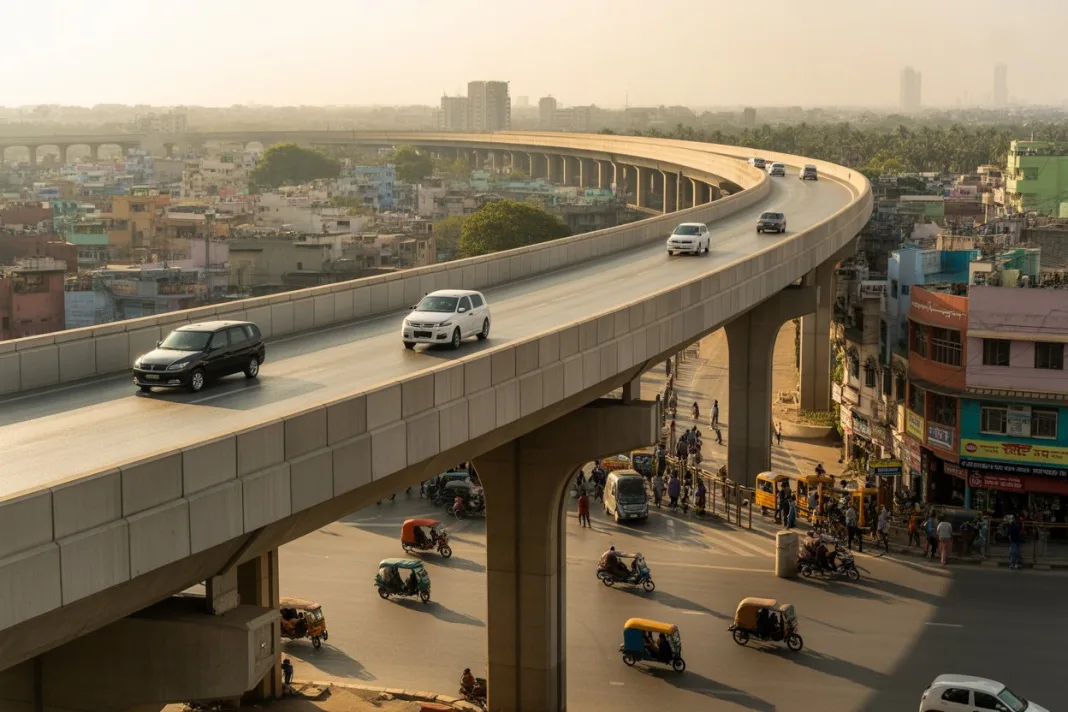
Image generated with Ai
The Government of Karnataka and Karnataka Road Development Corporation Limited (KRDCL) officially expanded the Bengaluru – Mysuru Infrastructure Corridor with a new NICE Road link near Deepanjali Nagar that significantly reduces travel time for commuters heading toward Mysuru Road and major western highways. The opening of this 1.5‑kilometre four‑lane link enhances access to the NICE expressway network, improving the transport corridor that connects the city’s inner urban road system with peripheral express routes.
This newly operational stretch is a strategic infrastructure enhancement for Bengaluru’s road network. It serves daily commuters, freight transporters, and long‑distance travellers by bypassing congested urban areas, smoothing connections between key national and state highways. Road authorities confirm that this link integrates into the larger Bengaluru–Mysuru Infrastructure Corridor, designed to streamline traffic flow between Bengaluru and its western economic catchment areas.
What the New NICE Road Link Means for Commuters
The new NICE Road segment near Deepanjali Nagar creates direct connectivity from Mysuru Road to the NICE expressway network without forcing vehicles onto narrow city streets. According to official infrastructure maps and project documentation, this link:
- Connects Deepanjali Nagar Junction directly to the NICE Road cloverleaf near PES College.
- Cuts travel time for vehicles moving toward Mysuru Road, Hosur Road, Electronic City and Tumakuru Road.
- Reduces congestion on local access roads within south‑west Bengaluru.
Government engineers project that the link will not only reduce traffic delays at peak hours but also offer a signal‑free connection to the expressway network. This new segment will serve as a critical transition point for long‑distance highway traffic, including commuter vehicles and intercity freight transport heading toward Mysuru and beyond.
Advertisement
Advertisement
Official Government Role and Project Execution
The NICE Road and Bengaluru–Mysuru Infrastructure Corridor is part of Karnataka’s ongoing efforts to expand intercity connectivity infrastructure. The multi‑lane expressway was originally conceived to link Bengaluru with Mysuru and other major road arteries in the state.
Government authorities confirm that the Karnataka Road Development Corporation Limited (KRDCL), under the Public Works Department, stewards the project’s implementation and monitoring. The new link represents the latest in incremental improvements aimed at relieving chronic traffic bottlenecks on Mysuru Road and adjacent suburban routes that see heavy peak‑hour congestion.
Advertisement
Advertisement
KRDCL officials have emphasised that expanding the road network remains a key priority for state infrastructure planning. Their public statements reinforce that improved road connectivity supports both commuter convenience and economic efficiency by facilitating faster cargo movement between the city and industrial hubs.
Economic and Urban Growth Benefits
Improved travel time on major corridors directly supports Bengaluru’s broader economic prospects. The enhanced NICE Road link not only eases daily commuter pain but also fuels logistics and industrial connectivity. Key benefits include:
- Faster access between central Bengaluru and western industrial corridors.
- Reduced fuel consumption and operational costs for commercial transport.
- Enhanced accessibility for suburban labour markets.
- Increased attractiveness for residential and business property development near the western NSEZ and Mysuru Road clusters.
These transport benefits align with Karnataka Government infrastructure policy goals, which emphasise improved road safety, reduced congestion, and equitable access to regional economic zones.
How the NICE Road Link Fits Into Bengaluru’s Transport Ecosystem
The addition of the new link enhances integration across multiple mobility initiatives in Bengaluru, including the National Highways network and urban public transit enhancements:
- NICE Road Corridor: Functions as a toll‑based expressway that interfaces with key access points and arterial roads in the city’s periphery.
- Mysuru Road Corridor: Part of National Highway networks connecting Bengaluru to Mysuru and western Karnataka.
- Regional Road Development Plans: State infrastructure plans incorporating corridor projects such as the Bengalu ru Business Corridor and metro expansions are underway to further unlock mobility bottlenecks.
Together, these projects form an interconnected framework that blends long‑distance commuting needs with intra‑city transit solutions.
Commuter Experience: What Changes on the Road
Daily drivers and logistics operators are expected to experience measurable improvements such as:
- 15–20 minutes faster travel time on segments approaching the NICE Road network from Mysuru Road.
- Reduced local congestion due to vehicles bypassing city junctions at Deepanjali Nagar.
- Improved fluidity for long‑haul drivers en route to industrial and neighbouring state centres.
In essence, the new NICE Road link functions like a “pressure valve” for Bengaluru’s western access points—leading to smoother flows and less gridlock around urban bottlenecks.
Conclusion: Long‑Term Transport Gains for Bengaluru
The opening of the new NICE Road link marks a significant infrastructure milestone that directly reduces travel time, improves regional connectivity, and supports Karnataka’s transport masterplan. By linking Deepanjali Nagar with the expressway network, the state government has delivered a strategic solution to persistently overloaded routes on Mysuru Road and surrounding corridors.
Bengaluru commuters, logistics firms, and long‑distance travellers stand to benefit from faster, more reliable travel. The focus on reducing commute times and enhancing expressway access directly supports economic activity and quality of life in South India’s fastest‑growing metropolis.
The success of this road project underscores Karnataka’s commitment to advancing its urban‑regional transport infrastructure for a more integrated future.