
The following is a joint announcement from the MIT School of Architecture and Planning, MIT Schwarzman College of Computing, Hasso Plattner Institute, and Hasso Plattner Foundation.
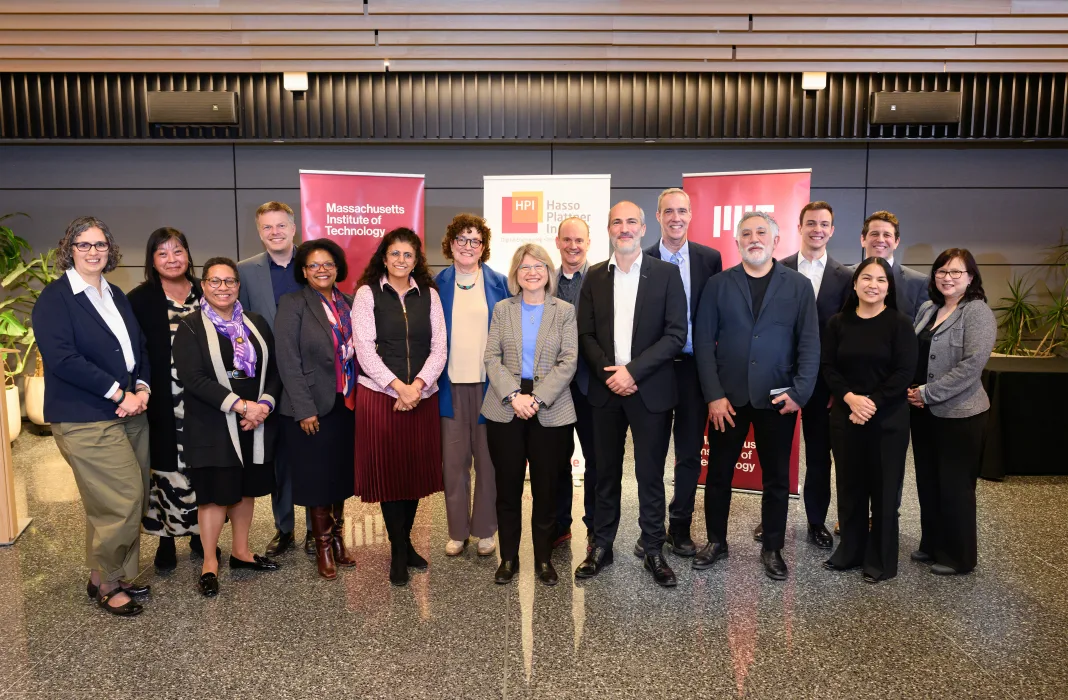
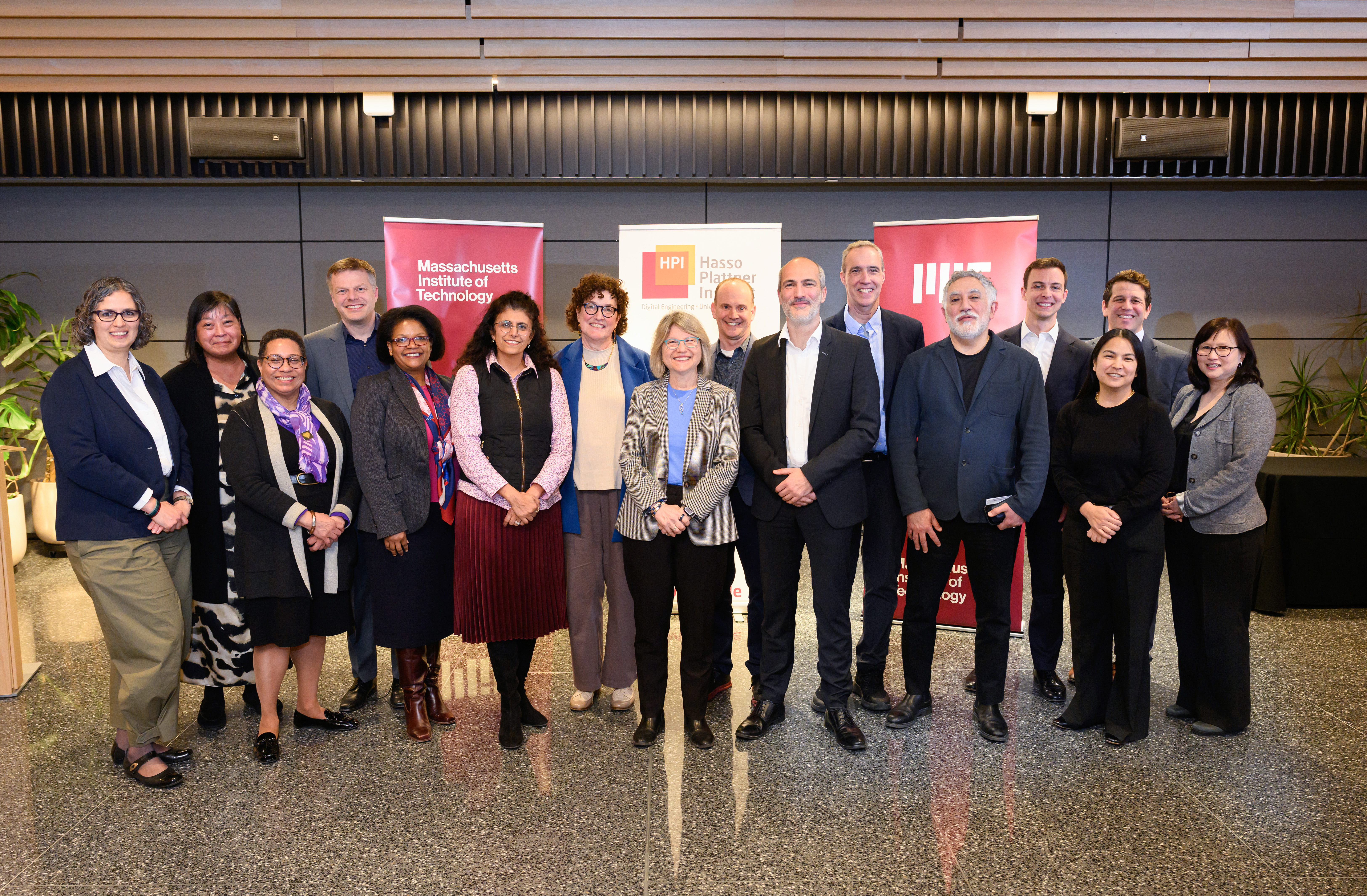
The MIT Morningside Academy for Design (MAD), MIT Schwarzman College of Computing, Hasso Plattner Institute (HPI), and Hasso Plattner Foundation celebrated the launch of the MIT and HPI AI and Creativity Hub (MHACH) at a signing ceremony this week. This 10-year initiative aims to deepen ties between computing and design as advances in artificial intelligence are reshaping how ideas are conceived and shared.
Funded by the Hasso Plattner Foundation, MIT and HPI will work together to foster collaborative interdisciplinary research and support a portfolio of educational programs, fellowships, and faculty engagement focused on AI and creativity, expanding scholarly inquiry into AI applications across disciplines, industries, and societal challenges. The collaboration begins with an inaugural two-day workshop March 19-20 at MIT, bringing together faculty, students, and researchers to set early priorities.
“As we hear from our faculty, as the Information Age gives way to an era of imagination, we expect a new emphasis on human creativity,” reflects MIT President Sally Kornbluth. “Through this collaboration, MIT and HPI are creating a shared space where students and faculty will come together across disciplines to explore new ideas, experiment with emerging tools, and invent new frontiers at the intersection of human creativity and AI.”
“The best minds need the right environment to do their most creative work,” says Rouven Westphal, from the Hasso Plattner Foundation. “When HPI and MIT come together across disciplines and borders, they create exactly that. The Hasso Plattner Foundation is committed to supporting this collaboration for the long term, building on Hasso Plattner’s vision of uniting technological excellence with human-centered design and creativity.”
Deepening collaboration at the intersection of technology, creativity, and societal impact
Building on the success of the Hasso Plattner Institute-MIT Research Program on Designing for Sustainability, established in 2022 between MIT MAD and HPI, the new MHACH hub represents a commitment to deepen collaboration at the intersection of technology, creativity, and societal impact.
“MIT and HPI share a common commitment to turning scientific excellence into real-world impact. Through this collaboration, we will create an environment where students and researchers from both sides of the Atlantic can work together, experiment across disciplines, and learn from one another — at a time when artificial intelligence is set to profoundly shape our lives. We are convinced that this collaboration will generate ideas with impact far beyond both institutions and inspire international cooperation and innovation,” says Professor Tobias Friedrich, dean and managing director of the Hasso Plattner Institute.
“HPI and MIT exist at the nexus of technology and creativity. Expanding this dynamic relationship will generate new paths for the infusion of AI, design, and creativity, enabling students, faculty, and researchers to dream and discover novel solutions, moving more quickly than ever from idea to implementation. MAD was established to connect thinkers across and beyond the Institute, and this new era of collaboration with HPI advances that mission on a global scale,” comments Hashim Sarkis, dean of the MIT School of Architecture and Planning and the Elizabeth and James Killian (1926) Professor.
Academic leadership from MIT and HPI will jointly shape the hub’s research and teaching agenda. Based in Potsdam, Germany, HPI is a center of excellence for digital engineering advancing research, education, and societal transfer in IT systems engineering, data engineering, cybersecurity, entrepreneurship, and digital health. Through its globally recognized HPI d-school and pioneering work in design thinking methodology, HPI brings a distinctive perspective on human-centered innovation to the collaboration, alongside a strong record in AI and data science research and technology transfer.
Expanding research and education on AI and creativity
The efforts of this multifaceted initiative are intended to foster a dynamic academic community spanning MIT and HPI, anchored by Hasso Plattner–named professorships and graduate fellowships whose recipients will be actively engaged in the hub. The long-term framework is designed to provide continuity for faculty appointments, doctoral training, and cross-campus research.
The agreement also includes the development of classes and educational programs in areas of shared AI focus, along with expanded experiential opportunities through AI-focused workshops, hackathons, and summer exchanges. A steering committee composed of representatives from the MIT School of Architecture and Planning, MIT Schwarzman College of Computing, and Hasso Plattner Institute will facilitate the shared governance of MHACH.
“Creativity has always been about extending human capability. At its core, this collaboration asks what it truly means to create something new. The question isn’t whether AI diminishes creativity, but how new forms of intelligence can deepen and enrich that process. Our goal is to explore that intersection with rigor and build a cross-disciplinary scholarly and research community that shapes how AI supports the creation of new ideas and knowledge,” says Dan Huttenlocher, dean of the MIT Schwarzman College of Computing and the Henry Ellis Warren (1894) Professor of Electrical Engineering and Computer Science.
This collaboration is made possible by the Hasso Plattner Foundation’s long-term philanthropic commitment to institutions that connect technological innovation with design thinking and education. The Hasso Plattner Foundation has played a central role in establishing and supporting institutions such as the Hasso Plattner Institute and international design thinking programs that bridge disciplines and geographies.