
Published on
March 20, 2026

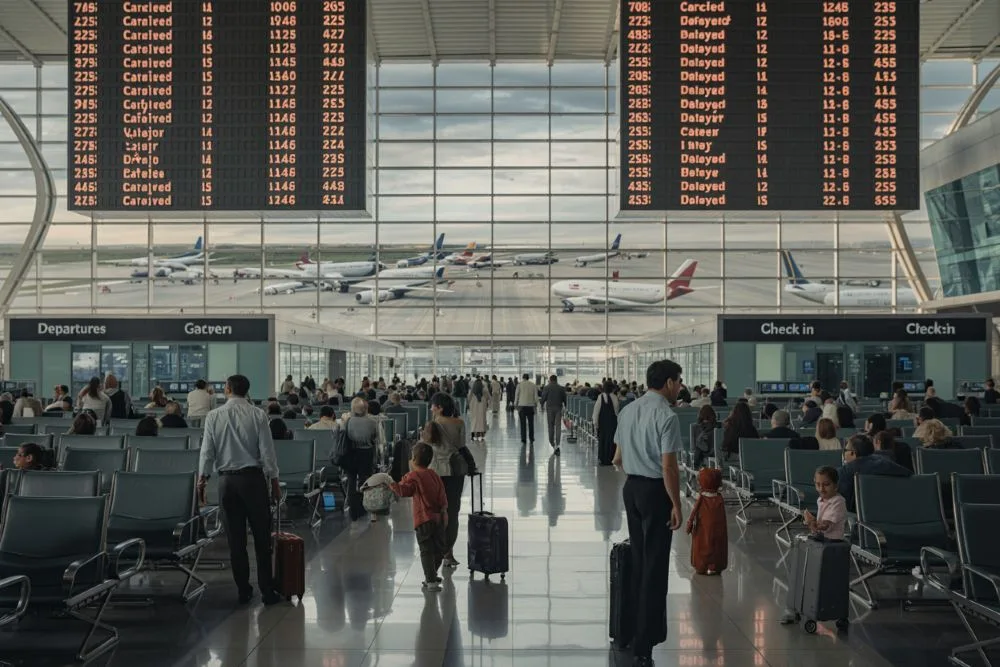
Image generated with Ai
On March 19, 2026, Toronto Pearson International Airport (YYZ) dealt with serious operational setbacks as Air Canada, its regional partner Jazz Air, and Icelandair pulled five flights from service. These cancellations rippled through international connections, hitting routes to the Middle East and South America hardest. Travelers bound for spots like Dubai, Bahrain, and Bogotá saw their plans upended, with knock-on effects from North American hubs.
Behind the Groundings: Mechanical, Crew, and Logistics Challenges
The issues boiled down to a mix of technical, staffing, and repositioning hurdles. Air Canada’s wide-body planes needed urgent maintenance checks to comply with rigorous safety rules, halting departures until cleared. Jazz Air faced crew shortages worsened by earlier weather holdups on shorter routes. Icelandair paused its service to Keflavík due to needs for adjusting aircraft across Atlantic paths.
Canada’s aviation authority, Transport Canada, enforces tough standards similar to those from the U.S. Federal Aviation Administration (FAA) at faa.gov, ensuring no plane takes off without passing inspections. Airport officials at YYZ worked closely with the airlines to limit fallout while upholding these priorities, as outlined in official safety protocols.
Air Canada Long-Haul Disruptions: Focus on Middle East and South America Links
Air Canada’s cuts zeroed in on extended routes from YYZ, including single daily runs to Dubai and Bahrain, each packing over 250 passengers and one to Bogotá. These paths form vital bridges for folks from the Toronto region heading overseas.
Middle East travelers felt the pinch most, given the reliable daily schedules to those hubs. The airline shifted impacted bookings to March 20 and 21 flights, but spots in upscale sections filled up fast. South American itineraries saw similar shifts, forcing some to adjust multi-leg trips.
Regional and Transatlantic Ripples from Jazz Air and Icelandair
As Air Canada’s feeder service, Jazz Air stopped two short hops from places like Montreal and Ottawa, which supply passengers for bigger international jumps. This blocked seamless transfers to evening long-haul options.
Advertisement
Advertisement
Icelandair’s lone halt to Keflavík (KEF), carrying around 180-200 people, disrupted North Atlantic flows. Those with tags to Europe beyond Iceland dealt with tricky reroutes needing input from partner carriers.
Stay Informed: Tools for Live Tracking at YYZ
Keep tabs on developments via reliable trackers. While airline apps from Air Canada deliver push alerts and rebooking details straight to your phone or email, YYZ’s terminal screens in areas 1, 3, and 5 show updates in English and French. For broader monitoring, official airport resources align with real-time data standards.
Your Rights Under Official Canadian Aviation Rules
The Canadian Transportation Agency (CTA) at otc-cta.gc.ca sets clear guidelines for disruptions. If delays top three hours or flights get scrapped, you may claim CAD $400 to $2,400 based on distance: under 1,500 km gets $400; 1,500-2,500 km earns $700; over 2,500 km pays $2,400. Airlines must offer the soonest alternative flight free of charge.
For waits beyond 48 hours, expect vouchers for food, overnight stays, and rides plus priority for your bags on the next leg.
Path to Normalcy: Airlines’ Recovery Plans
Air Canada aims to have its full lineup flying again by March 21, after checks wrap up, pulling in spare planes to clear the queue. Jazz Air plans to sync crews and fixes by late March 20. Icelandair tapped nearby planes for a March 20 morning restart to KEF.
YYZ runs at peak capacity, but bags might lag until March 21 as teams handle the surge. Those with wiggle room in schedules snag better odds on afternoon March 20 slots.
Advise for the Travellers
For travelers using Toronto Pearson in the coming days, the safest strategy is to stay ahead of the disruption rather than simply react to it. By monitoring official airline updates, understanding entitlements under Canadian and U.S. air passenger protection rules, and reshaping itineraries as soon as a delay appears likely, passengers can reduce stress and limit knock-on impacts to hotels, meetings, and onward flights. This episode at YYZ is a reminder that even in a highly regulated aviation system where safety rightly comes first, informed and proactive travelers are far better positioned to protect both their time and their wallet.