
Published on
March 20, 2026

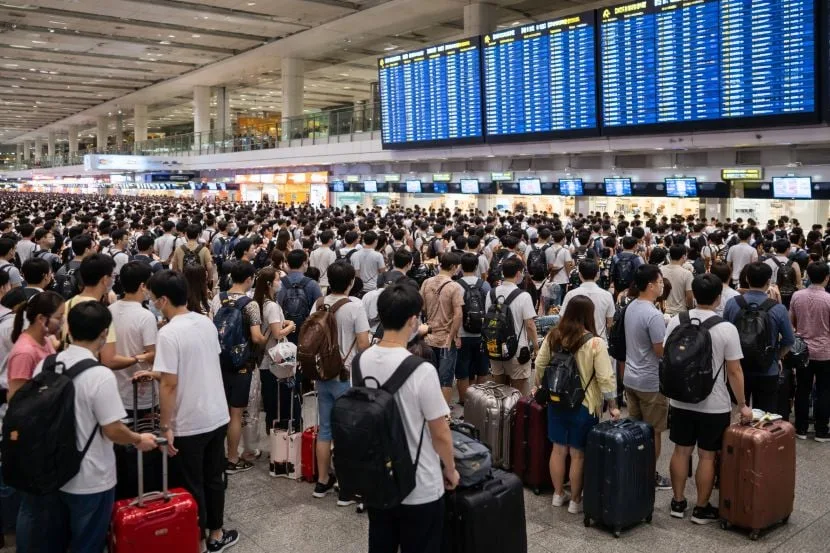
Delays and cancellations have made air travel difficult in some of the largest airports in China today. Xi’an Xianyang International, Guiyang Longdongbao, and Shanghai Pudong International have sizable delays that impact international and domestic travelers alike. The delays impact travelers and the country’s tourism industry because of the cascading effect on the country’s transport system. We analyze the numerous flight cancellations and delays, their impact on the travelers, and the impact on the tourism industry.

Flight Delays and Cancellations Across Airports
Today, the situation at China’s airports has escalated, with delays and cancellations affecting multiple locations. The following is a breakdown of the total number of delays and cancellations reported at key airports:
- Xi’an Xianyang International Airport:
Total Delays: 130
Total Cancellations: 4 - Guiyang Longdongbao Airport:
Total Delays: 66
Total Cancellations: 2 - Urumqi Diwopu International Airport:
Total Delays: 56
Total Cancellations: 3 - Shanghai Pudong International Airport:
Total Delays: 246
Total Cancellations: 5 - Hohhot Baita International Airport:
Total Delays: 26
Total Cancellations: 4 - Xishuangbanna Gasa Airport:
Total Delays: 29
Total Cancellations: 3 - Yining Airport:
Total Delays: 7
Total Cancellations: 3
These figures indicate significant flight disruptions at multiple airports, with Shanghai Pudong experiencing the highest number of delays. The volume of delays across major airports suggests that travel across regions of China, particularly in the central and western parts of the country, has been heavily impacted.
Advertisement
Advertisement
Passenger Impact
The total number of passengers affected by these delays and cancellations is substantial. With 246 delays reported at Shanghai Pudong International alone, it is safe to estimate that thousands of passengers have been delayed, impacting both domestic and international flights. Travelers with connecting flights, those on business trips, or vacationers are facing the brunt of this disruption.
Advertisement
Advertisement
Cancellations add an extra layer of frustration for affected passengers, as they may need to rebook flights or find alternative routes to reach their destinations. The total of 4 cancellations at Xi’an Xianyang, 2 at Guiyang Longdongbao, and similar disruptions at other airports contribute to passenger uncertainty and stress.
For international travelers, the situation is even more pressing, as they must deal with the added complexity of rebooking long-haul flights, possibly incurring extra costs or losing their planned accommodations. This situation becomes particularly worrying as travel delays accumulate throughout the day, and some passengers may miss critical business meetings, connections, or other planned activities.
Impact on Tourism
The ripple effect of these flight disruptions on tourism cannot be overlooked. As major cities like Shanghai, Xi’an, and Urumqi are popular destinations for both domestic and international tourists, these delays and cancellations have the potential to influence the tourism industry significantly.
First, the immediate loss of confidence in air travel, caused by frequent delays, might discourage tourists from visiting cities with unstable air traffic patterns. Tourists who are planning to explore destinations like the Terracotta Army in Xi’an, the karst landscapes in Guiyang, or the bustling financial hub of Shanghai may alter their itineraries or cancel their visits altogether.
Moreover, the tourism industry is already recovering from previous setbacks, and these disruptions might result in a setback for the overall recovery effort. Local tourism businesses, including hotels, tour operators, and restaurants, might see reduced footfall as travelers adjust their plans or stay away from destinations with unreliable flight schedules. This could lead to financial strain on local economies, especially those dependent on tourism for livelihood.
Conclusion
Major disruptions in air travel have recently affected China and the southern U.S. states. In the southern U.S., multiple airports continue to cancel and delay flights. Most recently affected airports include Xi’an Xianyang, Shanghai Pudong International, and Guiyang Longdongbao, and travel and tourism as a whole have been equally disrupted as travelers become accustomed to and become more frustrated by interruptions in flights. Delayed and cancelled flights offer travelers a disrupted travel experience and a are a source of anxiety related to when and how ultimately to travel again. Delayed, cancelled, and disrupted flights ultimately lead tourist to alter, abandon, and/or completely avoid travel tot the most recently affected airports.
Travelers are able to manage and modify their travel plans due to ongoing updates by the government and airlines as airline and government communications highlight changes in the plans.
Source: Flightaware