
Published on
March 13, 2026

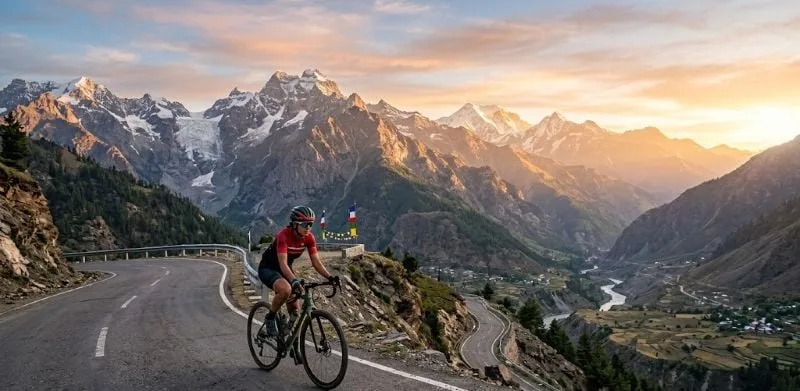
Image generated with Ai
The modern global tourism sector is experiencing a profound shift toward travel that is both purposeful and transformative. Currently, explorers are moving away from traditional sightseeing and are instead prioritizing expeditions that challenge societal boundaries and personal limits. Consequently, the Sampoorn Bharat Yatra has surfaced as a primary example of this revolutionary trend in human movement. This specific journey represents a courageous evolution of solo travel by merging extreme physical endurance with a significant social objective. By selecting a bicycle to traverse immense distances, the athlete at the center of this story engaged directly with the diverse and vibrant heart of the nation. Her experience offers an explanatory introduction to a new era of global mobility where individual safety and empowerment are naturally linked. Decisive actions and clear goals defined her movement through a variety of challenging terrains. Therefore, this narrative highlights the extraordinary depth of human resilience and its power to alter global perspectives. It proves that the international travel industry must now prepare for a much more daring and independent demographic of women. Through this unique lens, we witness how a single person can successfully redefine worldwide travel standards.
The massive undertaking recently completed by Aasha Malviya featured a staggering 25,000-kilometre cycling mission that touched almost every corner of the country. This expedition, which unfolded across 28 Indian states, stands as one of the most comprehensive solo surveys conducted in modern times. It was reported that her central goal was to provide a tangible, real-world demonstration that India remains a secure and welcoming environment for women who choose the path of solo travel. By broadcasting her daily experiences to a global audience, she intended to deliver a powerful and unmistakable message regarding women’s empowerment.
Her primary motivation was to confront and systematically dismantle the lingering international stereotypes that often depict the region as hazardous for women traveling without companions. She expressed a deep-seated desire to inspire young girls to venture beyond their familiar surroundings and experience the world firsthand. By showcasing the consistent safety and the immense kindness she encountered, she hoped to instill the necessary confidence for others to begin their own independent journeys of discovery.
A Background Rooted in Resilience
The psychological and physical fortitude required for such an immense project did not appear by chance. Instead, it was carefully forged in Nataram, a quiet and modest village located within the state of Madhya Pradesh. Her early life was characterized by significant hardship, particularly following the loss of her father while she was still an infant. Her mother, who worked tirelessly as a daily wage laborer to sustain the family, became the indispensable pillar of her existence. Despite the lack of financial luxury, her mother provided a foundation of unwavering emotional support. This encouragement allowed the young athlete to envision a future that reached far beyond the borders of her small village.
Long before she ever considered a career in long-distance cycling, she had already established a formidable reputation in the high-stakes world of mountaineering. As an exceptionally skilled climber, she had already tested her physical limits on several of the most difficult peaks on the planet. She famously reached the summits of Bisi Rai, which reaches an elevation of 20,500 ft, and Tenzing Khan, which stands at 19,545 ft. These early triumphs in the high-altitude wilderness served as the ultimate training ground. They provided her with the essential grit and the strict discipline required to maintain a demanding schedule on the open road for an entire year.
Advertisement
Advertisement
Insights from the Road
Throughout her vast travels, she observed that she was met with a profound and overwhelming sense of communal protection. Rather than the hostility that many international observers might predict, she found herself consistently embraced by local hospitality and genuine human warmth. Her strategic approach to the journey often involved staying in the homes of local families or utilizing public facilities provided by the government. These authentic interactions served as undeniable proof for her conviction that the nation is fundamentally safe for those who approach it with a positive and open heart.
Advertisement
Advertisement
However, the expedition was undeniably grueling from a physical standpoint. Cycling hundreds of kilometers every single day placed an enormous strain on her cardiovascular system and muscles. She was frequently forced to navigate through unpredictable weather patterns and geographically punishing conditions. From the thin, freezing air of the northern mountain passes to the heavy, oppressive humidity of the southern coastal stretches, every single stage of the journey was a trial of her determination. She credited her “mountain-climbing spirit” for her ability to remain focused on the goal. She viewed every mechanical failure or bodily ache not as a signal to quit, but as a temporary challenge to be overcome with a resilient and focused mindset.
Global Implications for the Travel Sector
The success of this solo odyssey has ramifications that extend deep into the international tourism and hospitality markets. Industry experts are now closely analyzing her journey to better understand how to categorize and communicate the concept of safety to female tourists on a global scale.
- Travel providers are now expected to shift their marketing focus toward the organic safety and hospitality found within rural communities.
- There is a predicted surge in demand for specialized infrastructure that caters to solo cyclists and those engaging in slow, sustainable travel.
This trek proves that the most effective security measure any destination can provide is the “human element.” When a local community is actively involved in welcoming and protecting a traveler, it creates a sustainable environment of mutual trust. This human-to-human connection acts as a far more powerful deterrent to crime than any modern surveillance technology or high-tech security system currently available.
Persisting Through Environmental and Physical Trials
The athlete’s endurance was constantly being measured against the raw and uncompromising forces of nature. She endured the blistering, dry heat of the central plains and the relentless, driving rains of the monsoon season. Nevertheless, her story indicates that the perceived environmental risks were significantly mitigated by the social safety net she encountered at every turn. Every state she entered provided a fresh cultural perspective, yet the underlying theme remained constant: a profound respect for her mission and her safety. This narrative serves as a vital reminder that the modern traveler is increasingly searching for authenticity. They seek safety in the most unpretentious and rural locations, proving that the heart of a country is often its most secure and valuable asset.
Encouraging a New Generation of Explorers
The final message from the athlete to the global community is a call for absolute fearlessness. She strongly believes that women should never allow anxiety or outdated societal expectations to restrict their potential for global exploration. She maintains that with the right level of preparation and the use of modern tools—such as the GPS-equipped bicycle she utilized—the entire world is an accessible and open book.
By successfully finishing the Sampoorn Bharat Yatra, she has generated a significant body of qualitative evidence regarding the safety of various travel corridors. Her 25,000-kilometre journey now serves as a definitive blueprint for future adventurers. It stands as a landmark case study that will likely trigger a surge of international interest in the diverse landscapes of Madhya Pradesh and the surrounding regions. The global travel industry is currently at a critical turning point. The bravery shown by a single cyclist from the village of Nataram has effectively cleared the path for thousands of others to explore the world with renewed confidence and a sense of security.
The Future of Sustainable and Safe Tourism
As we look toward the coming decades, the impact of this journey on the concept of sustainable tourism cannot be overstated. By choosing a bicycle as her primary vehicle, she highlighted a mode of travel that is environmentally friendly and allows for a much deeper connection with the surrounding geography. This “slow travel” movement is gaining significant traction across the globe. Her journey across 28 Indian states shows that it is possible to cover immense distances without leaving a massive carbon footprint, all while maintaining a high standard of personal safety.
The global travel sector is now paying very close attention to these grassroots movements. Agencies are beginning to realize that the next generation of travelers will not be satisfied with generic luxury; they will seek out stories of resilience, empowerment, and genuine connection. The Sampoorn Bharat Yatra is not just a personal achievement for one woman; it is a catalyst for systemic change in how we view the intersection of gender, travel, and security on a global scale.
The Mission: Sampoorn Bharat Yatra
Ultimately, the mission was a success because it successfully translated an abstract social idea into a visible, lived reality. By cycling through India, the athlete proved that the barriers to solo travel are often more psychological than physical. Her documentation of the journey provides the travel industry with a wealth of information regarding the friendliness and accessibility of the country’s many regions. This information will be invaluable for future tourism development, ensuring that the spirit of exploration remains vibrant and inclusive for everyone, regardless of their gender or personal background.
Through her historic ride, the cyclist from Nataram has redefined what it means to be a traveler in the 21st century. She has shown that the road to empowerment is often long and difficult, but it is a road that is open to anyone with the courage to take the first step. The global impact of her story will be felt for many years to come as more women take to the roads, inspired by the success of the Sampoorn Bharat Yatra. By highlighting Madhya Pradesh as the starting point for such resilience, she has placed her home state firmly on the map of world-class adventure tourism.
The story concludes with a simple but powerful truth: that the world is much kinder and safer than we are often led to believe. It is only by stepping out and experiencing it for ourselves that we can truly understand the power of human connection and the boundless potential of the human spirit. The travel industry must now embrace this reality and work to create a world where every explorer feels as safe and supported as she did during her remarkable 25,000-kilometre odyssey.
Summary of the Journey across 28 Indian States
The following points summarize the key takeaways for the international travel community:
- The critical importance of community-based hospitality as a primary safety feature for independent travelers.
- The rising global trend of “slow travel” and its ability to foster deeper cultural understanding and environmental sustainability.
- The role of individual athletic achievements in promoting national and regional tourism destinations to a wider audience.
Global Effects on Travelers and Industry
The implications of this journey reach far beyond national borders. Internationally, this story serves as a data point for “Safety Perception Indices.” When a solo cyclist successfully navigates 28 Indian states, it provides a counter-narrative to travel advisories that may be overly cautious. Consequently, we can expect:
- A rise in “Empowerment Tourism,” where travel is marketed as a tool for personal growth.
- An increase in trans-continental cycling tours led by women.
- A shift in hotel and hostel designs to better accommodate solo female cyclists.
Environmental and Physical Trials Revisited
The athlete’s ability to persist through the varying climates of the subcontinent—from the Bhopal plains to the high peaks—highlights the necessity for durable travel gear. The travel industry will likely see a boost in the sales of high-end trekking and cycling equipment as more people attempt to replicate parts of this route. Her journey proves that the human spirit is the most important piece of equipment one can carry.
A Blueprint for the Future
Ultimately, the Sampoorn Bharat Yatra is a testament to the fact that the landscape of travel is changing. It is no longer just about the destination; it is about the message sent and the barriers broken along the way. From the small village of Nataram to the global stage, this journey has proven that safety is found in the kindness of strangers and that empowerment is found in the strength of one’s own legs. The world is waiting, and thanks to this remarkable athlete, it looks a little bit smaller and a lot more welcoming.