
Published on
March 12, 2026

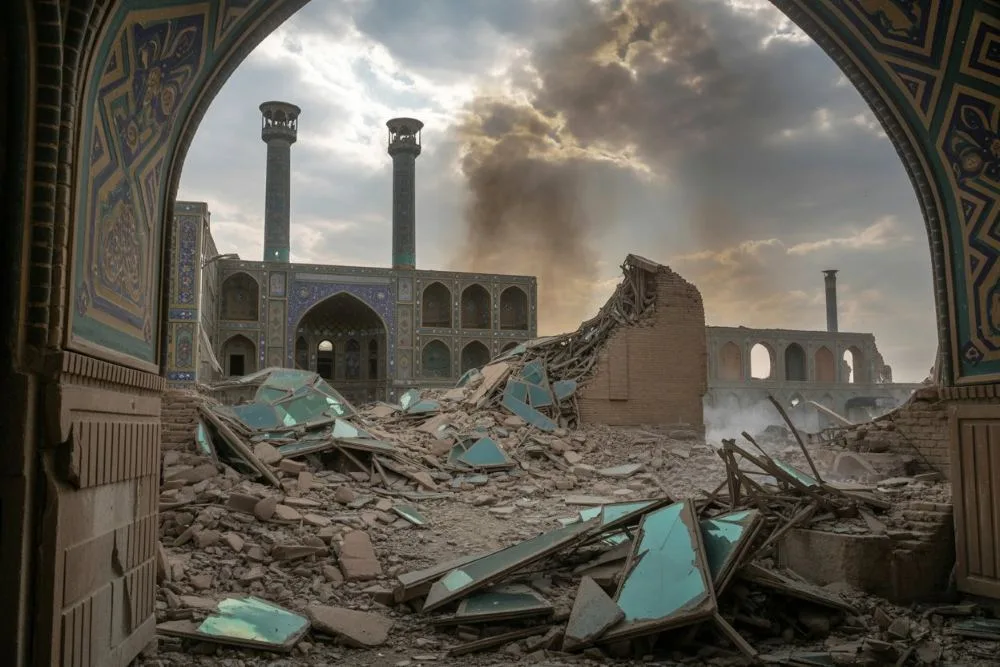
Image generated with Ai
The recent US and Israeli strikes on Iran have left a trail of devastation across some of the country’s most precious UNESCO World Heritage sites. Among the worst-hit are Golestan Palace, Chehel Sotoun, and the Masjed-e Jame, iconic landmarks that have stood for centuries as symbols of Iran’s rich cultural and architectural history. These historic sites, along with ancient caves dating back to 63,000 BC, have been decimated, their priceless heritage shattered by shockwaves and missile debris. The attacks represent not just a physical assault on buildings, but a direct strike against the very soul of a nation’s past.
As these historic treasures crumble, Iran’s national identity and its deep connection to its ancient history are left in ruins. The international community watches in disbelief as the world’s shared cultural heritage faces the consequences of this devastating conflict.
Devastating Toll on Iran’s Cultural Heritage: Historic Sites Damaged in US‑Israel Strikes
Iran’s ancient cultural landscape has been shaken by the ongoing conflict between the United States, Israel and Iran, with some of the nation’s most treasured historic places suffering significant damage. These sites, many of which are UNESCO World Heritage landmarks and symbols of Iranian history and identity, were not struck directly. However, the shockwaves from nearby explosions and falling debris have left shattered glass, broken tiles and cracked stonework in their wake — a loss felt deeply by local communities, historians, and global heritage advocates alike.
Golestan Palace, Tehran — Ruins in the Heart of the Capital
Golestan Palace in Tehran, a lavish complex once the ceremonial seat of the Qajar dynasty, stands among the most iconic symbols of Persian culture and royal history. Parts of the palace — particularly its mirrored ceilings and glasswork — have been badly damaged as debris from nearby airstrikes shattered windows and ornamental interiors. The centuries‑old site, inscribed as a UNESCO World Heritage Location, has suffered broken archways, ruined decorative moulding, and glass fragments scattered across historic halls.
Chehel Sotoun Palace, Isfahan — Safavid Masterpiece Bruised by Blast Waves
In the historic city of Isfahan, the 17th‑century pavilion and gardens of Chehel Sotoun — famed for its reflecting pools and delicate frescoes — have also endured damage. Airstrike shockwaves caused cracking and structural stress to the palace’s lavish tilework and wooden features. The Safavid era monument is part of the Persian Gardens World Heritage inscription and is widely regarded as a masterpiece of Persian landscape design and royal architecture.
Masjed‑e Jame, Isfahan — Ancient Mosque Scarred by Conflict
Also in Isfahan, the Masjed‑e Jame — one of Iran’s oldest mosque complexes, reflecting more than a millennium of Islamic architectural evolution — has suffered turbulence from the strikes. Shockwaves caused ornate turquoise tiles to fall from the structure and left visible damage to the mosque’s historic brickwork. The mosque’s long history and significance as a place of worship and learning make this more than a physical loss; it strikes at the cultural and spiritual heart of local communities.
Advertisement
Advertisement
Khorramabad Valley Prehistoric Sites — Echoes of Earliest Human Life Affected
Beyond palaces and mosques, heritage near the Khorramabad Valley — which houses prehistoric caves and rock shelters with evidence of human habitation dating back tens of thousands of years — were also affected by blast waves. The proximity of the ancient archaeological zone to nearby strikes raised alarm among archaeologists, as structures that have survived since prehistory incurred structural damage.
Broader Heritage Impact and UNESCO’s Response
UNESCO has verified damage to at least these four key cultural and historical sites and stressed that the organisation had previously shared exact geographical coordinates of these locations with all parties to the conflict to help avoid harm. Despite precautionary efforts, the current devastation has prompted Iran and Lebanon to petition UNESCO for enhanced protection for vulnerable heritage locations.
UN spokespersons and international heritage advocates have underscored the tragic implications of these losses — not just for Iran but for world history. They argue that such destruction erodes community identity, undermines collective memory, and diminishes the global cultural record.
Human Cost Beyond Battlefield Damage
The destruction of these sites comes amidst broader civilian suffering across Iran. International reporting indicates that thousands of people have been killed or injured in recent weeks, and infrastructure from hospitals to schools has been struck alongside historic landmarks. This confluence of civilian and heritage damage refocuses global attention on the humanitarian and cultural costs of modern conflict.
Why This Matters to the World
The damaged sites were more than national icons — they were part of humanity’s shared heritage. Places like Golestan and Chehel Sotoun attract scholars and tourists alike, standing as testaments to centuries of art, architecture and collective cultural memory. Their loss or damage reverberates far beyond Iran’s borders, challenging the global community to safeguard cultural sites under threat.
Source: Siasat, AP News, The National